How to Choose Health and Wellness Gifts People Actually Use
Health and wellness gifts work best when they fit someone's real routine. Here's how to match a gift to one everyday goal, check hidden costs and privacy, and skip the common mistakes.


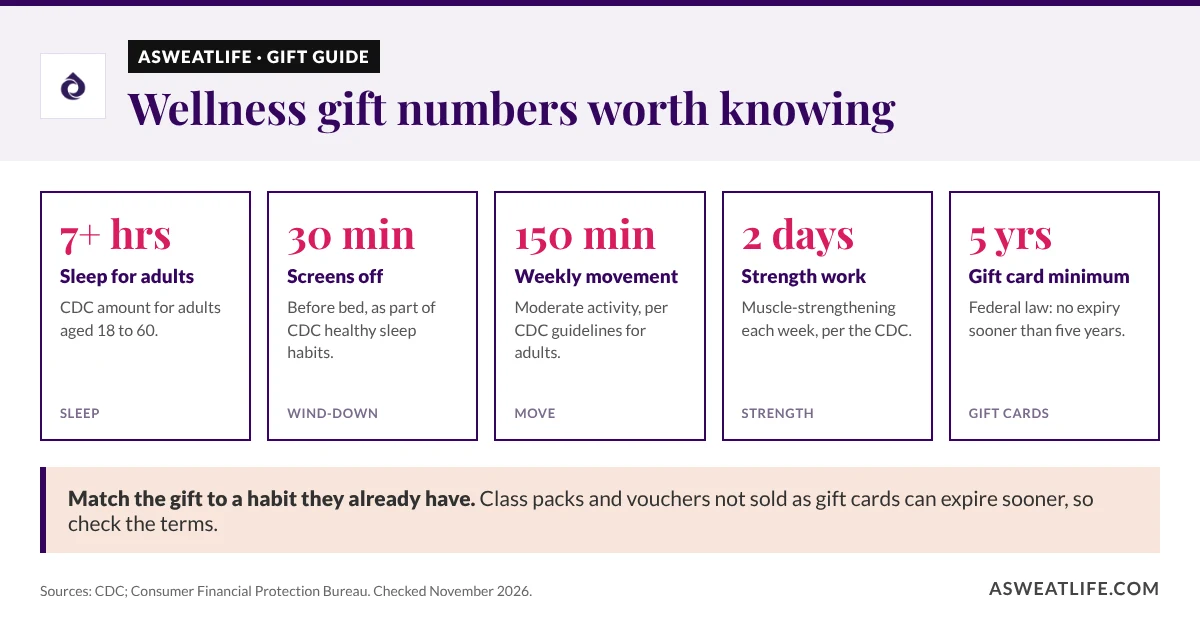
Shopping for someone who’s into wellness can feel like a trap, because health and wellness gifts only work when they fit the person’s real routine. Even the basics vary: the CDC says adults aged 18 to 60 need 7 or more hours of sleep per day, but how each person gets there is personal.
Here’s how to read the clues they’ve already given you, match a gift to one everyday goal, check the costs and privacy details most people miss, and avoid the mistakes that send a gift straight to the back of the closet.
Why Fit Matters More Than Price With Wellness Gifts
Wellness means something different to everyone on your list. One person’s version is a long walk after work, another’s is a quiet evening with a book, and someone else just wants weekday lunches to stop being a scramble. A gift that slots into one of those habits gets used. A gift built for a whole new lifestyle usually doesn’t.
Price doesn’t decide usefulness, either. An inexpensive item that’s comfortable, easy to store and simple to use can earn its place every day, while a pricey gadget that needs charging, an app and a setup session can stay in its box. Before you buy, picture the full experience: setup, charging, cleaning, refills and storage. The best wellness gift takes friction out of someone’s day.
How Do You Figure Out What They’d Actually Use?
Listen for Everyday Clues
Think back to what they’ve said recently, without turning the gift into a verdict on their health. Comments like “I can’t switch off at night,” “I’ve started walking at lunch” or “I’m trying to cook more” are better guides than any trending product list. Use what they’ve told you, and leave out anything that could read as a hint that they need to change.
Consider Their Daily Style
Frequent travelers and people in small apartments tend to appreciate compact things. Busy parents and professionals often prefer gifts that work without appointments, cables or a manual. Someone trying to spend less time on screens may enjoy a journal, a class or a massage more than an app-connected device, and someone who loves data might be thrilled by exactly that device.
Here’s a quick way to turn what you’ve heard into a gift direction:
| If they’ve said… | Consider | Skip |
|---|---|---|
| They can’t wind down at night | Sleep mask, eye pillow, simple reading light, a book | Anything promising to fix insomnia |
| They’ve started walking or running | Weather-ready accessories, a good water bottle, reflective gear | Clothes you’d have to guess the size of |
| They love a particular studio or class | A class pass or drop-in credit there | Equipment for a different sport |
| Life feels hectic lately | A journal, art supplies, a massage gift certificate | Self-improvement books with a lecturing tone |
| They’re cooking more at home | Food storage containers, a quality pan, a cooking class | Diet plans or weight-loss products |
| They’re curious about their health or ancestry | A test they’ve specifically asked for, plus help with privacy settings | A surprise DNA kit |

Health and Wellness Gifts Matched to Everyday Goals
This guide is for general information and isn’t a substitute for medical advice. If someone you’re shopping for is managing a health condition, let them lead on anything health-specific.
For Better Sleep
Sleep gifts work best when they support a calmer wind-down rather than promising results. The CDC’s sleep guidance lists healthy habits that include going to bed and getting up at the same time every day, keeping the bedroom quiet, relaxing and cool, and turning off electronic devices at least 30 minutes before bed.
That gives you a useful shopping list: a soft sleep mask or earplugs for a darker, quieter room, comfortable bedding extras, a reading light with simple controls, or a paper book to replace late-night scrolling. Comfort is personal, so buy from a store with a straightforward return policy.
For Movement and Fitness
Match movement gifts to what they already do. The CDC’s guidelines suggest adults get 150 minutes of moderate-intensity activity a week plus at least two days of muscle-strengthening activity, and people hit those numbers in very different ways.
- Walkers: weather-ready layers, reflective gear for darker evenings or a refillable water bottle.
- Yoga and Pilates fans: a supportive prop, a good mat towel or a pass to a studio they already like.
- Regular gym-goers: a gym bag organizer, a durable shaker bottle or recovery basics.
- Team sports players: practical extras such as a sports bag or a quality foam roller.
Activity has wide benefits: the CDC notes that it can help you sleep better and reduce short-term anxiety. If you’re shopping for someone who’s still figuring out what kind of exercise they like, our guide to finding movement that brings you joy might be a better starting point than a piece of equipment.
For Stress Relief
Stress-relief gifts should feel private and pressure-free. A notebook, an eye pillow, a calming audio subscription, art supplies, a puzzle or a massage gift certificate all give someone options without suggesting they need fixing. The holidays can be a lot for many people, and these ideas pair well with the tips in our piece on protecting your mental health during the holidays.
Skip anything that claims to treat anxiety, insomnia, pain or another medical condition. Those claims belong with a healthcare professional.
For Nutrition and Meal Support
Food gifts land well when they make everyday cooking easier. Think good food storage containers, a quality knife or pan, a meal-planning notebook, a cooking class or a grocery delivery credit. Check allergies, dietary preferences and household needs before you buy anything edible.
Supplements, restrictive diet products and anything weight-focused can feel too personal unless the recipient has asked for them specifically. Someone who wants a supplement can choose it with their own doctor.
For Personal Health Information
Gifts that involve testing, genetic information or detailed health data need the most care. The FDA notes that direct-to-consumer tests have varying levels of evidence behind their claims, and results can raise questions that are best taken to a doctor or genetic counselor.
If someone has told you they want a DNA test, the FTC’s advice on giving DNA test kits as gifts is worth following:
- Read the privacy promises: check whether the company shares data with others, what privacy tools it offers and whether users can delete their data.
- Help with setup: offer to walk them through the account settings, use a strong, unique password, turn on multifactor authentication if it’s available and start with the most private options.
- Remember what’s at stake: DNA results reveal information about relatives too, and any company can be hacked.
Also check whether the test includes ongoing membership fees after the first purchase. A personal result is never a replacement for medical advice or professional follow-up.
How Do Common Wellness Gift Types Compare?
Once you know the goal, it helps to compare gift types on what they ask of the recipient after the wrapping paper comes off:
| Gift type | Best for | Check before buying | Possible ongoing costs |
|---|---|---|---|
| Sleep support | Light sleepers, travelers, anyone building an evening routine | Comfort, noise and easy cleaning | Replacement earplugs or covers |
| Fitness accessories | People who already walk, train, play or take classes | Fit with their current activity and sizing | Usually none |
| Recovery tools | Active adults who enjoy post-workout self-care | Safety guidance, noise and storage space | Charging, replacement heads |
| Mindfulness gifts | Journalers, creatives and anyone who likes quiet time | How much time it asks of them | Refills or app subscriptions |
| Health trackers | People who genuinely enjoy habit data | Battery life, comfort, app and privacy settings | Subscription fees for full features |
| Experience gifts | People who’d rather do something than own something | Location, scheduling and expiry terms | Travel to the venue |
| Health and ancestry tests | People who’ve asked for one | Privacy policy, data deletion, membership fees | Optional or required memberships |
If you’d like named product ideas grouped the same way, 23andMe’s roundup of the best health and wellness gifts sorts 20 picks by goal, from sleep and recovery to gifts with nothing to charge or set up, and includes an under-$50 section. It’s published by 23andMe and includes one of the company’s own products, which it marks, so weigh that pick against the privacy checks above.
These five numbers are handy to keep in mind while you shop:
What Does a Wellness Gift Really Cost?
The price tag is only part of it. Before you buy, check whether the gift needs a membership, an app subscription, refills, replacement parts or a paid service to stay useful. A tracker that locks its best features behind a monthly fee, or a gadget that needs proprietary refills, quietly hands the recipient a bill.
Also check shipping costs, the return deadline, warranty coverage and how to reach customer support. Ask for a gift receipt for anything where comfort or fit is uncertain.
Gift cards and experience credits come with their own fine print. According to the CFPB’s guide to gift card rules, federal law stops a gift card from being sold with an expiry date of less than five years, and inactivity fees can’t kick in during the first 12 months. Those rules only cover cards sold as gift cards, though, so a studio class pack or promotional voucher may expire much sooner. Read the terms before you buy.
Which Comfort, Accessibility and Privacy Details Matter?
Small details decide whether a gift gets used. Think about weight, texture, noise, screen size, button size and how adjustable it is. Someone with limited grip strength may prefer large buttons and lightweight materials, and someone who spends a lot of time seated may want something that works from a chair.
For anything connected to an app, find out:
- Whether the recipient needs to create an account to use it.
- What information the device or app collects, and who the company shares it with.
- How to delete their data or close the account later.
- Whether the full features need a paid subscription.
If those answers are hard to find, a simpler non-connected gift is often the kinder choice.
Find a Health and Wellness Gift in Under a Minute
Use the matcher below to turn what you know about the person into a gift direction, plus what to check and what to skip.
Answer four quick questions about the person you’re shopping for. The matcher suggests a gift direction, what to check before you buy and what to skip.
Who is it for?
What have they mentioned lately?
Which sounds most like them?
Your rough budget
Check before you buy
Probably skip
What Works for Coworkers, Partners and Family?
How close you are changes what’s appropriate. A gift that’s sweet from a partner can feel intrusive from a coworker.
- Coworkers and clients: stay neutral. A nice notebook, a tea or coffee assortment, a desk-friendly comfort item, a reusable bottle or a flexible gift card works for almost anyone. Avoid anything involving body measurements or health information. For more low-key ideas, our list of stocking stuffer ideas for adults has plenty that fit an office gift exchange.
- Friends: lean on shared interests. A class you can take together or gear for an activity you both enjoy adds a social side to the gift.
- Partners: you know their routine best, so you can be more specific, such as a sleep upgrade for the person who’s always cold at night or a pass to the studio they keep talking about.
- Family: think about stage of life and comfort. Practical, easy-to-use gifts often go down better than the latest gadget.
What Are the Most Common Wellness Gift Mistakes?
- Buying for an imagined future version of the person instead of their current routine.
- Choosing a health-related gift that feels too personal for the relationship.
- Overlooking subscriptions, refills or other ongoing costs.
- Ignoring setup, storage, charging or cleaning.
- Presenting a wellness product as if it can diagnose, cure or treat a condition.
- Guessing at measurements for wearables, shoes, clothing or weighted items.
- Skipping the return policy when comfort and fit are uncertain.
Packaging counts too. If you’re trying to keep the season a little lighter on waste, these tips on cutting plastic and packaging waste while holiday shopping are worth a look.
A Simple Checklist for Buying Health and Wellness Gifts
- Identify one interest or goal they’ve mentioned recently.
- Pick something that supports a habit they already have.
- Set a total budget that includes likely ongoing costs.
- Check comfort, privacy, safety instructions and ease of use.
- Review delivery timing, returns, warranties and booking or expiry terms.
- Add a short note explaining why the gift made you think of them.
That last step does more work than it looks. A line like “For your lunchtime walks” tells someone you noticed what matters to them, which is the whole point.
Health and Wellness Gift FAQ
What makes a good health and wellness gift?
Usefulness, comfort and personal fit matter more than price or popularity. The best gift supports something the person already does and doesn’t come with extra work or hidden costs.
Are wearable health trackers worth giving?
They can be, for people who enjoy tracking their habits. Check comfort, battery life, app requirements, privacy settings and whether full features need a subscription before you buy.
What are good wellness gifts for coworkers?
Neutral options such as a journal, a tea assortment, a desk-friendly comfort item, a reusable bottle or a flexible gift card. Avoid anything that requires health details or body measurements.
Is a DNA test a good wellness gift?
Only if the person has said they want one. Review the company’s privacy policy and data deletion options, offer to help with privacy settings, and remember results should be discussed with a doctor or genetic counselor.
How much should I spend on a wellness gift?
There’s no right amount. A useful wellness gift fits almost any budget, and consumables or small comfort items often beat a cheap gadget.
Is a gift card a thoughtful wellness gift?
It can be, especially for a studio, spa or grocery delivery service they already use. Check the expiry terms, since federal gift card protections don’t cover every voucher or class pack.
The best wellness gift is rarely the most advanced one. It’s the one that feels natural, gets used and shows you’ve been paying attention.