Best Electrolyte Drinks and Powders for Workouts by Sodium and Sugar
How much sodium is in electrolyte drinks? Anywhere from 55 mg to 1,000 mg per serving, depending on the brand, and sugar runs from 0 g to 32 g. That spread is the whole story: this electrolyte drinks sodium comparison puts eight popular mixes side by side, Skratch Labs, Liquid I.V., Nuun Sport, LMNT, DripDrop, Tailwind, Ultima Replenisher and Gatorade, on sodium, sugar and calories per serving, then converts each one to sodium per liter as mixed, since the labels call for anywhere from 8 to 20 ounces of water.
Which numbers you want depends on the session. The American College of Sports Medicine says there is little evidence of a performance difference between a carbohydrate-electrolyte drink and plain water during exercise lasting less than 1 hour, and it recommends adding carbohydrates, electrolytes or both for longer efforts. So the best electrolyte drink or powder is the one whose sodium and sugar match your workout, not the one with the biggest numbers. Figures come from retailer label listings checked in November 2026 and shift by flavor, so check the panel on the box you buy.
Our picks, by the workout you are doing:
- Best overall for most workouts: Nuun Sport. 300 mg of sodium and 1 g of sugar per tablet lands inside the ACSM sodium range once mixed, with almost no sugar.
- Best for long sessions: Skratch Labs Hydration Sport Drink Mix. 400 mg of sodium plus 18 to 19 g of sugar, the carbohydrate a run or ride past an hour needs.
- Best all-in-one fuel: Tailwind Endurance Fuel. 100 calories and 25 g of sugar per scoop, built to replace gels on long efforts.
- Best high sodium, no sugar: LMNT. 1,000 mg of sodium per stick for heavy sweaters and hot rooms.
- Best single-serve sticks: Liquid I.V. Hydration Multiplier. 510 to 560 mg of sodium, in original (11 g sugar) or sugar-free.
- Best for rehydrating fast: DripDrop. 330 mg of sodium and 7 g of sugar in just 8 ounces of water, an oral rehydration ratio.
- Best low sodium, zero sugar: Ultima Replenisher. 55 mg of sodium and 0 calories, for easy days or anyone on a sodium limit.
- Best budget: Gatorade Thirst Quencher powder. 230 mg of sodium and 32 g of sugar per packet, the classic sports drink at the lowest price per serving.
This post contains affiliate links. As an Amazon Associate we earn from qualifying purchases, at no extra cost to you.
Electrolyte Drinks Compared by Sodium and Sugar per Serving

| Product | Format | Sodium | Sugar | Calories | Best for |
|---|---|---|---|---|---|
| Nuun Sport | Effervescent tablet | 300 mg | 1 g | 15 | Most workouts, light sodium, low sugar |
| Skratch Labs Hydration Sport Drink Mix | Powder, 22 g scoop | 400 mg | 18 to 19 g | 80 | Long sessions that need carbohydrate |
| Tailwind Endurance Fuel | Powder, 27 g scoop | 303 mg | 25 g | 100 | All-in-one fuel for endurance |
| LMNT Electrolyte Drink Mix | Powder stick | 1,000 mg | 0 g | 10 | Highest sodium, no sugar |
| Liquid I.V. Hydration Multiplier | Powder stick | 510 to 560 mg | 11 g original, 0 g sugar-free | 50 original | Single-serve carrying |
| DripDrop | Powder stick, 8 oz serving | 330 mg | 7 g | 35 | Fast rehydration in a small drink |
| Ultima Replenisher | Powder stick or scoop | 55 mg | 0 g | 0 | Low sodium, zero sugar, easy days |
| Gatorade Thirst Quencher powder | Powder packet, 16.9 to 20 oz serving | 230 mg | 32 g (0 g in Zero Sugar) | 130 | Budget pick, team sports |
Per serving, checked in November 2026 against label listings at Stop & Shop (Nuun Sport), Running Warehouse (Skratch Labs), Running Warehouse (Tailwind), Vitamin Shoppe (LMNT), H-E-B (Liquid I.V.), Stop & Shop (DripDrop), Vitacost (Ultima Replenisher) and Albertsons (Gatorade).
Switch between sodium and sugar to see how the mixes stack up per serving.
Shop Electrolyte Drinks and Powders on Amazon
Pick by the length of your workout first: carbohydrate for long sessions, sodium without sugar for hot or sweaty ones. Prices change daily, so tap through for today’s price.
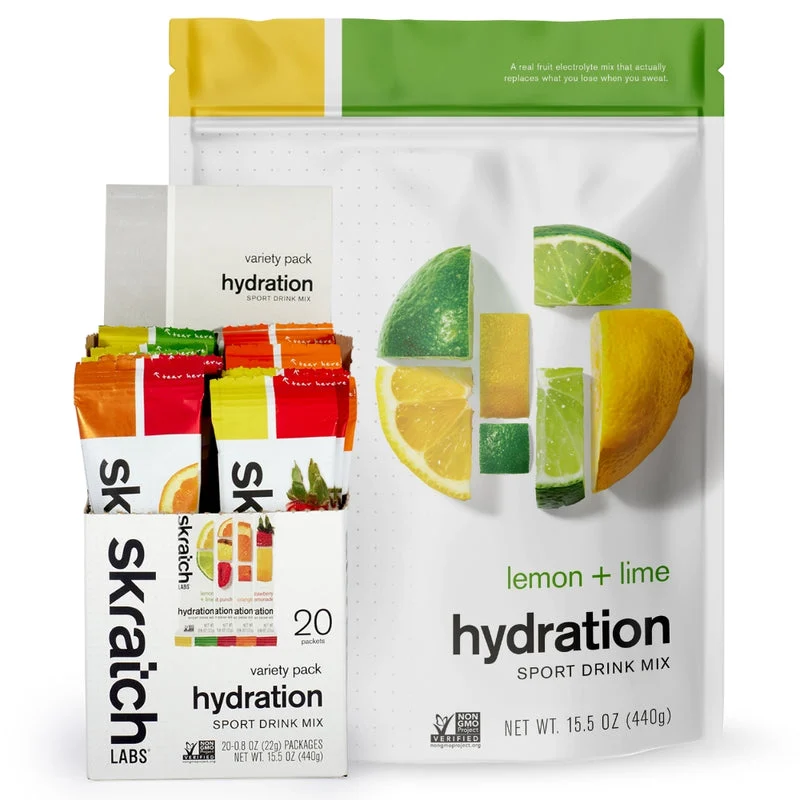
Skratch Labs Hydration Sport Drink Mix
400 mg sodium, 18 to 19 g sugar per 22 g scoop
Best for long runs, endurance rides and double-session days that need some fuel.Check price on Amazon
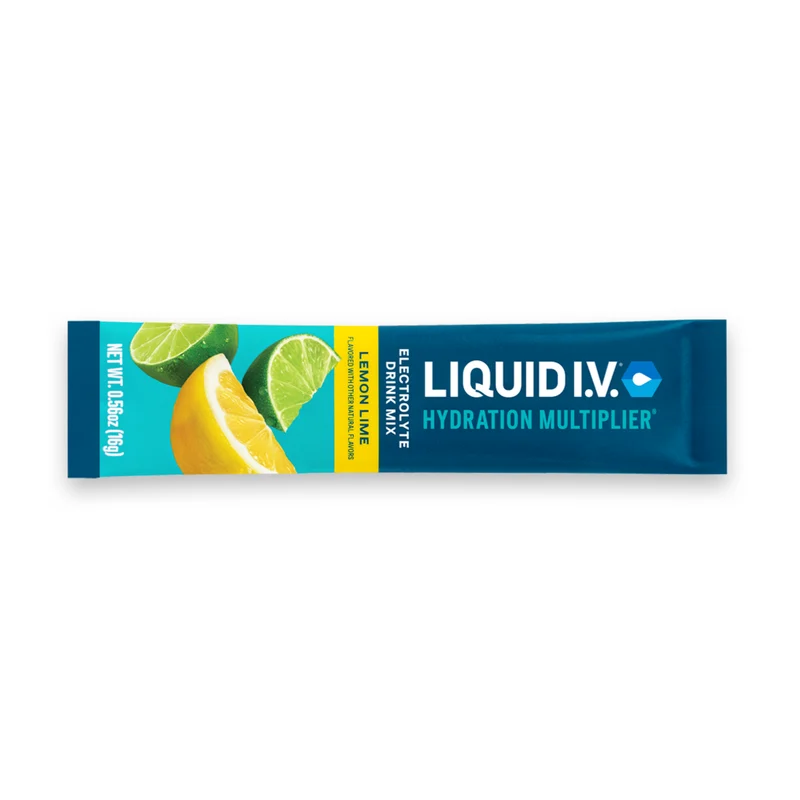
Liquid I.V. Hydration Multiplier
510 to 560 mg sodium; 11 g sugar, or 0 g sugar-free
Best for single-serve sticks you can toss in a full workout bag.Check price on Amazon
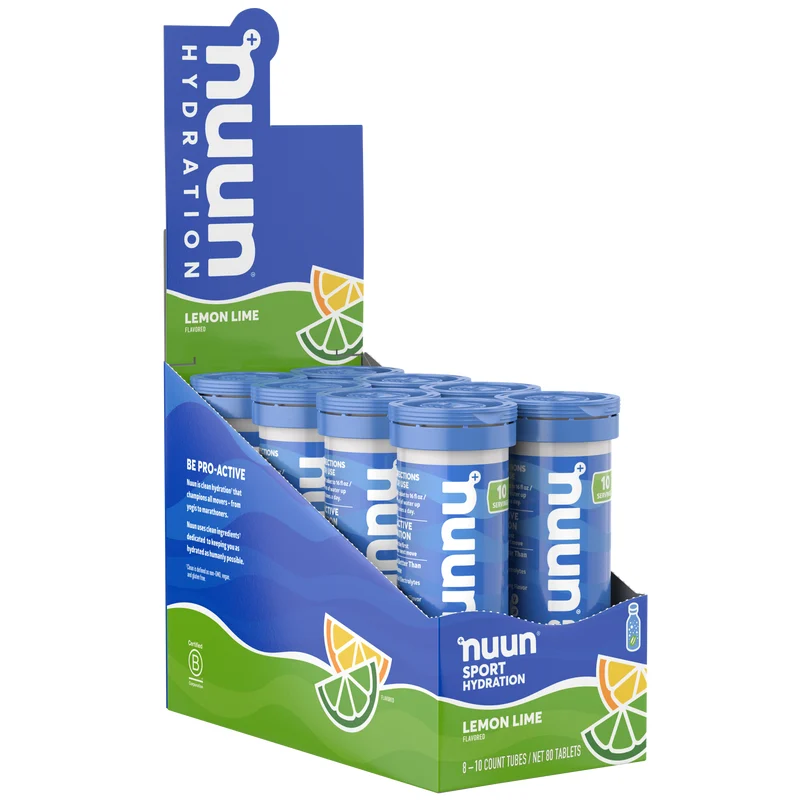
Nuun Sport Tablets
300 mg sodium, 1 g sugar per tablet
Best for most workouts when you want light sodium and almost no sugar.Check price on Amazon
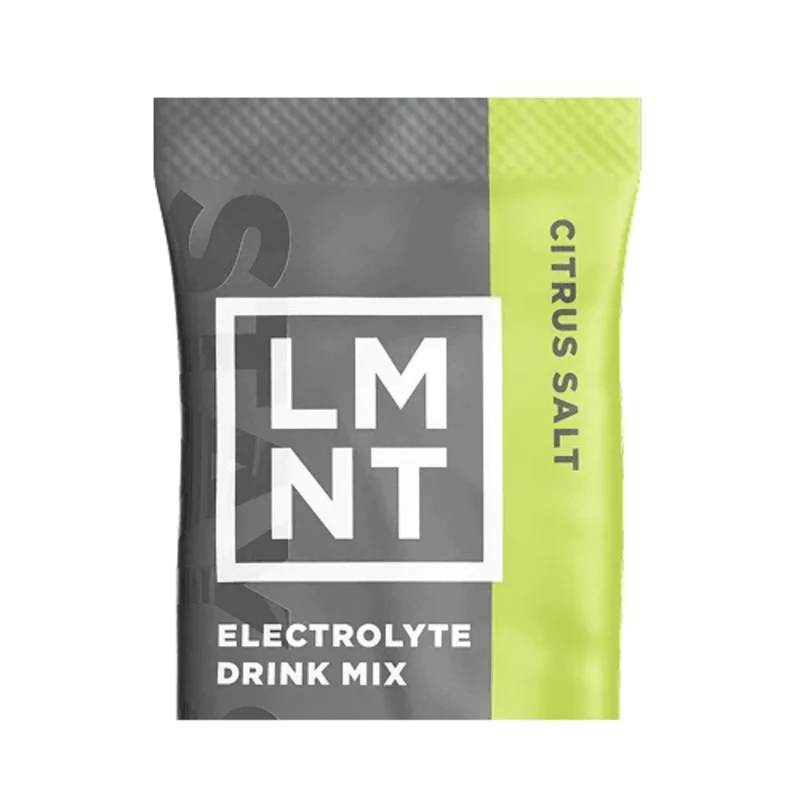
LMNT Electrolyte Drink Mix
1,000 mg sodium, 0 g sugar per stick
Best for heavy sweaters training long or in heat who want sodium without sugar.Check price on Amazon
As an Amazon Associate we earn from qualifying purchases.
Sodium per Liter: How Salty Each Electrolyte Drink Is Once Mixed
Sodium per serving only tells half the story, because the labels mix into very different amounts of water: DripDrop goes into 8 ounces, Gatorade into 16.9 to 20 ounces. ACSM’s sodium target is written per liter of fluid, 500 to 700 mg, so we converted every mix to milligrams per liter at the water volume on its label. No other comparison we found does this, and it reorders the list.
| Product | Label mix | Sodium per liter as mixed | Against ACSM’s 500 to 700 mg per liter |
|---|---|---|---|
| LMNT | 1 stick in 16 oz | About 2,100 mg | Three times the top of the range |
| DripDrop | 1 stick in 8 oz | About 1,400 mg | Double the range |
| Liquid I.V. | 1 stick in 16 oz | About 1,100 to 1,200 mg | Well above the range |
| Tailwind Endurance Fuel | 1 scoop in 8 to 12 oz | About 850 to 1,300 mg | Above the range |
| Skratch Labs | 1 scoop in 12 to 16 oz | About 850 to 1,100 mg | Just above the range |
| Nuun Sport | 1 tablet in 16 oz | About 630 mg | Inside the range |
| Gatorade Thirst Quencher | 1 packet in 16.9 oz | About 460 mg | Just under the range |
| Ultima Replenisher | 1 stick in 16 oz | About 120 mg | Far below the range |
Our calculation from each label’s sodium and recommended water volume. Mixing into more water lowers the concentration, which is one reason brands suggest a range.
The pattern is clear. The newer “hydration multiplier” style mixes (LMNT, DripDrop, Liquid I.V.) run two to three times saltier than the ACSM range, which is the point for heavy sweaters and hot conditions but more than a 45-minute class needs. The classic sports drink formulas (Nuun, Skratch, Gatorade) sit in or near the range. Ultima is closer to flavored water with minerals.
1. Nuun Sport Tablets: Best Overall for Most Workouts
One tablet lists 15 calories, 300 mg of sodium, 150 mg of potassium, 4 g of carbohydrate and 1 g of sugar. The effervescent tablet fizzes into a 16-ounce bottle, and at that volume 300 mg works out to about 630 mg of sodium per liter, inside ACSM’s range. It is the only mix here that lands in the range without pushing sugar, which is why it is our pick for the typical hour-long gym session, studio class or weekday run.
With 1 g of sugar it brings sodium and flavor but almost no carbohydrate, so a long, hard effort needs food alongside. A tube of 10 tablets takes up less space than a single stick-pack box. A few retailer listings show 360 mg of sodium for certain flavors, so confirm yours.
2. Skratch Labs Hydration Sport Drink Mix: Best for Long, Sweaty Sessions
One 22 g scoop lists 80 calories, 400 mg of sodium and 18 to 19 g of sugar, depending on flavor, plus 50 mg of potassium and 19 to 20 g of total carbohydrate.
That sugar is the carbohydrate ACSM has in mind for intense exercise lasting longer than 1 hour, where it recommends 30 to 60 g per hour. One scoop supplies about 19 g of it, and the rest comes from food or gels. For a class under an hour, you don’t need that carbohydrate for performance, so plain water usually does the job. It suits long runs, endurance rides and double-session days. Racing soon? Add it to your marathon-day packing list.
Like the flavor but not the sugar? Skratch also makes an Unsweetened Hydration Sport Drink Mix that lists the same 400 mg of sodium with 0 g of sugar and about 10 calories, so it behaves more like LMNT or Nuun than like the original.
3. Tailwind Endurance Fuel: Best All-in-One Fuel for Endurance
One 27 g scoop lists 100 calories, 303 mg of sodium, 88 mg of potassium and 25 g of sugar from dextrose and sucrose, with small amounts of calcium and magnesium. Tailwind is less an electrolyte drink than a liquid fuel with electrolytes built in: the label suggests two to three scoops per 24 ounces per hour on long efforts, which delivers 50 to 75 g of carbohydrate, above the top of ACSM’s 30 to 60 g per hour range, so one to two scoops per hour is the better starting point for most of us.
Choose it when you want to skip gels and chews on a marathon, century ride or trail day and drink your calories instead. For anything under 90 minutes it is more sugar than the session can use, and Nuun or Skratch is the better fit.
4. LMNT Electrolyte Drink Mix: Highest Sodium, No Sugar
One Citrus Salt stick lists 1,000 mg of sodium, 200 mg of potassium and 60 mg of magnesium, with about 10 calories and no sugar. It’s sweetened with stevia leaf extract.
It’s a concentrated mix. Stirred into a 16-ounce bottle, one stick gives about 2,100 mg of sodium per liter, three times the top of ACSM’s range, and mixing it into more water lowers that. If a doctor has given you a sodium limit, compare it with this figure before you buy. It suits readers who train long or in heat, finish with salt marks on their clothes, and want sodium without sugar.
5. Liquid I.V. Hydration Multiplier: Best Single-Serve Sticks
Liquid I.V. sells the Hydration Multiplier in stick packs, in original and sugar-free versions. An original Lemon Lime stick lists 50 calories, 560 mg of sodium and 11 g of sugar, while the sugar-free Lemon Lime stick lists 530 mg of sodium and 0 g of sugar. Other flavors fall between about 510 and 560 mg of sodium, so match the number to the flavor on your box.
The sugar-free version carries about 5 g of total carbohydrate, which makes it a sodium-forward pick with little fuel. Choose original for a longer session and sugar-free for an easier one. A stick weighs almost nothing, which helps if your workout bag is already full.
6. DripDrop: Best for Rehydrating Fast
One stick lists 35 calories, 330 mg of sodium, 180 mg of potassium, 40 mg of magnesium and 7 g of sugar, and the label mixes it into just 8 ounces of water. That small volume is deliberate: DripDrop is built on the oral rehydration solution model, which pairs sodium with a little glucose at a set ratio so the gut absorbs fluid faster. Per liter it works out to about 1,400 mg of sodium, double the ACSM range.
It makes the most sense after a session that left you clearly depleted, a hot outdoor workout or a day of travel, rather than as a sipping drink during a class. The 8-ounce serving is easy to get down quickly, and the sugar is low enough that it will not count as fuel.
7. Ultima Replenisher: Best Low Sodium, Zero Sugar
One stick pack lists 0 calories, 55 mg of sodium, 250 mg of potassium, 100 mg of magnesium and 0 g of sugar, sweetened with stevia. Mixed into 16 ounces, that is about 120 mg of sodium per liter, far below ACSM’s range, so it will not replace what a heavy sweater loses in a long session.
That is the trade-off and the appeal. If you have been told to limit sodium, want something with flavor for a short or easy workout, or just want to drink more water during the day, Ultima gives you potassium and magnesium with almost none of the salt the other mixes lead with.
8. Gatorade Thirst Quencher Powder: Best Budget Pick
One single-serve packet lists 130 calories, 230 mg of sodium, 70 mg of potassium and 32 g of sugar, mixed into 16.9 to 20 ounces of water depending on the flavor. That is the original sports drink formula: about 460 mg of sodium per liter, just under ACSM’s range, with 6 to 7 percent carbohydrate, inside the 4 to 8 percent ACSM recommends for absorption. The Zero Sugar packets keep the same 230 mg of sodium with 0 g of sugar and 5 calories.
Per serving it is the cheapest option here by a wide margin, and the canister works out cheaper still. The sugar is high for anything under an hour, so pick Zero Sugar for short sessions and the original for long practices, tournaments and hot-weather games.
How Much Sodium and Sugar Should You Look For in Electrolyte Drinks?
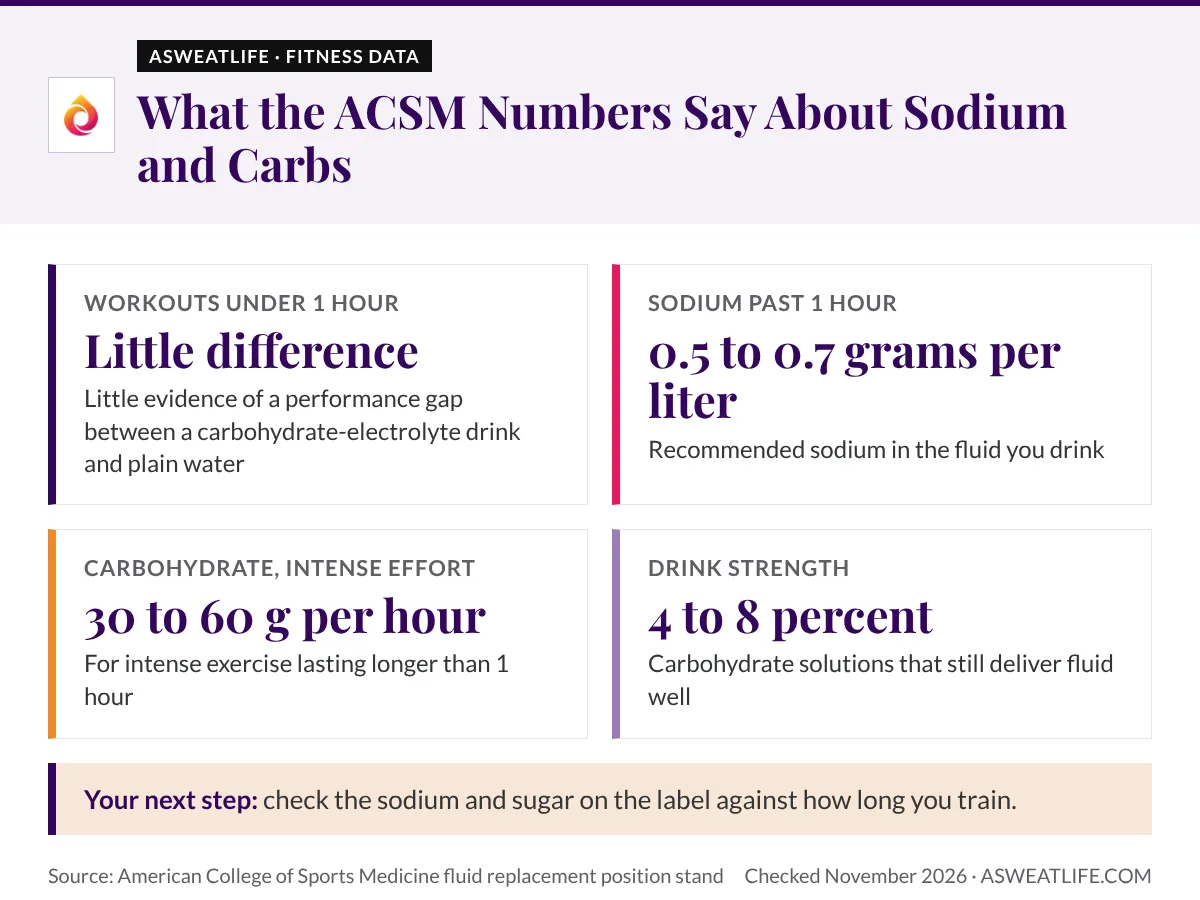
ACSM recommends sodium at 0.5 to 0.7 grams per liter of fluid for exercise lasting longer than 1 hour. That converts to 500 to 700 mg per liter, or roughly 250 to 350 mg in a 17-ounce (500 ml) bottle.
For sugar, ACSM recommends carbohydrate at 30 to 60 g per hour during intense exercise lasting longer than 1 hour. Drinking 600 to 1,200 ml per hour of solutions with 4 to 8 percent carbohydrate (4 to 8 g per 100 ml) delivers that without slowing fluid absorption.
Those figures come from ACSM’s 1996 position stand. Its 2007 update, which replaced it, describes sports drinks with about 20 to 30 mEq of sodium per liter (roughly 460 to 690 mg) and 5 to 10 percent carbohydrate, so the targets have barely moved.
These are general ranges, and sweat rate, heat and intensity all move your own numbers. A registered dietitian can tailor them. As a starting point, a low-sugar label such as Nuun Sport’s 1 g or LMNT’s 0 g fits easier sessions, and a mix with carbohydrate, such as Skratch Labs or Tailwind, covers the sugar side of a hard effort past an hour.
How We Chose These Electrolyte Drinks and Powders
We picked eight mixes you can buy at a grocery store, running shop or online, covering the four styles on shelves right now: effervescent tablets, high-sodium sugar-free sticks, carbohydrate sports drink powders and oral rehydration sticks. For each we pulled the nutrition panel from a retailer listing in November 2026 rather than from brand marketing, recorded sodium, sugar, calories and potassium per serving, and converted sodium to milligrams per liter at the label’s water volume so the mixes could be compared against ACSM’s published range. Picks are based on those label figures and the workout each formula suits, not on taste tests. Prices change often, so we left them out and linked to current listings instead.
Do You Need an Electrolyte Drink for a Short Workout?
Usually not. Beyond the ACSM finding for exercise under 1 hour, Mayo Clinic Care Network guidance treats water as the usual choice and points to a sports drink once a workout runs past 60 minutes. Hot rooms, heavy sweating and back-to-back sessions are the exceptions: board-certified sports dietitian Amy Goodson, writing in the NFHS guide to whether sports drinks are worth it, points to sports drinks for training past 60 minutes in the heat and flags “salty sweaters,” who finish with white salt marks on their clothes, as likely to need more sodium.
Your next step: note the length and heat of your next three workouts. If most run under an hour in a cool room, water and your next meal cover you. Keep a tube of tablets or a few sticks on hand for the long or hot days. For the hours outside the gym, our guide to when you need electrolytes through the day fills in the rest.
New to the category? Our explainer on what an electrolyte beverage is and whether to try one starts from the basics, and our earlier roundup of electrolyte supplements covers more options.
Electrolyte Drink FAQs
What Is the Best Electrolyte Drink for Most People?
For the typical hour-long workout, Nuun Sport: 300 mg of sodium and 1 g of sugar per tablet puts it inside ACSM’s sodium range once mixed, without the sugar of a sports drink or the very high sodium of LMNT and DripDrop. Go up to Skratch Labs or Tailwind when the session runs past an hour, and to LMNT when heat and heavy sweating are the problem.
Is a Sugar-Free Electrolyte Mix Enough for a Long Workout?
Sugar-free mixes supply sodium and little carbohydrate: the sugar-free Liquid I.V. lists about 5 g, Ultima and LMNT list none. ACSM’s 30 to 60 g per hour for intense exercise past 1 hour would then come from food or gels.
Which Electrolyte Drink Has the Most Sodium?
LMNT lists the most at 1,000 mg per stick, followed by Liquid I.V. at 510 to 560 mg, Skratch Labs at 400 mg, DripDrop at 330 mg, Tailwind at 303 mg, Nuun Sport at 300 mg, Gatorade at 230 mg and Ultima Replenisher at 55 mg. Per liter as mixed the order changes, because DripDrop goes into only 8 ounces of water.
LMNT vs Liquid I.V.: Which Is Better for Workouts?
It depends on the session. LMNT gives 1,000 mg of sodium and no sugar per stick, so it suits heavy sweaters on long or hot days who get their carbohydrate from food. Original Liquid I.V. gives 510 to 560 mg of sodium plus 11 g of sugar for a little fuel, and its sugar-free version keeps the sodium at about 530 mg. Mixed into 16 ounces, LMNT lands near 2,100 mg of sodium per liter and Liquid I.V. near 1,100 to 1,200 mg, so both sit well above ACSM’s range and LMNT is roughly double.
Nuun vs Liquid I.V.: Which Has More Sodium?
Liquid I.V., by a wide margin: 510 to 560 mg per stick against 300 mg per Nuun Sport tablet, and both mix into 16 ounces, so the gap holds per liter too (about 1,100 to 1,200 mg versus 630 mg). Nuun sits inside ACSM’s 500 to 700 mg per liter range and Liquid I.V. is nearly double it. Nuun also has less sugar (1 g versus 11 g in the original), so it is the lighter choice for a typical hour-long session and Liquid I.V. the stronger one for heat or a long day.
LMNT vs Nuun: How Big Is the Sodium Gap?
LMNT has more than three times the sodium: 1,000 mg per stick against 300 mg per tablet, with 200 mg of potassium versus 150 mg. Neither has meaningful sugar. Per liter, LMNT is about 2,100 mg and Nuun about 630 mg, so Nuun matches ACSM’s range for exercise past an hour while LMNT is built for salty sweaters, hot conditions and long days, and is more than most gym sessions need.
Are Electrolyte Powders Better Than Gatorade?
Not automatically. A Gatorade packet sits just under ACSM’s sodium range and inside its carbohydrate range, which is what the formula was designed for. The newer powders mostly trade in one direction: more sodium and less sugar. That is an upgrade for heavy sweaters doing short or moderate sessions, and a downgrade for a long practice where the sugar was doing useful work.
Can Food Replace an Electrolyte Drink After a Workout?
Often, yes. Foods such as milk or bananas can help replace electrolytes after a workout, so a regular meal covers many sessions. Our guide to what to eat in the two hours after a hard workout has ideas for that plate.
This article is for educational purposes and does not replace advice from a doctor, registered dietitian or qualified trainer.