Vintage or Modern Lab-Grown Engagement Rings: How to Choose a Style That Fits Your Life
A guide to choosing between vintage and modern lab-grown engagement rings, from diamond shapes, settings and metals to everyday wear for active people.

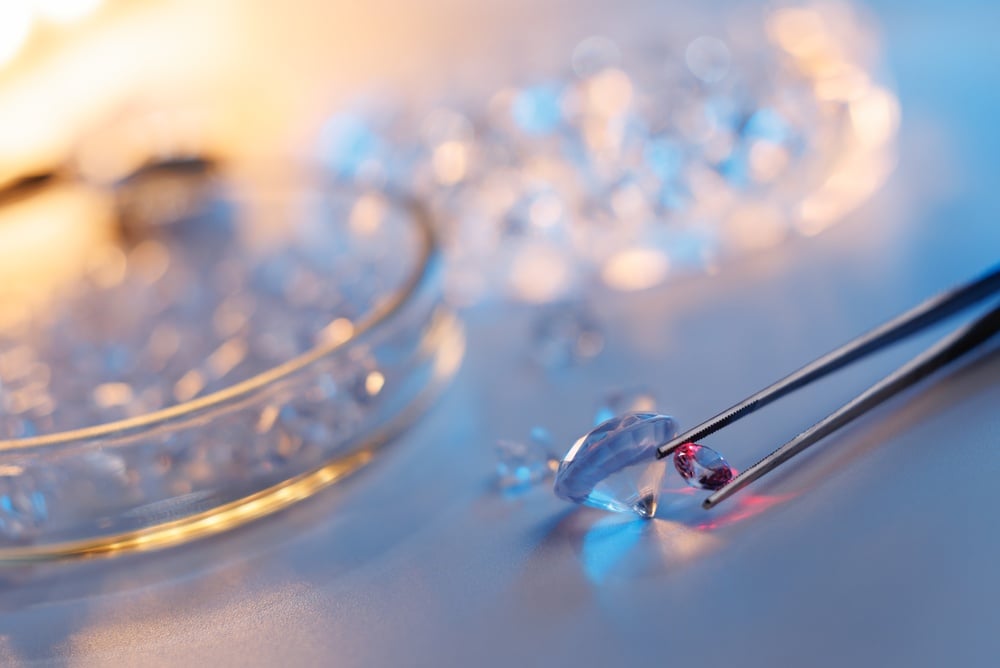
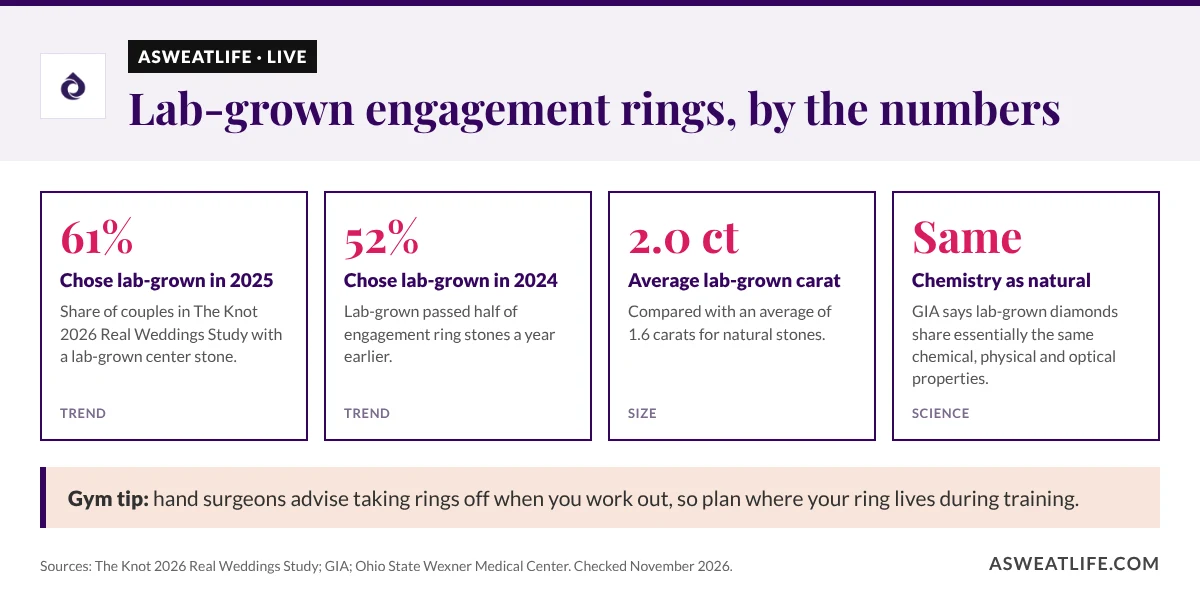
If you’re shopping for an engagement ring, one of the first style questions is vintage detail versus clean, modern lines. Lab-grown diamonds are now the most common choice: The Knot reports that 61% of couples picked a lab-grown center stone in 2025.
Below, we cover how to find your style, which diamond shapes, settings and metals lean vintage or modern, what lab-grown diamonds offer, and how to choose a ring that works with an active routine.
Vintage or Modern: Which Engagement Ring Style Suits You?
Start with what you already wear. Look at your favorite jewelry, clothes and even your home, and notice if you’re drawn to ornate, storied pieces or clean, simple ones.
Vintage-inspired rings tend to have more detail: milgrain edges (tiny beaded borders), engraved bands, floral shapes and small stones around the center diamond. Modern rings usually have smoother bands, simpler settings and less decoration.
| Vintage-inspired | Modern | |
|---|---|---|
| Overall look | Detailed, romantic, antique feel | Clean lines, minimal decoration |
| Common shapes | Cushion, old mine, oval, pear | Round, emerald, oval |
| Typical settings | Halo, side stones, engraved bands | Solitaire, bezel |
| Metals often paired | Yellow or rose gold | White gold or platinum |
| Everyday upkeep | More crevices to clean | Fewer places for dirt to collect |

Treat these as starting points. Save photos of rings you like and look for patterns. Many people find their taste sits somewhere in between.
Which Diamond Shapes Lean Vintage or Modern?
The shape of the center stone changes the whole ring. Some cuts have a strong link to older jewelry, while others feel fresh and current.
- Oval and pear: soft and elegant, and they work in either style. Longer shapes can make fingers look longer.
- Cushion: rounded corners give a warm, classic feel.
- Old mine: an antique-style cut with a distinctly vintage look.
- Emerald: long, clean lines that suit both vintage and modern settings.
- Round: balanced and familiar, and easy to pair with any setting.
Try a few shapes on your own hand. A stone that looks great in a photo can feel different once it’s on your finger.
Which Settings Match Each Style?
The setting holds the diamond in place, and it shapes the ring’s character as much as the stone does. The same diamond can look completely different depending on how it’s set.
Vintage-style settings often include halos, side stones, twisted bands or detailed metalwork. Modern settings put the focus on the center stone. A classic solitaire uses a plain band and one main diamond, while a bezel setting wraps metal around the edge of the stone for a clean finish.
If you’re unsure, browse a range of lab grown engagement rings and compare how different settings change the feel of similar stones. Seeing designs side by side makes it easier to spot the details you keep coming back to.
Try the finder below to narrow down your direction.
Answer four quick questions about your taste and your training. The finder suggests a style direction, settings that suit how you use your hands, and a few things to check when you try rings on.
The jewelry you already love is
Your main training is
Metal tone you reach for
Stone shape that catches your eye
Settings to try on
For everyday and training wear
How Does Metal Color Change the Look?
Yellow gold gives a warm, classic look that suits antique-inspired designs. Rose gold has a soft pink tone that feels romantic without being loud. White gold and platinum are popular for modern styles, since their bright finish lets a clear diamond stand out.
None of these are fixed. Yellow gold can look modern on a smooth, plain band, and white gold can carry vintage details beautifully. Match the metal to the jewelry you already wear every day.
What Do Lab-Grown Diamonds Offer?
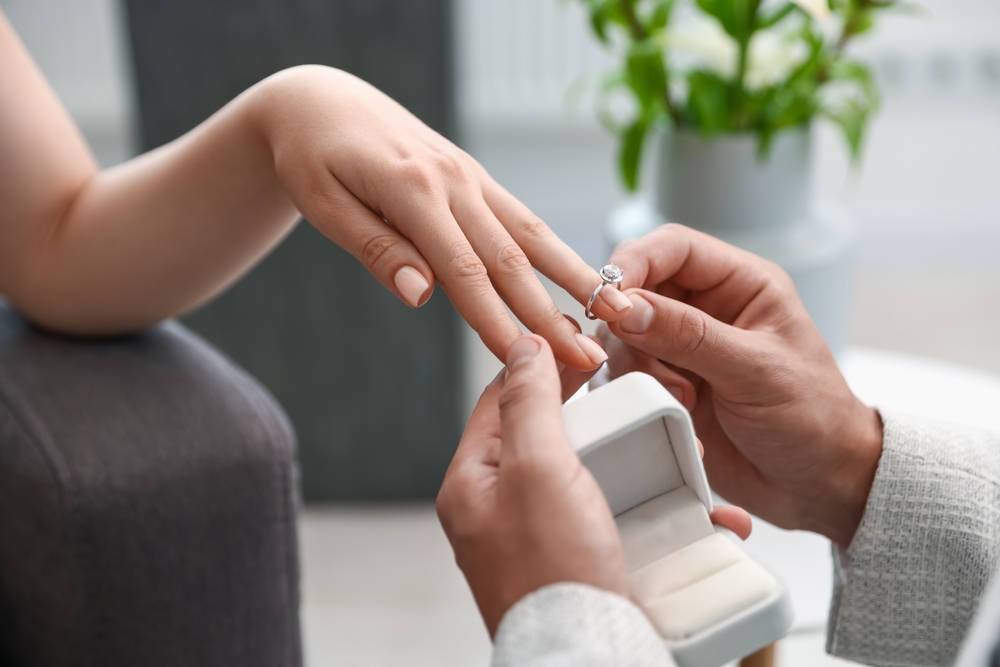
Lab-grown diamonds are real diamonds made in a lab instead of forming underground. The Gemological Institute of America says they have essentially the same chemical, physical and optical properties as natural diamonds, and they can only be told apart with specialist equipment.
They’re also increasingly mainstream. The Knot’s 2026 Real Weddings Study shows lab-grown center stones rising from 52% of engagement rings in 2024 to 61% in 2025, with an average lab-grown carat weight of 2.0, compared with 1.6 for natural stones.
Lab-grown diamonds often cost less than natural stones with similar features, which can leave room in the budget for a larger stone or a more detailed setting. Whatever you choose, compare the cut, color, clarity and carat weight, ask for a grading report, and make sure the seller clearly identifies the stone as lab-grown.
How Do You Choose a Ring for an Active Lifestyle?
A ring can look perfect in a photo, but you’ll wear it through workouts, commutes and everyday tasks. If you train regularly, comfort and practicality matter as much as style.
| Setting | Snag risk | Cleaning | Good for |
|---|---|---|---|
| High-set solitaire | Higher | Easy | Maximum sparkle, less hands-on days |
| Low-set or bezel | Lower | Easy | Busy hands and daily wear |
| Halo or pave | Moderate | More crevices | Vintage detail lovers |
| Engraved band | Low | Grooves hold dirt | Adding vintage character |
Before buying, ask yourself a few simple questions:
- Does the ring feel comfortable between your fingers?
- Could the setting catch on clothes, hair or gym equipment?
- Is the band too thin or too wide for your taste?
- Would you be able to clean it when dirty?
- Will you be happy wearing it through your usual daily activities?
There’s also a safety point for anyone who lifts, climbs or plays sports. A hand surgeon at Ohio State Wexner Medical Center advises people to remove rings at the gym and in other situations where a finger may be at risk, because a ring that catches can cause serious injury. Plan where your engagement ring will live during training, or consider a silicone band, which a certified hand therapist at HSS discusses in its guide to silicone rings for workouts. Our look at a silicone wedding ring for the gym covers the same idea.
Can You Mix Vintage and Modern Details?
Yes, and some of the most personal rings do exactly that. You could set a classic oval diamond on a clean modern band, or put a simple round diamond in a setting with fine vintage detailing. A yellow gold band with a sleek bezel setting is another balanced option.
Mixing styles works well if you love vintage jewelry but want something that feels fresh and easy to wear. If you have a clear idea and can’t find it ready-made, ask about custom design options.
Lab-Grown Engagement Ring FAQ
Are lab-grown diamonds real diamonds?
Yes. GIA says they have essentially the same chemical, physical and optical properties as natural diamonds.
Which engagement ring styles look vintage?
Halos, side stones, milgrain edges, engraved bands and antique-style cuts such as cushion and old mine all lean vintage.
What’s the most practical setting for an active lifestyle?
Low-set and bezel settings are less likely to snag than tall prongs, and simpler designs are easier to clean.
Should you wear your engagement ring at the gym?
Hand surgeons advise taking rings off when your fingers may be at risk, including at the gym. Store it somewhere safe or wear a silicone band instead.
Take your time, try different shapes, settings and metals, and choose the ring you’ll love wearing every day. If you’re in the thick of planning, our athlete’s guide to wedding planning and tips on self-care during wedding planning can help keep the rest of the process balanced.