Strength Training at Home for Women: A Beginner Routine
A simple six-move strength routine for women training at home, with starting weights, equipment in stages and a five-point safety check for lifting alone.

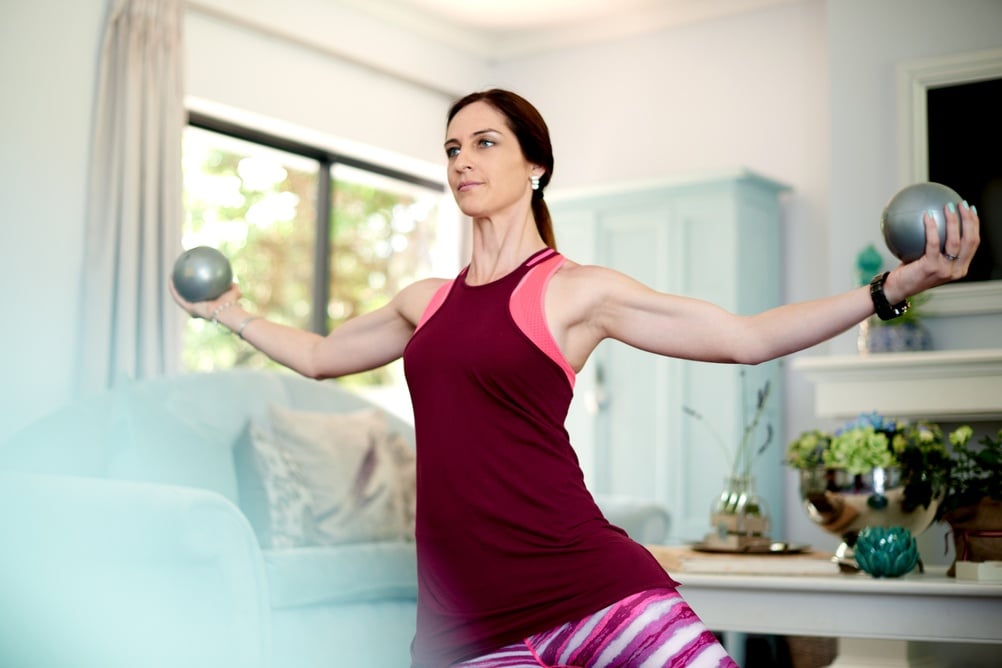
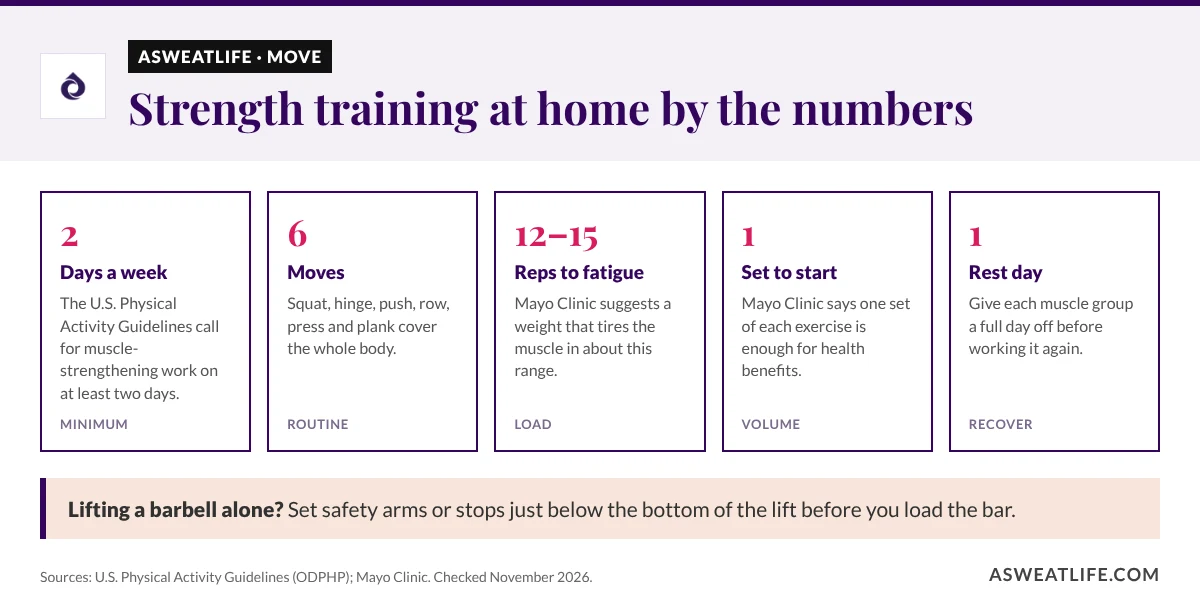
If you’ve cleared a corner of the living room and you’re wondering where strength training at home for women actually starts, the answer is simpler than most lifting videos suggest. The U.S. Physical Activity Guidelines ask adults to do muscle-strengthening activity on at least two days a week, and you can cover that with a pair of weights and a mat.
Below you’ll find a six-move beginner routine, how to pick your starting weight, the equipment worth buying in stages, a five-point safety check for lifting without a spotter and how to know when to progress.
Why Does Strength Training at Home Work for Beginners?
The biggest barrier for most beginners is getting started at all, and training at home removes a lot of friction. There’s no commute, no waiting for equipment and nobody watching while you learn a new move. Two sessions a week meets the federal minimum, and the guidelines give lifting weights and push-ups as examples of the kind of work that counts.
If you’ve ever been told to stick to light weights, the research says otherwise. A 2025 review of resistance training in women found that it improves strength, body composition and bone health, along with mental health, self-esteem and body image. The NSCA reached a similar conclusion in its new position statements, which we covered in our piece on the NSCA guidelines on women and strength training. Women build strength in response to training in much the same way men do, so it’s normal to keep adding weight as you get stronger.
You also don’t need much room. A living room, a spare bedroom or a corner of the garage works, as long as you can move freely in every direction.
What Does a Beginner Strength Training Routine at Home Look Like?
This article is for general information and isn’t medical advice. If you’re pregnant, recovering from an injury or managing a health condition, check with your doctor or a qualified trainer before you start.
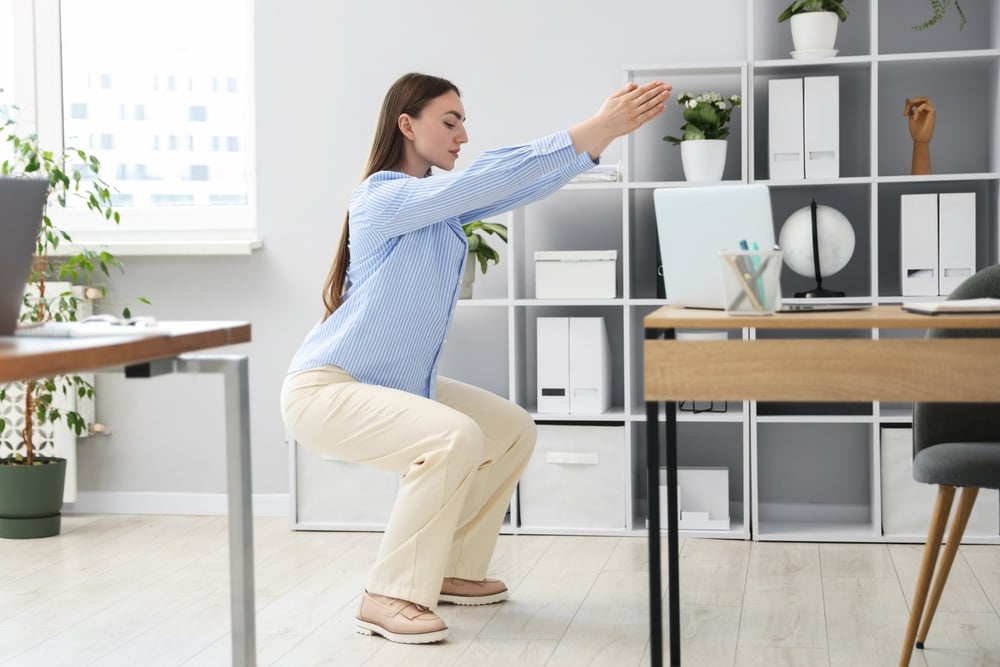
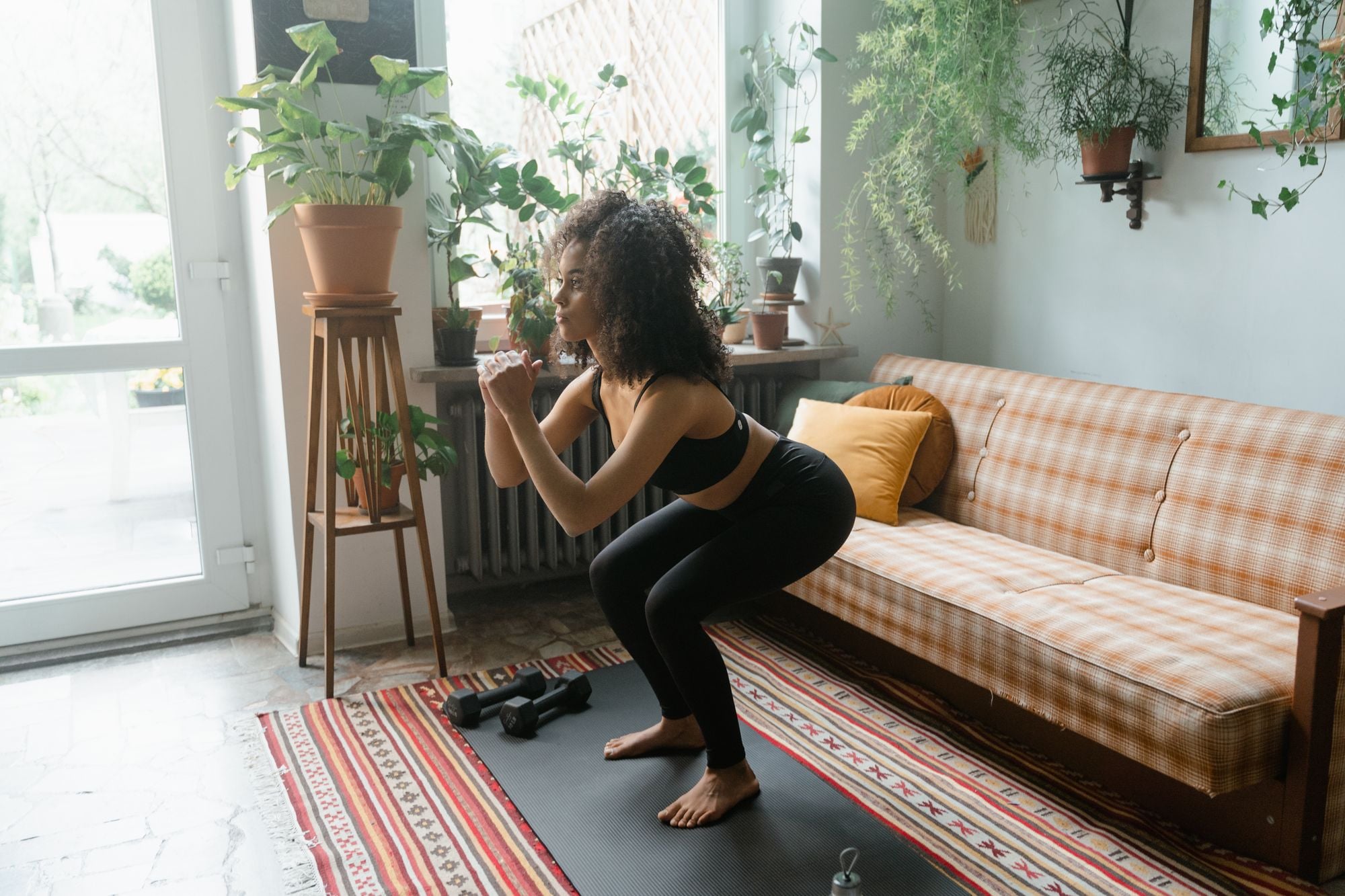
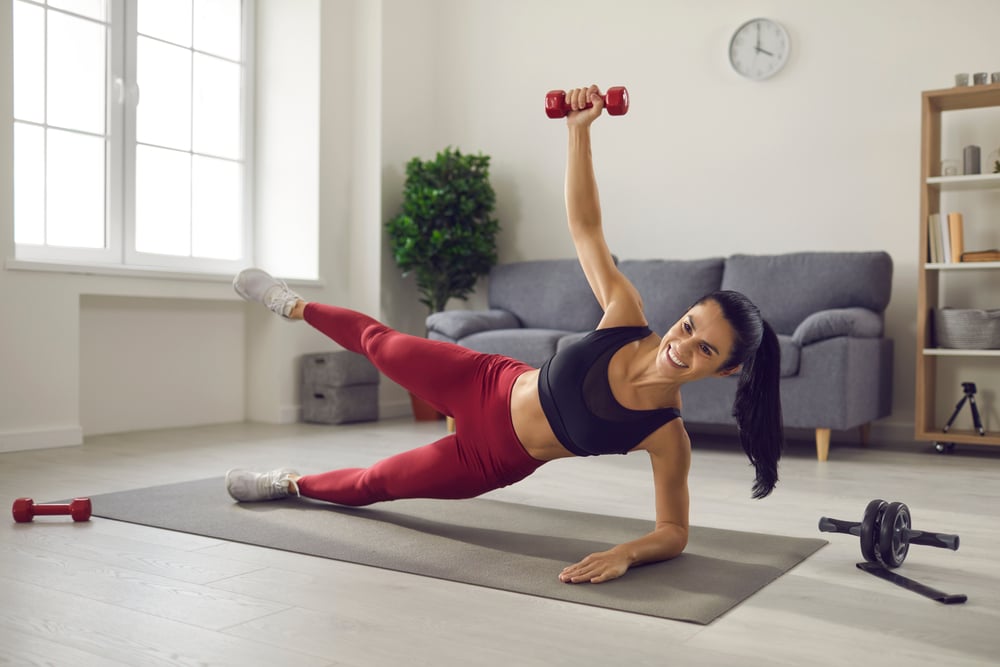
Do this full-body routine two or three times a week on non-consecutive days. Warm up first with a few minutes of brisk walking, arm circles and bodyweight squats.
| Move | Sets and reps | What it trains |
|---|---|---|
| Goblet squat | 1 to 3 sets of 10 to 15 | Legs and glutes |
| Romanian deadlift | 1 to 3 sets of 10 to 15 | Hamstrings, glutes and back |
| Incline or floor push-up | 1 to 3 sets of 6 to 12 | Chest, shoulders and arms |
| One-arm dumbbell row | 1 to 3 sets of 10 to 15 per side | Upper back and arms |
| Standing overhead press | 1 to 3 sets of 10 to 12 | Shoulders and arms |
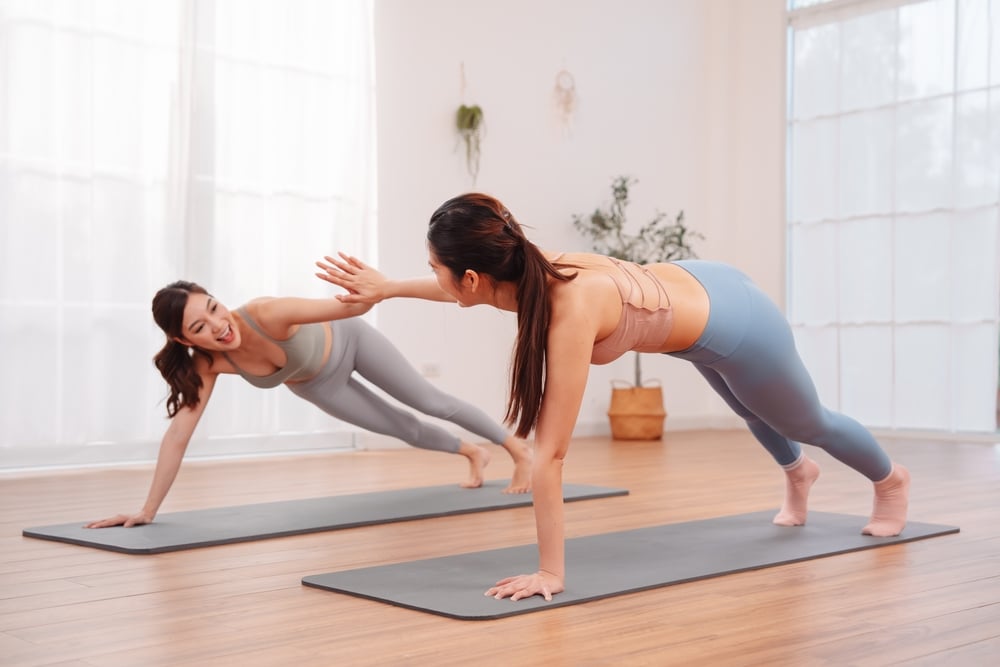
| Plank | 1 to 3 holds of 20 to 30 seconds | Core |

How Heavy Should You Start?
Mayo Clinic suggests choosing a weight or resistance that tires your muscles after about 12 to 15 repetitions. If the last few reps feel easy, go up a little next time. If your form breaks down before the end of the set, the weight is too heavy.
You don’t need to do three sets from day one. Mayo Clinic says one set of each exercise is enough for health and fitness benefits, so start there and add a second set once the routine feels steady.
How Much Rest Do You Need?
Give each muscle group a full day of rest before you train it again, which is why the routine works best on days like Monday, Wednesday and Friday. Within a session, rest long enough between sets that you can do the next one with good form. Mayo Clinic also reminds lifters to breathe during strength training, so keep the air moving instead of holding your breath through each rep.
If you’d rather follow a set schedule for your first month, our simple four-week beginner workout plan lays out each week for you.
Plan Your First Weeks
Use the planner below to pick your training days, a starting volume and the safety checks that fit your equipment.
Tell the planner how often you can train, what equipment you have and how long you have been lifting. It suggests training days with a rest day in between, a starting volume for the six-move routine and the safety checks that matter for your setup.
Days you can train each week
Equipment you have
How long you have been strength training
Will anyone else be home while you lift?
Swaps for your equipment
Safety checks for your setup
What Equipment Do You Need for Strength Training at Home?
Start small and add pieces as you outgrow what you have. A few well-chosen items will carry you a long way.
| Stage | Equipment | Good for |
|---|---|---|
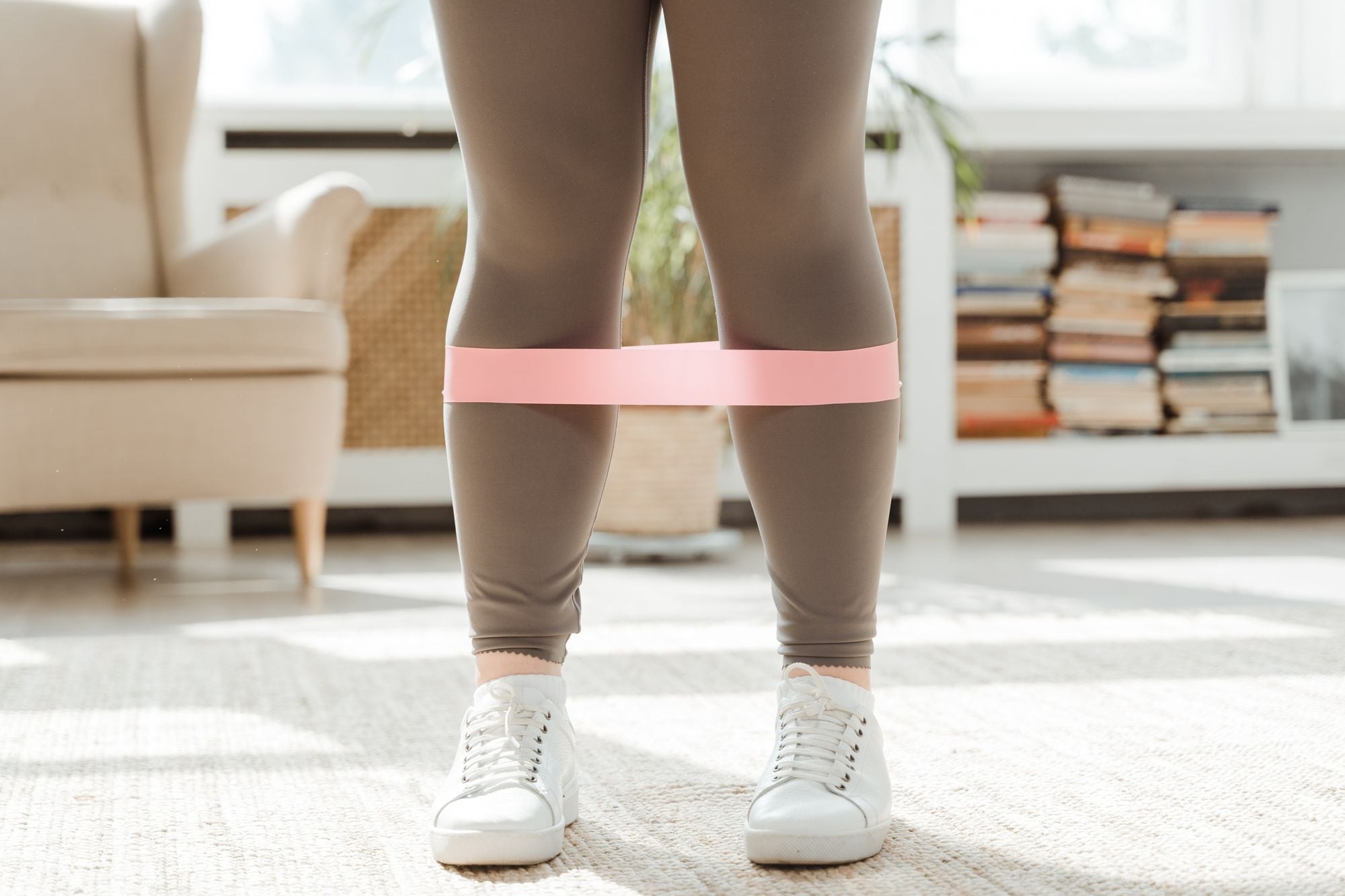
| Starter | A pair or two of dumbbells, resistance bands and an exercise mat | The full routine above |
| Next | An adjustable bench | Presses, rows and step-ups with more support |
| Heavier lifting | A power rack or Smith machine, a barbell and plates | Squats and presses that keep getting heavier |
For the first few months, most beginners do fine with a few sets of dumbbells and a mat. Light and medium pairs cover every move in the routine, and you can add heavier pairs as your squats and deadlifts outgrow them.
When dumbbells start to feel light for your lower body, a rack or Smith machine lets you load more weight safely on your own, because adjustable safety catches can stop the bar if you can’t finish a rep. As one example, the Major Fitness B52 all-in-one Smith machine combines a Smith bar with a power rack and comes with a set of safety arms. Its product page lists the frame at 82.6 inches tall, 78.7 inches wide and 66.9 inches deep, so it needs a dedicated corner. Our guide to setting up a home gym walks through planning that kind of space.
How Do You Lift Safely at Home Without a Spotter?
The biggest difference between a home gym and a commercial one is that nobody is there to help if a rep goes wrong. These five checks take about two minutes and cover the main risks.
1. Check Your Space and Ceiling Height
Stand in your training spot and raise your arms overhead. You should have clear space around you and above your hands, with nothing close enough to hit during a press or a squat.
Measure the ceiling before you buy a rack. A frame that stands 82.6 inches tall leaves about 13 inches of clearance under a standard 8-foot (96-inch) ceiling. The frame height also limits how high the bar can travel, so if you’re tall, check that you can lock out an overhead press before you order. Manufacturers usually list these measurements on the product page.
2. Train on a Stable Floor
Use a flat, non-slip surface. A mat or rubber flooring protects the floor and gives your feet a stable base. Avoid thick carpet for heavier squats and deadlifts, because it can shift under you.
3. Set the Safety Catches
If you lift a barbell, do it inside a rack with safety arms or a Smith machine with adjustable stops. Set them just below the lowest point of your squat, or just below the bar’s lowest point for presses, so a failed rep lands on the catches instead of on you. Test the height with an empty bar before you add plates. This is the single most important step when you lift alone.
4. Check the Starting Height and Your Feet
Set the hooks so you can lift the bar off without stepping far forward or rising onto your toes. On a Smith machine the bar runs on a fixed track, so foot placement matters more. Position your feet so your hips and knees move comfortably, and adjust if you feel strain in your knees or lower back.
5. Choose a Load You Can Control
Add weight only when you can do every rep with good form. If a lift starts to feel shaky, drop the weight and build back up. With dumbbells and bands you can simply set the weight down to the side if a rep fails, so most beginners don’t need a rack at all until they’re ready for barbell work.
How Do You Know When to Progress?
When you can finish every set at the top of the rep range and the last few reps no longer feel hard, add a little weight at your next session. Mayo Clinic suggests increasing the load once you can easily do more repetitions.
Log your weights in a notebook or on your phone so you can see your progress over several weeks. Once the basics feel solid, you can swap goblet squats for barbell squats, add lunges or hip thrusts, or follow a second set with a third.
Strength Training at Home for Women: FAQ
How many days a week should a beginner strength train at home?
Two or three non-consecutive days is a good place to start. Two days meets the federal recommendation for muscle-strengthening activity.
Do I need a spotter if I train at home?
Not for bodyweight, dumbbell or band exercises, since you can set the weight down if a rep fails. For barbell lifts, use a rack with safety arms or a Smith machine with safety stops set just below the bottom of the lift.
Is strength training at home different for women over 50?
The basics are the same: start light, focus on form and progress gradually. Talk to your doctor before you start, and see our guide to bone health after 40 for why many active women add strength work as they get older.
How much space do I need?
With dumbbells and a mat, you need roughly the length of a yoga mat plus room to stretch your arms out to both sides. For a rack or Smith machine, measure the floor space and the ceiling height before you buy.
Start With Two Sessions This Week
You don’t need a perfect setup to begin. Pick two days, do the six moves with a weight you can control and write down what you lifted. When you’re ready to add a rack, brands such as Major Fitness list frame heights and footprints on each product page, so you can compare them with your tape measure and plan the next step without guessing. Strength builds one session at a time.