30 Day Plank Challenge for Beginners: A Simple Weekly Schedule
A beginner 30 day plank challenge that starts with 15-second knee planks, builds to 60-second forearm planks, and builds in three rest days a week.

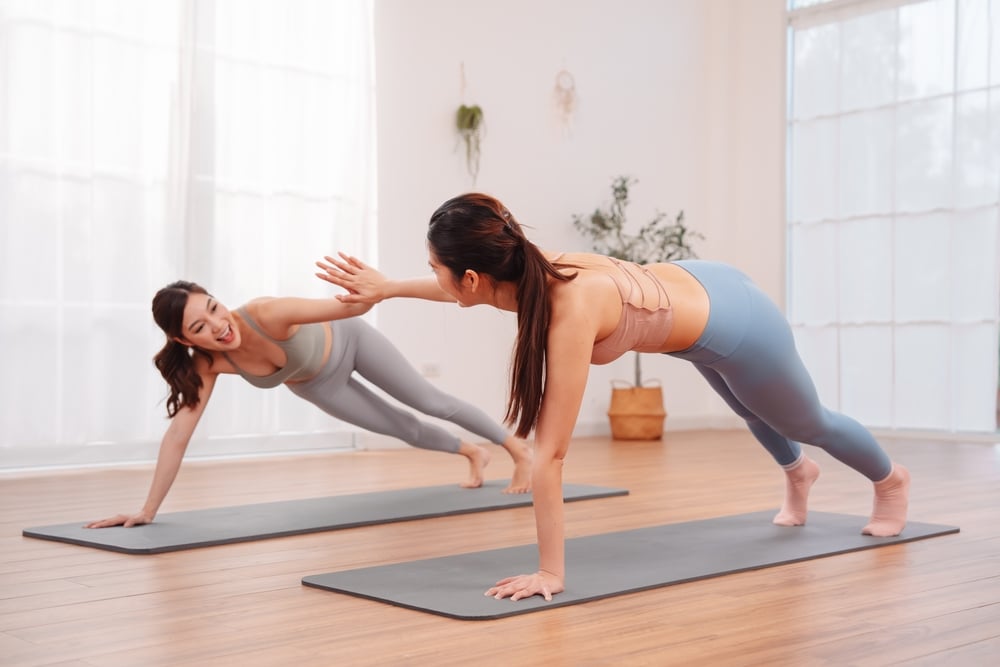
If you want a 30 day plank challenge for beginners that you can finish without wrecking your lower back, the plan below starts with three 15-second knee planks and builds to three 60-second forearm planks by day 27. It follows the pacing Cleveland Clinic exercise physiologist Katie Lawton gives for new plankers: plank two to four times a week and add five to 10 seconds at a time.
That means four plank days and three rest days each week, short sets in place of one marathon hold, and a simple weekly progression: knees in week one, forearms in week two, knee side planks in week three, and full side planks in week four. Below you’ll find the full day-by-day schedule, the form cues that keep each hold honest, when to rest or repeat a day, and what to do once day 30 is behind you.
How This 30 Day Plank Challenge for Beginners Works
Many viral plank challenges ask you to plank every single day and add time until you’re holding one plank for five minutes. This plan is built differently, for three reasons.
Short holds, repeated. For most people, 10 to 30 seconds per plank is plenty, and two minutes is often considered the ceiling, with little extra benefit after that. So every workout here is split into three sets, and no single hold goes past 60 seconds until the day 30 test.
Small jumps. Each step up adds five or 10 seconds per set, the same increment Lawton recommends. If a jump feels too big, you repeat the day (more on that below).
Built-in rest. Four plank days a week sits at the top of the two-to-four range, and every rest day gives your core time to recover before the next bump. It also leaves room for the rest of your week: adults need muscle-strengthening activities on two or more days a week that work all major muscle groups, and the plank only covers part of that list.
The longest workout, on day 27, takes about 10 minutes with 30 to 60 seconds of rest between sets, and the week one days take under four. Set a timer on your phone and you’re done before your coffee gets cold.
Before Day 1: Find Your Starting Point
Try one knee plank for 15 seconds. If you can hold it with a straight line from your head to your knees, start on day 1.
If 15 seconds on your knees feels shaky, start higher up: put your hands on a kitchen counter or a sturdy table and walk your feet back until your body forms a straight slant. Do the week one times in that position for a week, then move to the floor. There’s zero shame in that (everyone’s starting line is different, and the counter version still works your core).
If 30 seconds in a forearm plank on your toes already feels easy, you can skip ahead to week two and treat the first week as a form check.
Talk to your doctor or a physical therapist before you start if you’re pregnant, recovering from an injury, or have a history of back pain. Lawton suggests a physical therapist for anyone with a history of back pain who wants to plank safely.
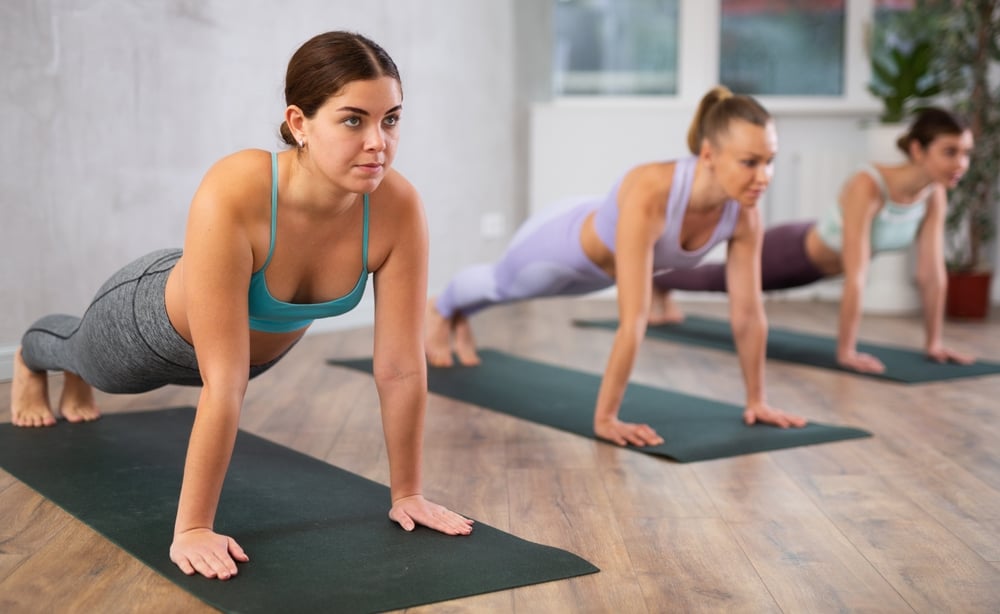
How To Do a Plank With Good Form
The forearm plank is the backbone of this challenge, so it’s worth getting right. Here’s the setup the American Council on Exercise teaches for the front plank:
- Lie on your stomach with your elbows close to your sides, directly under your shoulders, palms down and hands facing forward.
- Straighten your legs, pull your toes toward your shins, and brace your abs to stiffen your torso.
- Lift your whole body off the floor in one piece, keeping your shoulders stacked over your elbows.
- Hold without letting your lower back sag, your hips hike up, or your knees bend. Keep breathing the whole time.
- Lower yourself back to the floor with control before you relax.
Knee plank: same setup, with your knees on the floor and a straight line from your head to your knees. Lawton suggests mastering three one-minute sets of the modified version before moving to the low plank; this plan moves you up sooner, at 30 seconds, so drop back to your knees mid-set whenever your hips start to sag.
Side plank: lie on one side with your elbow under your shoulder and your legs stacked, then lift your hips until your body is straight. For the knee version in week three, bend both knees to 90 degrees and lift from your bottom knee and forearm.
The most common mistakes: sagging hips, a butt pointed at the ceiling, shrugged shoulders, and holding your breath. If you feel pain in your lower back, stop the exercise and check in with your doctor. A wobbly 20-second plank with clean form does more for you than 45 seconds of hanging off your shoulders.
Your Day-by-Day 30 Day Plank Challenge Schedule
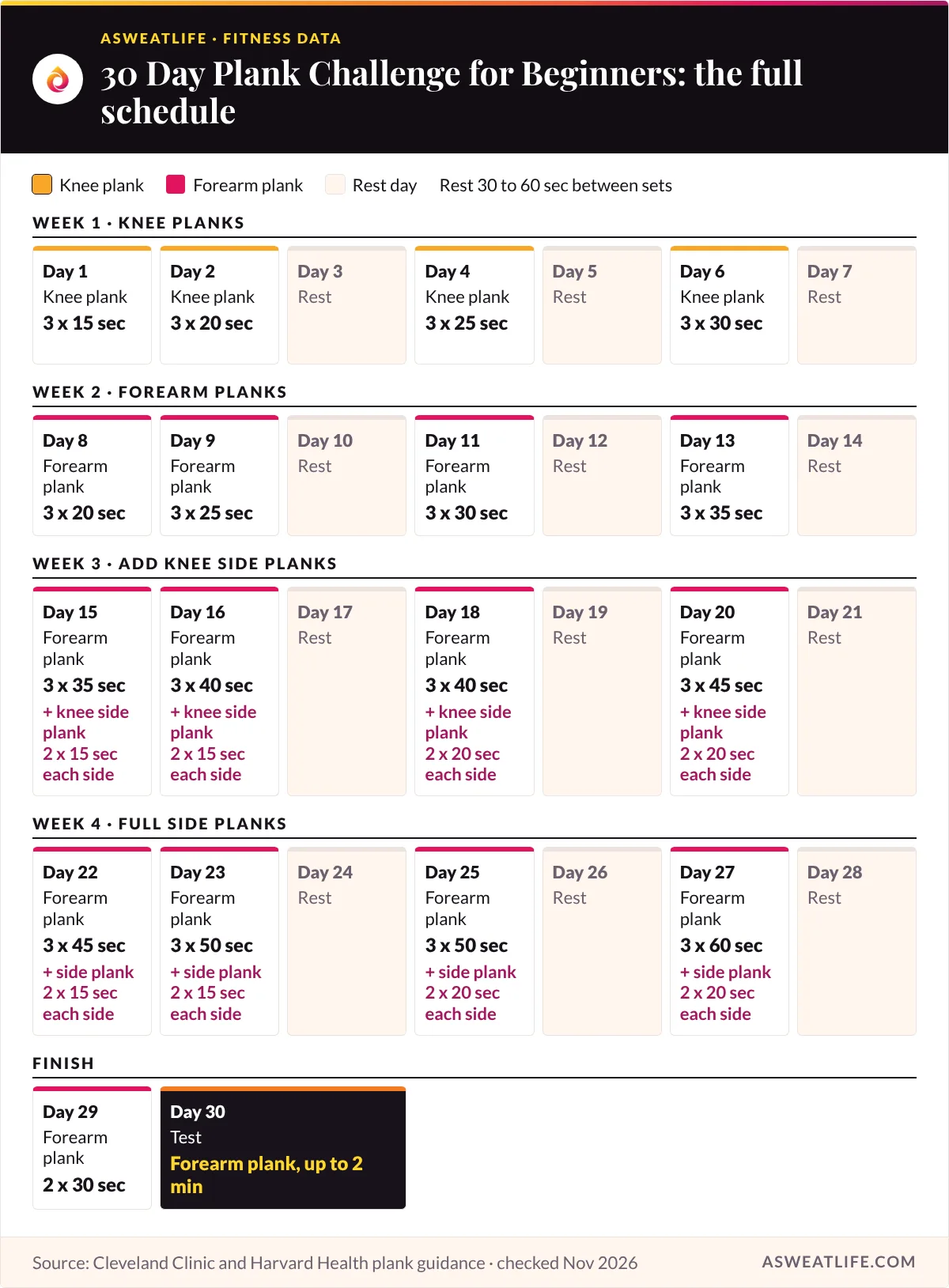
Each workout is a number of sets times the hold in seconds. Rest 30 to 60 seconds between sets. “Each side” means you do the sets on your right side and then your left.
| Day | Workout | Total plank time |
|---|---|---|
| Day 1 | Knee plank: 3 x 15 sec | 45 sec |
| Day 2 | Knee plank: 3 x 20 sec | 1 min |
| Day 3 | Rest | 0 |
| Day 4 | Knee plank: 3 x 25 sec | 1 min 15 sec |
| Day 5 | Rest | 0 |
| Day 6 | Knee plank: 3 x 30 sec | 1 min 30 sec |
| Day 7 | Rest | 0 |
| Day 8 | Forearm plank: 3 x 20 sec | 1 min |
| Day 9 | Forearm plank: 3 x 25 sec | 1 min 15 sec |
| Day 10 | Rest | 0 |
| Day 11 | Forearm plank: 3 x 30 sec | 1 min 30 sec |
| Day 12 | Rest | 0 |
| Day 13 | Forearm plank: 3 x 35 sec | 1 min 45 sec |
| Day 14 | Rest | 0 |
| Day 15 | Forearm plank: 3 x 35 sec; Knee side plank: 2 x 15 sec each side | 2 min 45 sec |
| Day 16 | Forearm plank: 3 x 40 sec; Knee side plank: 2 x 15 sec each side | 3 min |
| Day 17 | Rest | 0 |
| Day 18 | Forearm plank: 3 x 40 sec; Knee side plank: 2 x 20 sec each side | 3 min 20 sec |
| Day 19 | Rest | 0 |
| Day 20 | Forearm plank: 3 x 45 sec; Knee side plank: 2 x 20 sec each side | 3 min 35 sec |
| Day 21 | Rest | 0 |
| Day 22 | Forearm plank: 3 x 45 sec; Side plank: 2 x 15 sec each side | 3 min 15 sec |
| Day 23 | Forearm plank: 3 x 50 sec; Side plank: 2 x 15 sec each side | 3 min 30 sec |
| Day 24 | Rest | 0 |
| Day 25 | Forearm plank: 3 x 50 sec; Side plank: 2 x 20 sec each side | 3 min 50 sec |
| Day 26 | Rest | 0 |
| Day 27 | Forearm plank: 3 x 60 sec; Side plank: 2 x 20 sec each side | 4 min 20 sec |
| Day 28 | Rest | 0 |
| Day 29 | Forearm plank: 2 x 30 sec | 1 min |
| Day 30 | Test: one forearm plank, held for as long as your form stays clean (stop at 2 minutes) | Up to 2 min |
The Weekly Progression, Week by Week
Tap a week to see each day’s sets, holds, and total plank time.
Week 1 (Days 1 to 7): Knee Planks
You’ll go from three 15-second knee planks to three 30-second holds. The point of this week is learning what a braced core feels like: squeeze your glutes, pull your ribs down, and keep breathing. It’s the easiest week on paper, so use it to make the form automatic.
Week 2 (Days 8 to 14): Forearm Planks on Your Toes
Moving off your knees makes the plank harder, so the hold drops back to 20 seconds on day 8 before climbing to 35 seconds on day 13. If your hips sag in the third set, finish that set on your knees. That still counts.
Week 3 (Days 15 to 21): Add Knee Side Planks
Your obliques join the party. Each plank day now has the forearm plank (35 to 45 seconds) plus two knee side planks per side of 15 to 20 seconds. Side planks may help correct strength imbalances between the two sides of your body, so pay attention if one side gives out first.
Week 4 (Days 22 to 30): Full Side Planks and Your First 60-Second Holds
Side planks move up to your feet, starting again at 15 seconds per side, and the forearm plank climbs to three 60-second holds on day 27. Day 29 is an easy primer of two 30-second planks. Day 30 is your test: one forearm plank, held for as long as your form stays clean, with a stop at two minutes since longer holds add little.
How Much Plank Time You Actually Do Each Week
Add up every set and the weekly load looks like this. It’s the number that tells you the plan is progressing even on days when the individual holds feel similar.
| Week | Plank days | Longest single hold | Total plank time for the week |
|---|---|---|---|
| Week 1 (days 1 to 7) | 4 | 30 sec (knees) | 4 min 30 sec |
| Week 2 (days 8 to 14) | 4 | 35 sec | 5 min 30 sec |
| Week 3 (days 15 to 21) | 4 | 45 sec | 12 min 40 sec |
| Week 4 (days 22 to 28) | 4 | 60 sec | 14 min 55 sec |
| Days 29 and 30 | 2 | Up to 2 min (test) | 1 min, plus your test |
Across all 30 days that’s about 38 minutes of planking before the final test, spread over 18 workouts. A common viral version, which starts at 10 seconds and adds 10 seconds every day, ends with a single five-minute hold and totals 77 minutes 30 seconds of planking. This plan asks for half that time, in holds no longer than a minute, with 12 rest days.
When To Rest, Repeat a Day, or Stop
Rest days are part of the plan. Days 3, 5, 7, 10, 12, 14, 17, 19, 21, 24, 26, and 28 are off. A walk, a yoga flow, or an easy bike ride all fit; if you’re not sure which kind of day you need, here’s how to choose between an active recovery or a full rest day.
Repeat a day when form breaks. If you can’t finish all the sets without your hips sagging or your back aching, do the same workout again on your next plank day. A 30-day challenge that takes you 35 days is still a win.
Take an extra day off when your body asks. Lingering soreness, poor sleep, and dreading the timer are all signs it’s time to take a rest day. Then pick up where you left off.
Stop if it hurts. Back or shoulder pain during a plank usually means your form may be off. Drop to the knee or counter version, and if the pain sticks around, see a doctor or physical therapist before you continue.
What To Do After the 30 Day Plank Challenge
Once you can hold a plank for more than a minute, Lawton’s advice is to move to a new movement, such as reaching one arm overhead while you hold. Shoulder taps and longer side planks are natural next steps too, and this 30-minute plank workout strings several variations into one sweat sesh.
The bigger move is folding your core work into a full routine. The plank already shows up in our four-week beginner workout plan, alongside squats, glute bridges, and incline push-ups, and our guide on how to start a strength training routine covers the rest of your body.
30 Day Plank Challenge FAQ
Do Planks Give You Visible Abs?
Planks build core strength and endurance, but Lawton calls the promise of six-pack abs from planking overblown. A stronger core that supports your lifts, runs, and everyday bending is the real payoff.
What If I Miss a Day of the Plank Challenge?
Pick up with the workout you missed on your next plank day and shift the rest of the schedule back. The progression matters more than finishing on a calendar date.
Is a Knee Plank Still a Real Plank?
Yes. A knee plank uses the same braced, straight-line position as a full plank with a shorter lever, which is why Lawton suggests it as the starting point for beginners.
Can I Do the Plank Challenge on Top of My Other Workouts?
Yes. Every workout in this plan takes about 10 minutes or less, rests included, so it fits after a run, a class, or a strength session. Skip the plank workout on a day you’ve already done heavy core work.
Your next step: set a timer for 15 seconds, drop to your knees, and knock out day 1 today. Grab a friend to do it with you, because everything is better with friends (and someone to text “day 12 done” to).