How to Choose a Swimsuit for Winter Pool Workouts and Getaways
How to choose a swimsuit for indoor pool workouts, aqua classes, hot springs and warm-weather getaways this winter, from support and coverage to fabric and fit.

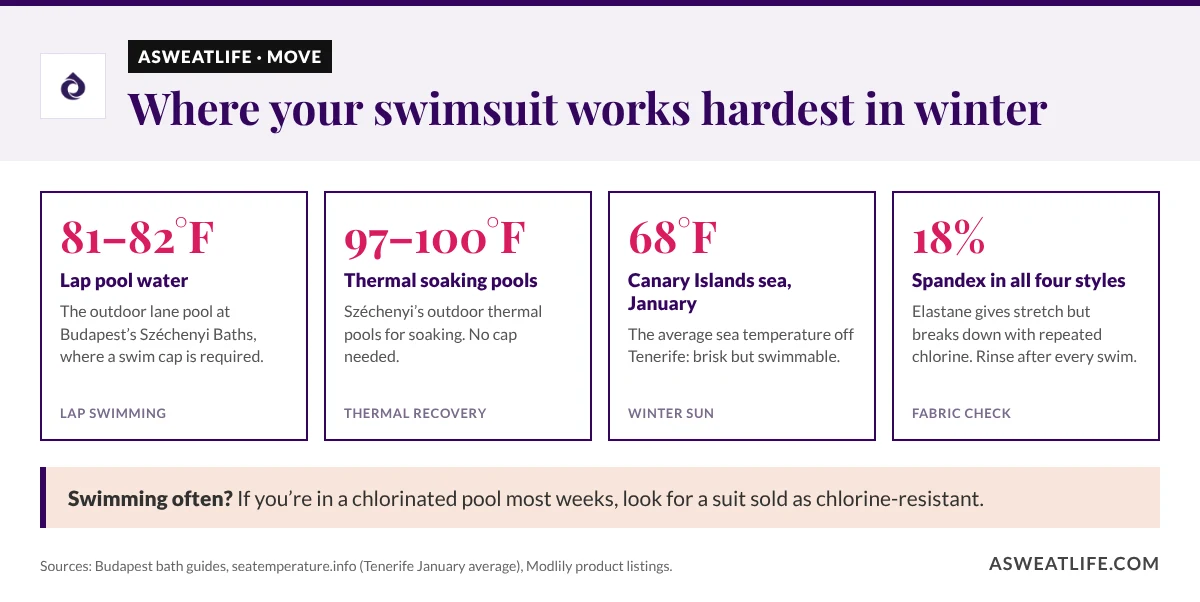
If you’re moving your workouts to an indoor pool this winter or packing for a warm-weather getaway, knowing how to choose a swimsuit for the activity saves a lot of tugging between laps. Fabric matters more than you might think: elastane, the stretchy fiber in most swimsuits, breaks down with repeated chlorine exposure, so a suit that’s great for vacation may sag after a season of pool workouts.
Below, we cover how to match a swimsuit to your winter water workouts, what support and coverage to look for, how fabric holds up to chlorine and mineral water, and a quick movement test to do before you commit.
Which Swimsuit Works for Which Winter Activity?
Start with the most demanding thing you’ll do in the water, then work backward. Most winter swimming falls into one of these:
| Winter activity | What the swimsuit needs to do | Details to look for |
|---|---|---|
| Indoor lap swimming or aqua aerobics | Overhead reaches, kicks, turns and wall push-offs | Close fit, secure back, straps that stay put |
| Warm-weather beach getaway | Walk, sit on a lounge chair, take short swims | Comfortable leg cut, opaque lining, works with a cover-up |
| Hot springs and thermal spas | Long soaks, short walks in cold air | Simple shape, little hardware, quick to rinse |
| Paddleboarding, snorkeling or boat days | Bending, climbing, layering under a life jacket | Secure neckline and leg openings, flat seams |
If you’re new to swimming for fitness, our guide to swimming for beginners covers the rest of the gear, from goggles to caps.
How Much Support Do You Need for Pool Workouts?
Support comes from how the neckline, bust, straps, back and torso length work together. A single tight spot doesn’t add much. A suit that presses hard at the shoulders but gaps elsewhere can look fine in the mirror and feel distracting in the water. Look for even contact across your body.
Lap Swimming and Aqua Classes
Water aerobics means steps, twists and arm sweeps, while laps add repeated overhead reaches and push-offs from the wall. Wider straps spread pressure across your shoulders, and a secure back reduces slipping. Raise both arms and rotate gently: anything that moves now will move more mid-workout. Extra fabric that floats away from your body also creates drag.
The Tummy Coverage Ombre Black One Piece Swimwear is one example of a wide-strap, scoop-neck style with removable padding. The listing describes its tummy coverage as gentle smoothing, so think of it as a comfortable cut rather than firm shaping.
Active Days on the Water
Paddleboarding, snorkeling and climbing in and out of boats involve bending, reaching and quick changes of direction. A neckline and leg openings that stay put matter more than how a suit looks standing still. Check where straps and knots sit under a life jacket or backpack, because anything bulky gets pressed into you.
For a relaxed beach day on a winter getaway, comfort while walking, sitting and taking short dips matters more than a streamlined shape. A soft surplice neckline, like the one on the Pink Surplice Floral Print One Piece Swimwear, suits lounging, and its adjustable straps help fine-tune the fit.

How Do You Choose Coverage and Fabric?
Coverage is a practical choice about where you want the suit to stay secure: bust, back, midsection, seat or upper legs. A fuller cut can feel reassuring when you’re bending and swimming, while a different neckline may feel better for a lazy afternoon by the pool. The test is simply whether it stays where it belongs.
When you browse one piece swimwear, look past the overall silhouette at the neckline, strap width, lining and leg cut. Two suits that look alike online can behave very differently in a class. If midsection coverage is your priority, the Black Tummy Control Patchwork One Piece Swimwear pairs a scoop neck and adjustable double straps with a tummy-control design.
Fabric matters most if you’ll wear the suit often. Most fashion swimsuits, including all four styles mentioned here, are about 82% nylon or polyester with 18% spandex. They’re fine for vacations and occasional swims, but polyester-rich fabrics usually hold up better to chlorine than nylon. If you’re in a chlorinated pool most weeks this winter, look for a suit sold as chlorine-resistant, and keep the fashion suit for travel.
Here’s how the four styles compare, according to their product listings:
| Style | Fabric | Straps | Neckline | Padding |
|---|---|---|---|---|
| Pink surplice floral | 82% nylon, 18% spandex | Adjustable | Surplice, ruched | Removable, wire-free |
| Ombre black tummy coverage | 82% polyester, 18% spandex | Wide, fixed | Scoop | Removable, wire-free |
| Black patchwork tummy control | 82% nylon, 18% spandex | Adjustable double straps | Scoop | Removable, wire-free |
| Black surplice tribal print | 82% polyester, 18% spandex | Adjustable | Surplice | Removable, wire-free |
Whatever you choose, rinse it in fresh water after every swim and dry it flat away from direct heat. Hold light colors and printed panels up to bright light to check the lining is substantial enough.
What Should You Know About Hot Springs and Thermal Spas?
Winter is prime time for a warm soak, and plenty of people pair it with a sauna session for recovery. Our look at the sauna after a workout covers what heat does for your muscles. A few spa rules affect what you pack:
- Expect a pre-swim shower. At Iceland’s Blue Lagoon, all guests must shower without a swimsuit before entering, so expect open changing areas.
- Protect your hair. The lagoon’s silica can make hair stiff, so the spa recommends applying conditioner before you go in and leaving it in.
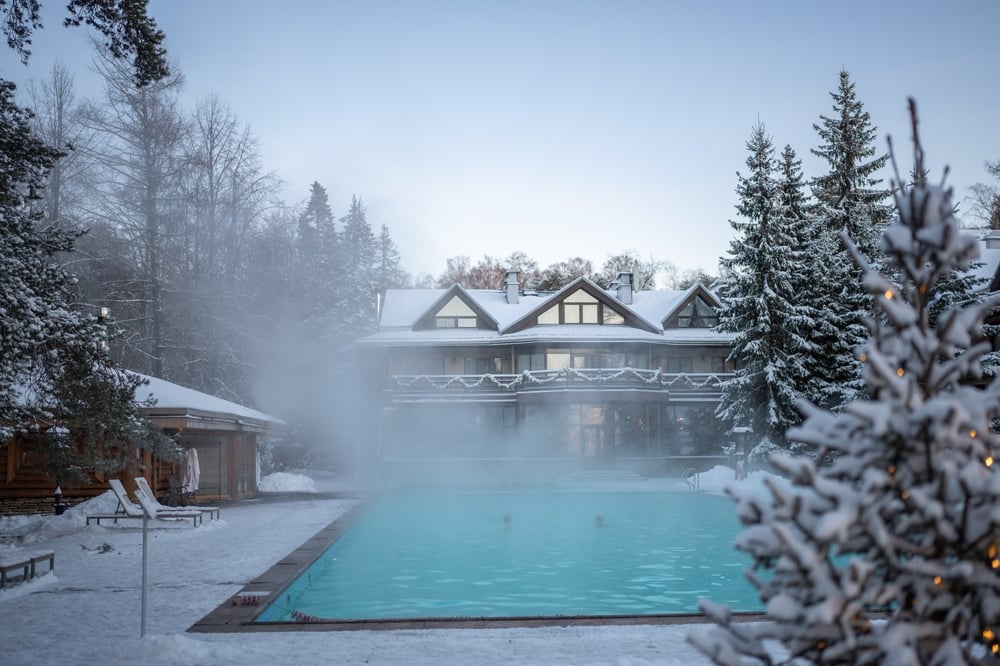
- Bring a cap for lap pools. At Budapest’s Széchenyi Baths, the outdoor thermal pools sit at 36–38°C (97–100°F) for soaking, but the cooler lane pool requires a swim cap.
- Pack flip-flops and a robe. Floors are wet and, in winter, the walk between outdoor pools is cold.
Want to go the other way? Our rundown of the benefits of cold water swimming explains what a chilly dip does for your body.
How Do You Do the Movement Test?
Start with the size chart and the measurements that matter for a one-piece: bust, waist, hips and torso length. Sizes vary between styles, and a longer or shorter torso changes where the neckline and leg openings sit.
Then try three moves at home or in the fitting room: reach overhead, bend to pick something up and sit for a moment. Watch for straps sliding, the bust edge gapping or the leg openings creeping, then take a few steps. A surplice style such as the Black Surplice Tribal Print One Piece Swimwear has adjustable straps you can tweak if the neckline sits too high or low on your torso.
When shopping online, compare the lining, straps, back and closures with how you’ll use the suit, and treat reviews as clues, since bodies differ. Check the return policy before removing any hygiene liner so you can test the fit at home.
Use the matcher below to pull it all together.
Choose your main water activity this winter and what matters most to you. The matcher lists the swimsuit details to look for and what to pack with it.
Main water activity
Swim sessions per week
Details to look for
Pack with it
Winter Swimsuit FAQ
How often should I replace a swimsuit I wear for pool workouts?
When it starts to sag, lose its stretch or turn see-through. Regular chlorine exposure speeds that up, so a chlorine-resistant suit makes sense if you swim most weeks.
Should I own two swimsuits for winter swimming?
If you swim several times a week, yes. A second suit means each one dries fully between sessions, which helps the fabric last.
Is a one-piece better for lap swimming?
Many swimmers prefer one, because a close-fitting one-piece stays put through turns and push-offs. Fit matters more than style, so do the movement test either way.
Will hot springs or mineral water damage my swimsuit?
Rinse the suit in fresh water straight after a soak and dry it away from direct heat. That habit helps any swimsuit last longer, whatever the water.