
Is Hard Seltzer Bad for You? What the Research Says
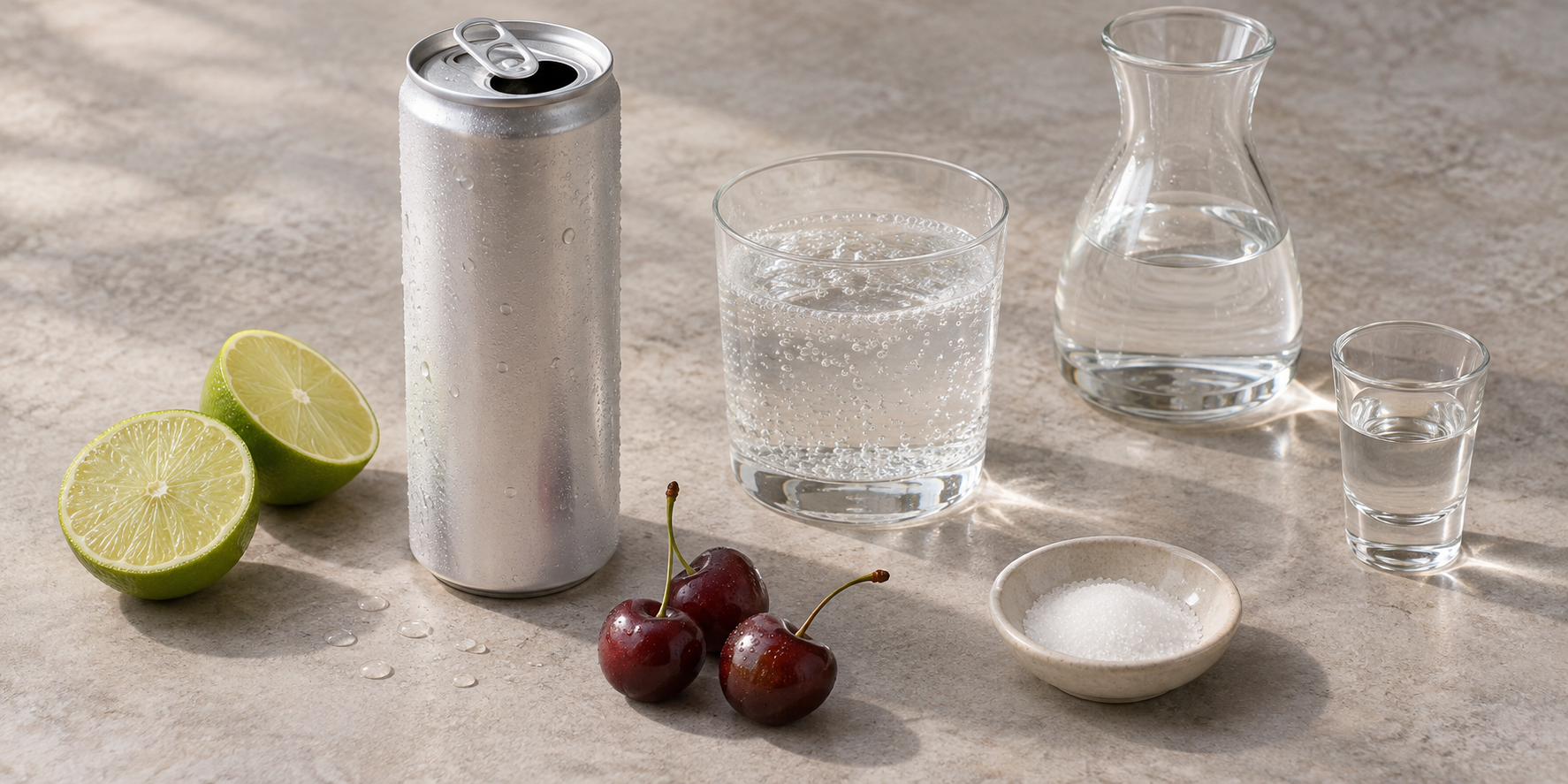
Hard seltzer is not bad for you in moderation, but it is still alcohol. A standard 12 oz can at 5% ABV runs about 100 calories with 0 to 2 grams of sugar, which puts it in the same lane as a light beer with fewer carbs, and the alcohol in it carries the same risks as the alcohol in anything else.
So the honest answer is that hard seltzer is a lighter way to drink, not a healthy one. If you are deciding what to reach for, our guide to the healthiest spiked seltzer ranks the brands can by can. This piece is about the bigger question: what a hard seltzer actually does in your body, and whether it beats the beer, wine or vodka soda you would otherwise order.
Is hard seltzer healthier than beer?
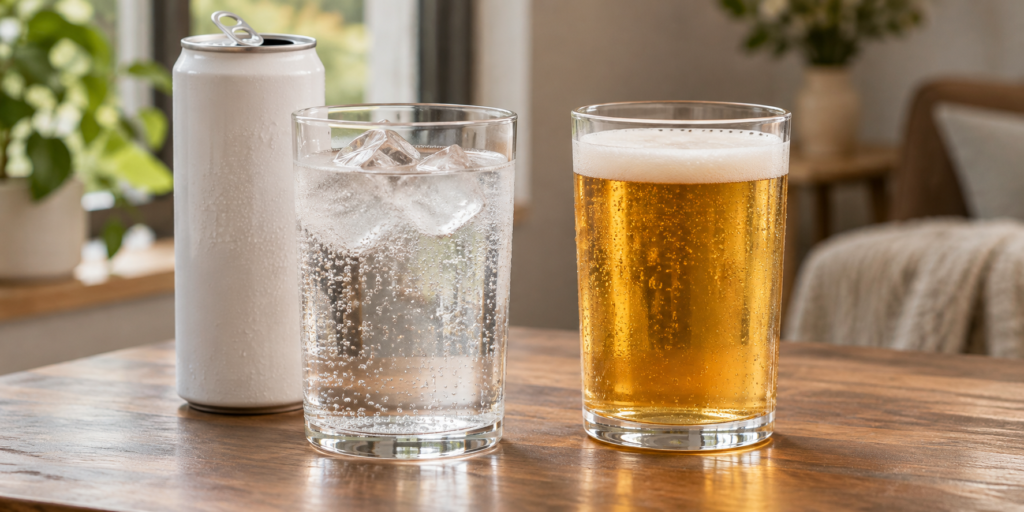
On calories and carbs, a 5% hard seltzer beats most regular beers and ties the lightest light beers. Michelob Ultra, the benchmark light lager, lists 95 calories and 2.6 g of carbs at 4.2% ABV per 12 oz. White Claw and Truly list 100 calories and 2 g of carbs at 5% ABV. The seltzer gives you slightly more alcohol for roughly the same calories, and the gap is small enough that taste should decide. Where hard seltzer wins clearly is against regular beer, sweet canned cocktails and most wine, which carry more carbs and, in the case of cocktails, far more sugar.
The figures below come from each brand’s own label or label page, read on 9 November 2026. Flavors within a brand vary by a gram or so, so check the can you are holding.
| Drink | Serving | ABV | Calories | Carbs | Sugar | Alcohol base |
|---|---|---|---|---|---|---|
| White Claw Hard Seltzer (Black Cherry) | 12 oz | 5% | 100 | 2 g | 2 g | Fermented sugar |
| Truly Hard Seltzer (Wild Berry) | 12 oz | 5% | 100 | 2 g | 1 g | Fermented sugar |
| High Noon Vodka Seltzer (Watermelon) | 12 oz | 4.5% | 100 | 3.8 g | 2.6 g (no added sugar) | Vodka |
| Topo Chico Hard Seltzer (Oasis Cherry) | 12 oz | 4.7% | 100 | 2 g | 2 g (added) | Fermented sugar |
| Carbliss (Black Cherry) | 12 oz | 5% | 100 | 0 g (brand claim) | 0 g (brand claim) | Vodka |
| Michelob Ultra (light beer) | 12 oz | 4.2% | 95 | 2.6 g | Not listed | Malted barley |
| Vodka soda (1.5 oz 80 proof vodka, soda water) | 1.5 oz spirit | 40% spirit | 97 | 0 g | 0 g | Vodka |
| White table wine | 5 oz | About 12% | 122 | 3.8 g | 1.4 g | Fermented grapes |
| Red table wine | 5 oz | About 12% | 125 | 3.8 g | 0.9 g | Fermented grapes |
One thing the table makes obvious: a hard seltzer, a light beer, a vodka soda and a glass of wine are all within about 30 calories of each other. The real calorie damage in drinking comes from the number of servings and from sugary mixers, not from picking the wrong 100-calorie can. If you want a lower-sugar glass without the alcohol at all, our picks for the best non-alcoholic wine are the better comparison.
What is actually in a hard seltzer
A hard seltzer is carbonated water, alcohol, flavoring and, in most cases, a little sugar or fruit juice for taste. The alcohol comes from one of two places. Brands like White Claw, Truly and Topo Chico ferment sugar into a neutral alcohol base, the same way a brewer ferments malted barley into beer, which is why they sit on the beer shelf and are taxed and regulated as beer. Brands like High Noon and Carbliss use distilled vodka, so they are technically canned cocktails rather than seltzers, even though they look and drink the same.
The base matters for two reasons. First, gluten: a seltzer brewed from sugar or made with vodka is naturally gluten free, while anything brewed from malted barley is not. Second, labeling: sugar-brewed seltzers that are not malt beverages also fall under FDA food labeling rules, according to a 2021 TTB presentation, which is why some cans carry a full Nutrition Facts panel and others only list calories and carbs. When a brand says “no sugar,” check whether it means no added sugar or no sugar at all.
What the research says about hard seltzer and your health
There is very little research on hard seltzer specifically, because the ingredient that matters is ethanol and the science on ethanol is extensive. Here is where it stood in November 2026.
A can is one standard drink. The National Institute on Alcohol Abuse and Alcoholism defines a standard drink as about 14 grams of pure alcohol, which is a 12 oz can at 5% ABV, a 5 oz glass of 12% wine or a 1.5 oz shot of 40% spirits. A 5% hard seltzer is exactly one. The same page notes that flavored malt beverages, which include some hard seltzers, can run around 7% ABV, in which case 8 to 10 oz is a standard drink and a tall can is closer to two.
The alcohol itself raises cancer risk, whatever it comes in. The U.S. Surgeon General’s advisory on alcohol and cancer, released in January 2025, links alcohol to at least seven cancers, including breast, colorectal, liver and mouth cancers, and estimates it contributes to nearly 100,000 cancer cases and about 20,000 cancer deaths in the U.S. each year. Two details matter for seltzer drinkers: the advisory says the risk holds regardless of the type of alcohol, and that for breast, mouth and throat cancers it may start to increase at around one drink a day or fewer. A low-sugar label does nothing to change that.
Official advice got vaguer, not looser. The 2025 to 2030 Dietary Guidelines for Americans, published on 7 January 2026, dropped the long-standing limit of two drinks a day for men and one for women and replaced it with a general instruction to consume less alcohol for better health. Liver specialists at the American Association for the Study of Liver Diseases criticized the change for removing a usable number. If you want a number, the CDC still describes moderate drinking as two drinks or fewer in a day for men and one or fewer for women, and notes that about 178,000 Americans die from excessive alcohol use each year.
The bubbles may hit faster. Carbonation appears to speed up alcohol absorption. In a 2003 crossover study in Alcohol and Alcoholism, 12 volunteers reached significantly higher blood alcohol levels after champagne than after the same champagne with the carbon dioxide removed, and performed worse on an attention task. A 2007 study in the Journal of Forensic and Legal Medicine found the same pattern in most, though not all, of its participants. Both were small studies, but they are a reason to treat a 5% seltzer as you would a 5% beer, not as something lighter because it tastes like soda water.
Hard seltzer will not hydrate you. Alcohol is a diuretic, so the water in the can is not a reason to skip the real glass of water between drinks, especially after a workout.
What to avoid in a hard seltzer
Added sugar in the spin-off lines. The original seltzers are low in sugar, but the lemonade, iced tea and “refresher” variants that share the brand name often are not. Read the panel, not the front of the can, and compare the sugar line with the 0 to 2 grams in the table above.
Higher ABV versions. Several brands sell 8% versions of their core flavors. These carry the alcohol of nearly two standard drinks in one can, and the calories rise with the alcohol, since alcohol itself has 7 calories per gram. If the can says 8% or comes in a 16 oz or larger size, count it as two.
A malt base if you avoid gluten. Most big hard seltzers are brewed from sugar, but malt-based seltzers exist and are not gluten free. Carbliss, for example, makes a vodka line and a separate malt-based cocktail line under a similar name. Look for the words “gluten free” or “sugar brew” on the can rather than assuming.
The “it’s basically water” mindset. The biggest health risk with hard seltzer is not the ingredients, it is the drinkability. Light flavor and low calories make it easy to have four without noticing, and four cans is four standard drinks. If you have drifted into that habit, the advice in our guide to sticking to Dry January works in any month, and our healthy canned cocktails guide covers ready-to-drink options that are easier to sip slowly.
The bottom line on hard seltzer
If you are going to drink, a 5% hard seltzer is one of the lower-calorie, lower-sugar ways to do it, and it edges out most beer, wine and cocktails on carbs. It is not healthier than a vodka soda, it is not a hydration drink and it does not reduce the cancer, liver or sleep effects of the alcohol inside it. Treat each can as one drink, stick to the original lines rather than the sweetened spin-offs, and let the research, not the label, set your limit.
Hard seltzer FAQ
Is hard seltzer healthier than beer?
Marginally, on carbs. A 12 oz White Claw or Truly has 100 calories and 2 g of carbs at 5% ABV, while Michelob Ultra has 95 calories and 2.6 g at 4.2%. Against a regular 150-calorie lager with 12 or more grams of carbs, the seltzer wins clearly. The alcohol content and its health effects are about the same.
Does hard seltzer have sugar?
A little. Most core flavors list 0 to 2.6 g of sugar per 12 oz can, either left over from fermentation or added for taste. Carbliss claims zero. The lemonade and tea variants from the same brands can carry much more, so read the panel.
How many calories are in a hard seltzer?
About 100 per 12 oz can at 4.5% to 5% ABV across White Claw, Truly, High Noon, Topo Chico and Carbliss. The 8% versions and 16 oz or 24 oz cans run considerably higher because most of the calories come from the alcohol itself.
Is hard seltzer healthy?
No alcoholic drink is healthy. Hard seltzer is a lower-calorie, lower-sugar choice among alcoholic drinks, which is a different thing. The Surgeon General’s 2025 advisory links alcohol to seven cancers regardless of what form it comes in, and the 2026 Dietary Guidelines advise consuming less alcohol overall.
Can you drink hard seltzer on a keto or low-carb diet?
Most 5% hard seltzers fit, with 0 to 4 g of carbs per can. Vodka-based options such as Carbliss and High Noon are the lowest. Keep in mind that your body processes alcohol before fat, so drinking pauses fat burning even when the carbs are low.
Does hard seltzer get you drunk faster?
Possibly a little. Small studies on champagne and other carbonated drinks found that carbonation speeds alcohol absorption and raises peak blood alcohol in most people. A 5% can also has slightly more alcohol than a 4.2% light beer. The bigger factor is pace: seltzers are easy to drink quickly.