How to Keep Your Health Routine When Moving House
Moving house tends to hit your body before your calendar. Protect a few core habits, pace the heavy work, stay safe in the heat and unpack in an order that gets your routine back fast.

Moving sounds like a logistics problem, but it usually hits your body first, which is why keeping your health routine when moving house takes a plan of its own. Timing adds to the load in a city like Memphis, where the National Weather Service puts the Memphis normal July high at 91.9°F.
Here’s how to protect a few core habits, pace the physical work, stay safe lifting and working in the heat, set up your new place for health first and rebuild your routine in phases.
Which Habits Should You Protect During a Move?
When people move, they focus on furniture, lease dates and utility transfers. Your baseline habits deserve the same planning. Think about the three things that most affect how you feel day to day: sleep, food and movement.
You don’t need a perfect wellness routine during a move. You need continuity. Pick a few non-negotiables before packing begins and give each one a minimum version you can keep on the worst day:
| Habit | Your normal version | Moving-week minimum |
|---|---|---|
| Sleep | Consistent bedtime and wake time | Same wake time every day, even on packing days |
| Movement | Full workouts three or four times a week | A 10-minute walk or stretch every day |
| Meals | Weekly meal prep | Three repeat meals that need one pan or none |
| Hydration | Water bottle at your desk | A filled bottle by the door on every moving day |
| Downtime | Regular evening wind-down | Ten screen-free minutes before bed |

Move decision fatigue builds quickly, and small fixed habits cut the number of choices you have to make. Put your non-negotiables on the moving checklist itself so they don’t get buried under practical jobs. If you’d like a framework for keeping habits small and sustainable, our guide to building a wellness routine fits this stage well.
How Do You Pace the Physical Work of Moving?
Most moving checklists are built around deadlines. Few account for physical output, which is where people get blindsided. Packing a kitchen after work sounds manageable until you’ve been standing, lifting and problem-solving for three straight hours.
Sort every task by effort, then spread the hard ones across your week instead of stacking them into one brutal weekend:
| Effort level | Examples | When to schedule |
|---|---|---|
| Low | Address changes, utility transfers, canceling subscriptions | Evenings or lunch breaks |
| Moderate | Packing clothes, linens and decor; labeling boxes | After work in short blocks |
| Heavy | Packing books and the kitchen, clearing storage, carrying boxes | Mornings on days off, with breaks |
| Very heavy | Furniture, mattresses, appliances, stairs | Hand off to movers or a group of helpers |
This matters even more if you’re also working, caregiving or commuting. Treat the move like a temporary training block: the work goes better when you leave room for recovery.
Say you’re moving across Memphis, from a Midtown apartment to a house in Cordova. Booking Memphis movers for the sofa, bed and dresser while you take the boxes yourself can turn a weekend of lifting into a single afternoon, and leave you with enough energy to actually unpack the kitchen that night.
How Do You Lift Boxes Without Hurting Your Back?
Repeated twisting, overhead reaching and awkward lifting add up over a long day. Fatigue and rushing make every lift riskier, so pace yourself.
- Warm up for five minutes before heavy packing days: a brisk walk, hip hinges and arm circles.
- Pack lighter. Put books and dishes in small boxes and save the big boxes for bedding and pillows.
- Keep the load close to your body, hinge at the hips and bend your knees.
- Turn with your feet instead of twisting through your lower back while you’re holding something.
- Stop before your form gets sloppy. Late in the day, when you’re tired, is when shortcuts creep in.
- Use tools: a hand truck, furniture sliders and lifting straps do a lot of the work for you.
The Occupational Safety and Health Administration offers practical guidance on safe lifting techniques, which can help you think more carefully about how you handle heavy objects.
Your footwear matters too. Supportive, closed-toe shoes with grip protect your feet from dropped items and give you a stable base on stairs and ramps. If your feet are already sore from long days on them, these common shoe mistakes are worth ruling out before moving day.
How Do You Stay Safe Moving in the Heat?
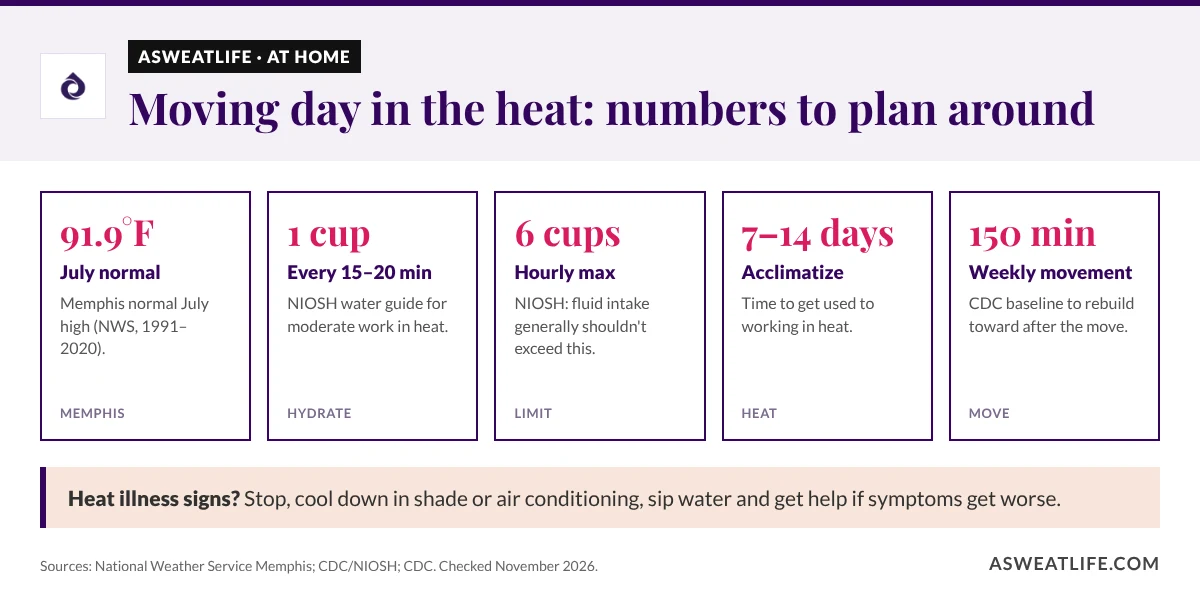
Moving in a Memphis summer turns a hard day of lifting into a heat-safety job. NWS normals put the city’s normal high near 89°F in June and close to 92°F in July and August, and carrying boxes in and out of a truck keeps you working hard the whole time.
For moderate activity in the heat that lasts less than two hours, CDC/NIOSH heat stress guidance suggests drinking 1 cup of water every 15 to 20 minutes, switching to electrolyte drinks if you’re sweating for several hours, and generally keeping fluid intake to no more than 6 cups an hour. NIOSH also advises lighter work and more frequent breaks for people who aren’t used to working in heat.
Acclimatization takes time. CDC guidance for outdoor workers describes building up heat exposure gradually over 7 to 14 days. Few people get that luxury before a move, so plan around it instead:
- Schedule the heaviest loading for early morning.
- Take shaded or air-conditioned breaks at least once an hour.
- Keep a cooler of water and electrolyte drinks by the truck.
- Wear light, loose clothing and a hat for outdoor trips.
- Watch each other. Dizziness, nausea, headache or confusion means stop, cool down and get help if symptoms get worse.
Plan Your Moving Day Water and Breaks
Enter your forecast and how long you’ll be working. The planner builds a water target and break plan from CDC/NIOSH heat guidance.
Planning a hands-on moving day? Enter the forecast and how long you’ll be lifting. The planner builds a water and break plan from CDC/NIOSH heat guidance and suggests what to hand off. General guidance only. Not medical advice.
Forecast high (°F)
Hours of physical work
Who’s doing the lifting?
Start time
Your priorities
Hand off or rethink
What Should You Unpack First for Your Health?
Many people unpack in a cosmetic order: they hang art, style shelves and organize decor while the essentials are still buried in taped boxes. It looks productive, but it delays the routines that make a place livable.
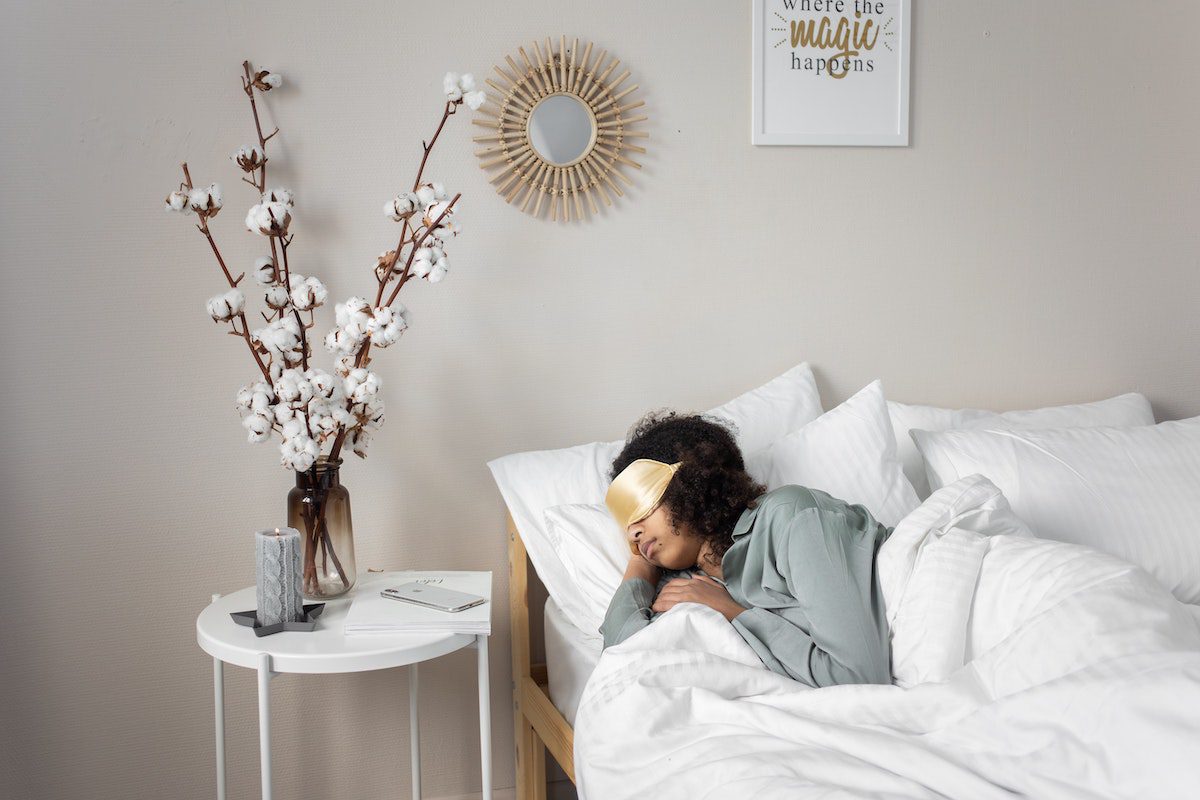
- Bedroom first. Blackout curtains, clean sheets, a charger by the bed and anything else that supports steady sleep.
- Kitchen second. Enough to make breakfast and one reliable dinner: a pan, a knife, a cutting board, plates and a kettle or coffee setup.
- Bathroom third. Towels, toiletries, medications and a shower curtain.
- A movement corner. You don’t need a home gym, just enough floor for a mat, mobility work or a bodyweight session.
Having those basics ready makes it easier to slip back into familiar habits without waiting until every room is finished.
How Do You Eat Well When Your Kitchen Is Packed?
The worst food choices during a move usually happen on days when the kitchen is half packed and your brain is done. That’s an environment problem more than a discipline problem.
Create a short transition menu for your last three days in the old place and your first three in the new one. Stick to foods that need little equipment and create almost no cleanup:
| Meal | No-cook or one-pan ideas |
|---|---|
| Breakfast | Greek yogurt with fruit, instant oats, hard-boiled eggs |
| Lunch | Wraps with rotisserie chicken and bagged salad |
| Dinner | Sheet-pan chicken and vegetables, or a grain bowl from prepared ingredients |
| Snacks | Nuts, cheese sticks, fruit, protein bars |
Keep a separate food bin that doesn’t go on the truck until the last minute, with paper towels, utensils, snacks, reusable bottles and a few shelf-stable options. If you arrive hungry and can’t find basic supplies, takeout stops being a treat and becomes the only option. Leaning on protein helps you stay full through long, physical days; our sample days with 100 grams of protein can give you easy ideas.
How Do You Keep Moving Without Adding Pressure?
A move can wreck your usual exercise plan, especially when your equipment is boxed up and your schedule changes daily. The mistake is thinking movement only counts if it looks like your normal training split.
During a move, use exercise to regulate stress. Ten minutes of stretching after packing eases tension in your back and hips. A brisk walk while you wait for the internet installer can reset your mood better than scrolling. Short bodyweight sessions keep momentum going without draining the energy you need for practical jobs. There’s good reason to keep it up: our look at exercise and mental health explains how even short sessions can help when life feels unsettled.
Once you’re settled, rebuild toward the CDC’s adult guideline of 150 minutes of moderate activity a week plus two days of strength work, adding a little more each week.
How Do You Learn Your New Neighborhood Quickly?
Your routine doesn’t only live inside your home. It depends on what’s around you and how easy it is to reach. A move changes that whole ecosystem overnight.
Within your first week, find one grocery store, one walking route, one pharmacy and one backup food option that isn’t fast food. In Memphis, the layout of your neighborhood can decide how often you drive versus walk, and summer humidity can change when outdoor exercise feels realistic. Early mornings and evenings tend to be the most comfortable times to walk in the hottest months.
This local mapping matters more than it sounds. When you know where to get the basics, small needs stop being disruptions, and your routine rebuilds faster.
How Do You Protect Your Mental Health During a Move?
Moving can leave you feeling isolated even when you’re surrounded by people helping you carry boxes. Regular calls, gym classes, therapy sessions and weekend rituals get crowded out by logistics, and that gap affects motivation more than most people expect.
Protect one repeating point of connection through the move: a standing video call, a morning check-in with a friend or your usual meditation before bed. Consistency matters more than length.
If the move comes with a bigger life change, such as a breakup, a new job or family stress, expect your emotional bandwidth to shrink and plan for it. Lower the bar without removing support.
How Long Does It Take to Get Back to Normal After Moving?
The pressure to get settled fast often backfires. People try to unpack everything, work at full speed, cook healthy meals and restart hard workouts in the same 72 hours, and end up exhausted.
Think in phases instead:
- Phase one: restore function. Sleep setup, clean clothes, water and basic meals.
- Phase two: rebuild rhythm. Daily movement, regular wake times, a grocery routine and normal work blocks.
- Phase three: refine. Finish the space and restart bigger fitness goals.
Every move brings some disruption. The goal is keeping it temporary.
Moving and Health Routine FAQ
How do I keep my health routine when moving house?
Choose a few non-negotiables, such as a fixed wake time, a daily walk and three simple meals, and put them on your moving checklist. Keeping small habits going is easier than restarting from zero.
How much water should I drink on a hot moving day?
For moderate activity in the heat lasting under two hours, CDC/NIOSH guidance suggests about 1 cup every 15 to 20 minutes, generally no more than 6 cups an hour, and electrolyte drinks if you’re sweating for several hours.
What should I unpack first after moving?
Your bed and sleep setup, then enough kitchen gear for breakfast and one dinner, then the bathroom. Decor can wait.
How do I avoid back pain while moving?
Warm up, pack heavy items in small boxes, keep loads close to your body, turn with your feet and stop before fatigue makes your form sloppy. Hand off furniture and appliances to movers or helpers.
Are local movers regulated the same way as interstate movers?
Not always. FMCSA regulates interstate movers, while requirements for moves within one state vary, so check with your state or local consumer affairs agency.
Should I keep working out during a move?
Yes, but keep it short and easy. Walks, stretching and bodyweight sessions help with stress and sleep without draining energy you need for the move.
Plan for friction instead of pretending it won’t happen, and your new place will start to feel like home sooner, with your routine still recognizably yours.