
Signs of Sprinkler System Problems: What Your Lawn Is Telling You
From a jump in your water bill to soggy patches and misting heads, here's what common sprinkler warning signs mean and what to check first.

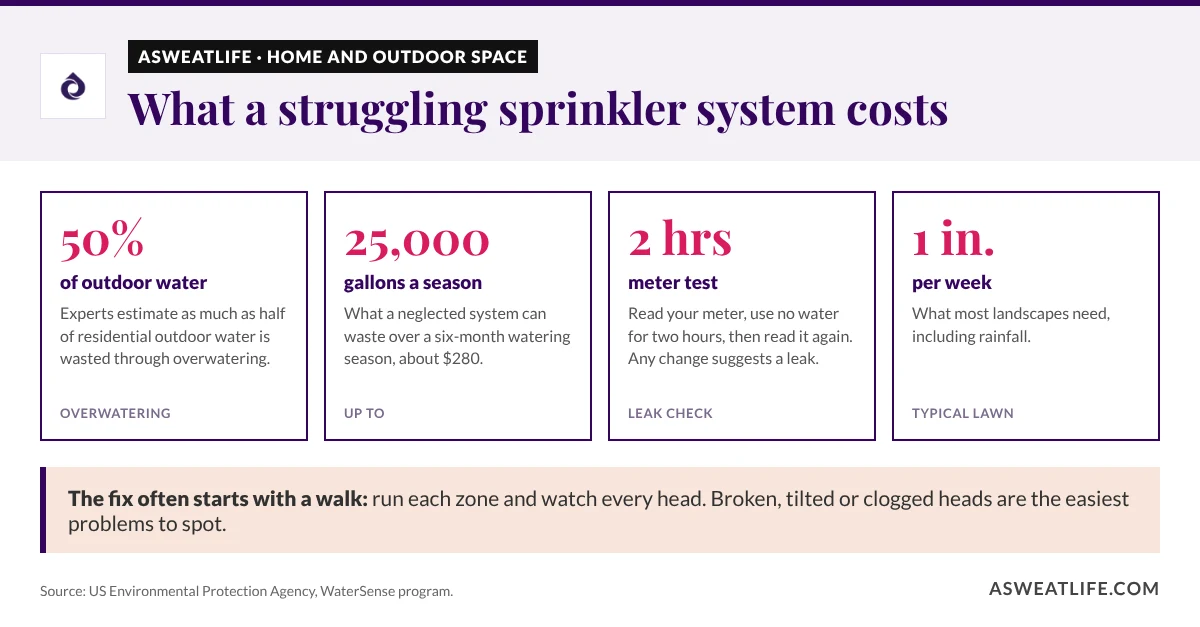
If your yard is where you stretch, play with the kids or unwind after work, signs of sprinkler system problems are worth catching early. Homes with clock-timer irrigation use about 50 percent more water outdoors than homes without it, and a neglected system can waste up to 25,000 gallons over a six-month season, according to the EPA.
Below, we cover the warning signs to watch for, from your water bill and patchy grass to soggy ground, broken heads, controller settings and weather damage, plus a quick checker to narrow down the cause.
What Are the Signs of Sprinkler System Problems?
Most irrigation trouble shows up in one of a few ways. Here’s what each sign usually points to:
| What you notice | Likely cause | First thing to check |
|---|---|---|
| Water bill jumps, habits unchanged | Hidden leak in a pipe or valve | Two-hour meter test |
| Brown strip that follows a spray pattern | Clogged, sunken or misaligned head | Watch that zone run |
| Soggy or sunken patch between cycles | Underground leak | Valve boxes and pipe routes |
| Water running onto sidewalks | Overwatering or misdirected heads | Run times and head direction |
| Misting or short, weak spray | Pressure too high or too low | Compare reach across the zone |
| Sprinklers running after rain | Controller schedule or missing sensor | Controller settings |
Not sure which applies? Check off what you’ve seen and the checker will point you to the most likely cause.
Check everything you’ve noticed. The checker ranks the most likely causes and tells you what to check first. Add two water bills to see how far your usage has moved.
Optional: compare your water bills
Check these first
Other possibilities

Can Your Water Bill Reveal an Irrigation Leak?
Often, yes, and before your lawn does. If your bill jumps while your household habits haven’t changed, the irrigation system deserves a look. Small underground leaks don’t always create puddles. You may see a greener patch, a dip in the soil or nothing at all, while the meter keeps moving.
Compare recent statements month to month and against the weather. Then try the EPA’s simple test: check your water meter before and after a two-hour period when no water is being used. If the reading changes, you likely have a leak somewhere on the property.
When the problem points to the sprinkler system, a sprinkler leak repair service can find the source before wasted water turns into landscape damage. Shut off the irrigation supply in the meantime if a spot is staying wet.
Why Is One Part of the Lawn Brown and Another Green?
Uneven color often comes from the system, even when it looks like a fertilizer, sun or soil issue. Irrigation systems rarely fail all at once. They drift out of balance zone by zone.
A clogged nozzle, a sunken head or a pressure drop can leave one strip of grass thirsty while another gets too much water. If the brown area follows the arc of a spray head or keeps coming back in the same spot, coverage is the likely culprit rather than turf disease.
Walk the yard during a watering cycle and watch how each head performs. Look for misting, sputtering, short throw distance or water shooting in the wrong direction. The EPA also suggests checking that each head reaches the next one so there are no dry gaps.
What Do Soft Ground, Puddles and Runoff Mean?
A lawn that still feels squishy hours after watering is usually dealing with a leak, oversaturation or uneven distribution. Excess water weakens roots, encourages fungus and can erode soil around beds and hardscaping.
Standing water near a valve box, along a trench line or around one head suggests water is escaping where it shouldn’t. Some leaks are slow enough to hide below the surface until the ground starts sinking or feels spongy underfoot, which also makes it a trip hazard if you use the yard for workouts or play.
Runoff onto sidewalks and driveways is another clue. A properly functioning system applies water at a rate the soil can absorb. If water streams away, the cause may be a broken head, a cracked line or a schedule that no longer fits your yard. On clay soil or slopes, the EPA recommends dividing watering time into shorter intervals with short breaks so water can soak in.
Standing water has a health angle too. The CDC advises clearing water-holding spots around your home once a week to stop mosquitoes from laying eggs, and a pooling sprinkler zone can create the same problem.
Is a Broken Sprinkler Head a Big Deal?
It rarely stays small. A head that’s leaning, bubbling or spraying the fence can throw off pressure across the whole zone, which changes coverage and stresses the rest of the system.
Damage often happens during mowing, edging or heavy foot traffic. Pop-up heads crack, nozzles loosen and risers shift out of line. Then water may geyser upward, pool at the base or miss the lawn completely.
The cost of waiting adds up. Turf in the dry area declines slowly while nearby plants get too much water, so one repair turns into patchy grass, muddy sections and possible root rot. A quick walk-through every few weeks during the season catches most head damage early.
Can Controller Settings Cause Sprinkler Problems?
Yes. Sometimes the hardware is fine and the programming is wrong for the season, the soil or the layout. That can look like a mechanical failure.
A common example is a controller still running peak-summer times after temperatures drop. Another is stacked start times that water the same zone several times in one morning. Rotor heads, spray heads and drip lines apply water at different rates, so scheduling them the same way leaves one area short. Power outages and dead backup batteries can also reset custom programs.
Most landscapes need about one inch of water a week, including rainfall, so use that as a sanity check. Weather-based or soil moisture controllers help: the EPA says replacing a standard clock timer with a WaterSense labeled controller can save an average home 15,000 gallons a year. They still need correct setup and a seasonal review.
How Do Roots, Soil and Weather Affect Your System?
Your irrigation system sits in a changing environment. Tree roots push against pipes and shift lines. Clay soil swells after rain and shrinks in dry spells, stressing underground connections.
Freezing weather is another risk. If a system wasn’t winterized properly, cracked pipes or manifolds may only show up when you start watering again, so watch the first few spring runs closely. Check again after storms, construction or major landscaping work, which can disturb grades and pipe routes.
What Should You Check Each Season?
| When | What to do |
|---|---|
| Spring start-up | Run each zone one at a time and look for geysers, pooling or weak spray |
| Every few weeks in season | Walk each zone during a cycle and fix tilted or clogged heads |
| Monthly | Compare your water bill with last month and the same month last year |
| When the weather shifts | Adjust run times and start times on the controller |
| Before the first freeze | Shut down and winterize the system |
A healthy yard is easier to enjoy and to use. If you’re building out your outdoor space, our tips for an eco-friendly outdoor living space and our guide on how to compost at home pair well with a well-tuned sprinkler system. Yard work also counts as light movement on active rest days.
Sprinkler Problems FAQ
How do I know if my sprinkler system has a leak?
Watch for a higher bill with no change in habits, soggy or sunken spots between cycles, and water around valve boxes. Then read your water meter, use no water for two hours and read it again. Any change suggests a leak.
How often should I inspect my sprinkler heads?
Every few weeks during the watering season, plus a full check at spring start-up and after mowing damage, storms or landscaping work.
Why is my sprinkler misting instead of spraying?
Misting usually means the water pressure at the head is too high. Weak spray that falls short usually means pressure is too low or the nozzle is clogged.
How much water does a lawn need?
Most landscapes need about one inch of water a week, including rain. Local rules may limit which days you can water, so check with your water utility.