The Post-Workout Bathroom: Remodel Ideas for Active People
If you train regularly, your bathroom is part of your recovery. Plan a shower, floor, ventilation and storage that handle post-workout showers, sweaty kit and stretching.

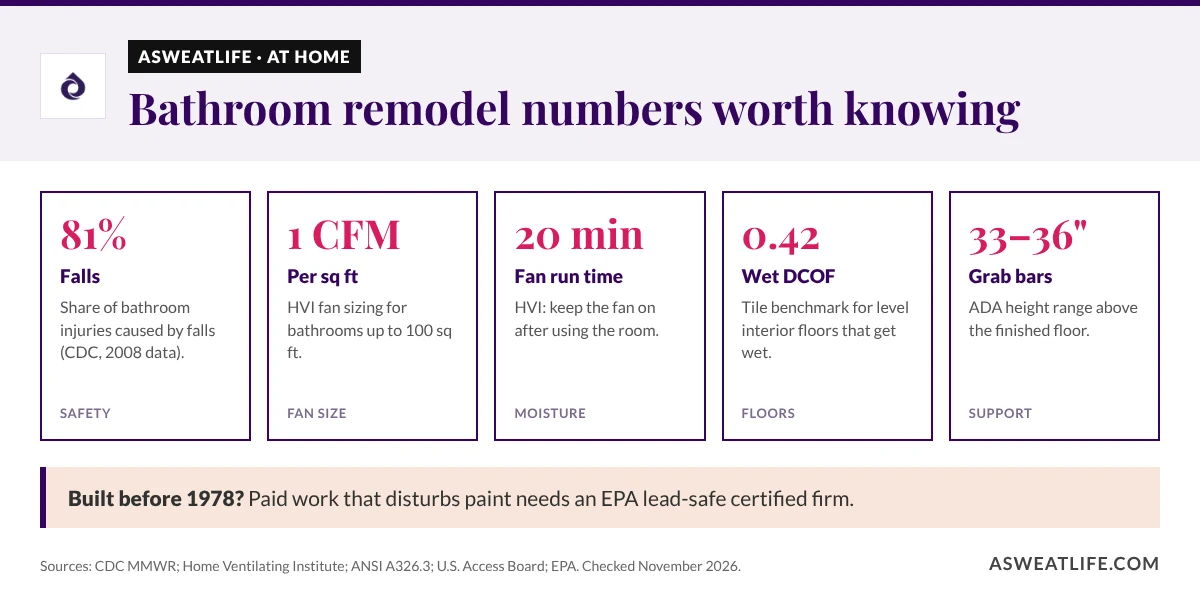
If you train regularly, your bathroom is part of your recovery routine: it’s where you rinse off after a run, hang sweaty kit and stretch out tight calves. A bathroom remodel for active people should plan for all of that, and for wet floors too. A CDC analysis estimated 234,094 nonfatal bathroom injuries in US emergency rooms in 2008, and 81.1% were falls.
Here’s how to spot what your post-workout routine needs, check your house before you design, plan a shower and floor that work for recovery, deal with sweaty gear and humidity, and budget for the parts that keep it all working.
What Does Your Post-Workout Routine Need From a Bathroom?
Most remodels start with inspiration photos. A better starting point is a week of paying attention to what happens after you train. Where does the sweaty kit end up? Do your towels ever fully dry? Is there anywhere to sit down when your legs are done? Does the floor feel slick when you step out with wet feet?
Write each annoyance down. Each one points to a specific fix:
| What happens after a workout | Likely cause | What to plan for |
|---|---|---|
| Damp kit and towels smell by morning | Not enough airflow or hanging space | A properly sized fan on a timer, plus hooks or a heated towel rail |
| Mirror fogs and mildew keeps coming back | Undersized or poorly ducted exhaust fan | A fan vented outside, sized to the room |
| Floor feels slick with wet feet | Polished tile, no drip zone | Tile rated for wet floors and a mat zone outside the shower |
| Foam roller, bands and products everywhere | Storage that doesn’t fit what you own | Deep drawers and an outlet inside a cabinet |
| Nowhere to sit or stretch | Every inch used by fixtures | A shower bench and a clear patch of floor |
| Muddy legs and shoes after trail runs | A fixed showerhead only | A hand shower on a slide bar |
That list becomes your brief. Every design choice after this should solve something on it, which keeps your budget aimed at the problems you deal with every training day.

What Should You Check Before You Design?
Older homes come with constraints you can’t wish away. Joist direction affects where a drain can move, existing vent stacks influence where fixtures go, and an old subfloor may need reinforcing before heavy tile or a curbless shower goes in.
Age raises a health question too. Under the EPA’s Renovation, Repair and Painting rule, anyone paid to disturb paint in a home built before 1978 must be certified, and the EPA recommends homeowners hire a lead-safe certified contractor for that work. Tearing out an old bathroom almost always disturbs paint, so raise it early.
Those limits don’t leave you stuck with a bad room. They just mean the smart version of the project starts with what’s behind the walls. If you’re researching CT bathroom remodeling, pay attention to how each contractor talks about waterproofing, ventilation and shower layout in older homes. Those answers say more about how the room will hold up to daily post-workout use than a finish board does.
In Connecticut, check the paperwork too. The state’s Department of Consumer Protection says all home improvement contractors must be registered with the department. It also reminds homeowners that Connecticut gives you three days to cancel a home improvement contract and suggests confirming with your town building official that a permit has been pulled.
How Do You Design a Shower for Recovery?
The shower does the heavy lifting in a post-workout bathroom, so it’s worth getting the details right.
- A hand shower on a slide bar lets you rinse muddy legs, aim water at tight shoulders or calves, and clean the shower itself more easily. Pair it with a fixed head if you like both.
- A built-in bench gives you somewhere to sit when your legs are spent, prop a foot for a calf stretch or shave your legs without balancing on one foot.
- Niches sized for full-size bottles keep body wash and shampoo off the floor. Measure your tallest bottle before tile goes up.
- A low or curbless entry means one less step to catch a tired foot on, where the structure and drainage allow it.
- Thermostatic or pressure-balancing valves keep the temperature steady when someone flushes or runs a tap elsewhere in the house.
The floor matters as much as the fixtures. In the CDC’s bathroom injury analysis, injuries in or around the tub or shower made up the largest share for younger adults, so don’t assume slips are only an older person’s problem. Tile makers point to a wet DCOF of 0.42 or greater as the benchmark for level interior floors that get wet. Smaller tiles with more grout lines can add grip inside the shower.

How Do You Handle Sweaty Gear and Humidity?
A training habit adds a lot of moisture to a small room: hot showers, wet towels and sweaty clothes that need to dry before they hit the laundry. Without good ventilation, that moisture turns into fogged mirrors, peeling paint and mildew.
The Home Ventilating Institute recommends a fan that moves 1 CFM per square foot of floor area in bathrooms under 100 square feet, with a 50 CFM minimum. Larger rooms are sized by fixture: 50 CFM each for a toilet, shower or tub and 100 CFM for a jetted tub. HVI also recommends a control that keeps the fan running for at least 20 minutes after each use, which is exactly when your post-run towels are hanging up.
- Put the fan on a timer or humidity sensor so it keeps running after you’ve left the room.
- Duct it outside. A fan that vents into the attic just moves the moisture somewhere you can’t see it.
- Give wet kit somewhere to hang flat. Hooks spaced apart, a heated towel rail or a fold-down drying rack all beat a heap on the floor.
- Choose a ventilated hamper so damp clothes aren’t sealed in until laundry day.
These are the numbers worth having in hand when you talk to contractors:
Can You Make Room to Stretch and Recover?
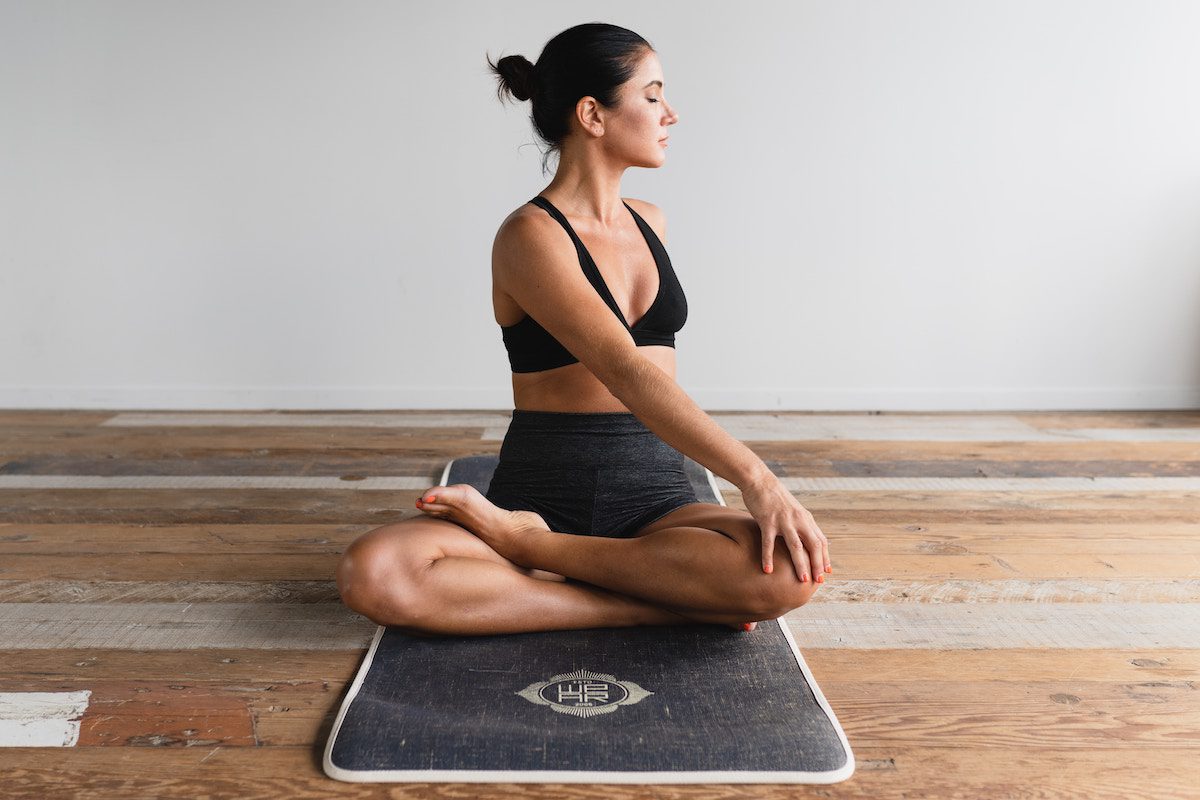
If you foam roll or stretch after a shower, the bathroom can be a good place to do it: it’s warm, it’s private and your tools can live there. That only works if there’s floor space.
A standard yoga mat is roughly six feet long, so measure for a clear run that size once the vanity, toilet and door swing are accounted for. If it doesn’t fit, a few layout moves can find the space:
- Pocket or outswing doors stop the door from eating floor space.
- A wall-hung vanity shows more floor and makes the room feel bigger.
- A recessed medicine cabinet adds storage inside the wall instead of into the room.
- A shower instead of a tub can free up space, if you won’t miss baths.
Think in clearances as well as fixture sizes. A double vanity sounds useful for two people training on the same schedule, but not if it squeezes out the only open floor in the room. Heated floors are a comfort upgrade worth pricing if you like to stretch on tile in winter.
How Do You Store Recovery Tools and Gear?
Active households keep more in the bathroom than most: foam rollers, resistance bands, massage guns, blister kits, sports tape, sunscreen, electrolyte tablets and a rotating pile of water bottles. Generic storage turns that into clutter.
- Deep drawers beat lower cabinets because you can see everything without kneeling.
- An outlet inside a drawer or cabinet keeps a massage gun, toothbrush or hair dryer charging out of sight.
- A dedicated first-aid zone for blister care, tape and bandages saves hunting through bags after a long run.
- A hook or shelf by the door for your gym bag keeps it off the floor.
- Separate zones for each person if two of you share the room.
It sounds minor, but tools you can see and reach are tools you’re more likely to pick up. It’s the same idea behind building a wellness routine from small habits you can repeat.
How Should You Light a Bathroom for Early and Late Workouts?
If you train at 5:30 a.m. or after work, you’ll use the bathroom at both ends of the day. Layered lighting handles both: bright, even light at the mirror for getting ready, and something softer for winding down at night.
Sconces at face height on either side of the mirror usually beat a single overhead bar light, because they light your face from the front and avoid casting shadows down it. Put them on a dimmer. A low-level night light helps you find your way at night without a blast of bright light, which is useful if an early alarm is part of your training plan.
How Do You Make a Bathroom Safer for Active Bodies?
The CDC’s analysis found bathroom injury rates rose with age, especially around the toilet, and its authors pointed to changes in the room itself as one way to reduce that risk. A remodel is the cheapest time to build in support, even if you’re nowhere near needing it.
- Add blocking behind the walls near the toilet and in the shower so grab bars can be installed securely later, whether that’s for aging or after a knee surgery. ADA standards place grab bars 33 to 36 inches above the floor, a useful reference even in a private home.
- Plan a drip zone with a mat or a different floor finish right outside the shower.
- Keep the route clear so you’re not stepping over gear with wet feet.
Injuries happen to athletes too. If you’ve ever tried to shower on crutches, you’ll appreciate a bench, a hand shower and somewhere solid to hold. Our guide to a personal safety plan covers the bigger picture of staying active and independent at home.
What Should You Budget for Behind the Walls?
The least glamorous line items protect your remodel the most, especially in a room that handles daily post-workout showers.
| Hidden item | Why it matters |
|---|---|
| Waterproofing membrane | Keeps water out of the walls and floor behind tile |
| Correct shower floor slope | Sends water to the drain instead of pooling |
| Fan ducting to the outside | Stops moisture from dumping into the attic or wall cavity |
| Blocking for grab bars and a bench | Lets you add support later without opening walls |
| GFCI protection | Protects outlets near water, including the one charging your massage gun |
| Shutoff valves and supply lines | Makes future repairs quick and contained |
| Framing and subfloor repairs | Old houses often need them once the walls are open |
Set aside contingency money, especially in an older home. It’s better to scale back a tile choice than to skip moisture management or proper prep.
Plan Your Post-Workout Bathroom
Use the planner below to size your exhaust fan and see which upgrades to prioritize for how you train.
Tell the planner about your bathroom and your training routine. It sizes the exhaust fan using the Home Ventilating Institute rule and ranks the upgrades that matter most for post-workout use. General guidance only; your contractor confirms what your house allows.
Room length (feet)
Room width (feet)
Biggest post-workout headache?
When was the house built?
How do you train?
Does it have a jetted tub?
Your priorities
Behind the walls
How Do You Make the Remodel Last?
Keep the hard-to-change elements simple and durable: tile, vanity proportions, plumbing locations and the lighting plan. Put personality into paint, mirrors, hardware and towels, which are easy to swap when your taste changes.
Think about the room on rest days too. A bathroom that’s easy to clean, well lit and well ventilated can double as a small recovery retreat. Our ideas for planning a spa day translate surprisingly well to a Sunday soak after a long week of training.
Post-Workout Bathroom Remodel FAQ
What should active people prioritize in a bathroom remodel?
Ventilation, a slip-resistant floor and a shower you can actually recover in: a hand shower, a bench and niches for full-size products. Then add storage for recovery tools and somewhere for wet kit to dry.
What size exhaust fan does a bathroom need?
The Home Ventilating Institute recommends 1 CFM per square foot for bathrooms under 100 square feet, with a 50 CFM minimum. Larger rooms are sized by fixture, and the fan should run for at least 20 minutes after each use.
What is the best floor tile for a wet bathroom?
Choose tile rated for level interior floors that get wet, which tile makers describe as a wet DCOF of 0.42 or higher.
Is a shower bench worth adding?
For most active people, yes. It gives you somewhere to sit when your legs are tired, prop a foot to stretch and stay steady if you’re ever injured.
Do I need a registered contractor in Connecticut?
Yes. Connecticut’s Department of Consumer Protection says home improvement contractors must be registered, and you can check a registration on the state’s eLicense site.
Should I add grab bar blocking if I’m young and fit?
It’s cheap insurance while the walls are open. Injuries and surgeries happen at any age, and blocking lets you add grab bars later without tearing out tile.
Plan the room around how you actually train, and your bathroom becomes part of your recovery instead of somewhere damp kit goes to sit.