
Beyond Brunch: Active Things to Do With Friends
Ice skating, beginner tennis, run clubs and more: seven active ways to spend time with friends, plus a picker that ranks plans for your group.

If every catch-up with your friends ends at the same brunch table, you’re not alone, and swapping in a few active things to do with friends can make those plans feel new again. It’s worth the effort: an analysis of American Time Use Survey data from 2003 to 2020 found that time spent with friends fell and social isolation rose over that period, even before the pandemic sped things up.
Below, you’ll find why shared experiences bring people closer, seven active ideas that work for mixed groups, a picker that ranks plans for your crew, and simple ways to make experience-based hangouts a habit.
Why Do Shared Experiences Bring Friends Closer?
Talking over a meal is great, but doing something together adds a different layer. You see how a friend handles a challenge, you laugh at the same mistake and you end up with a story you both tell for years.
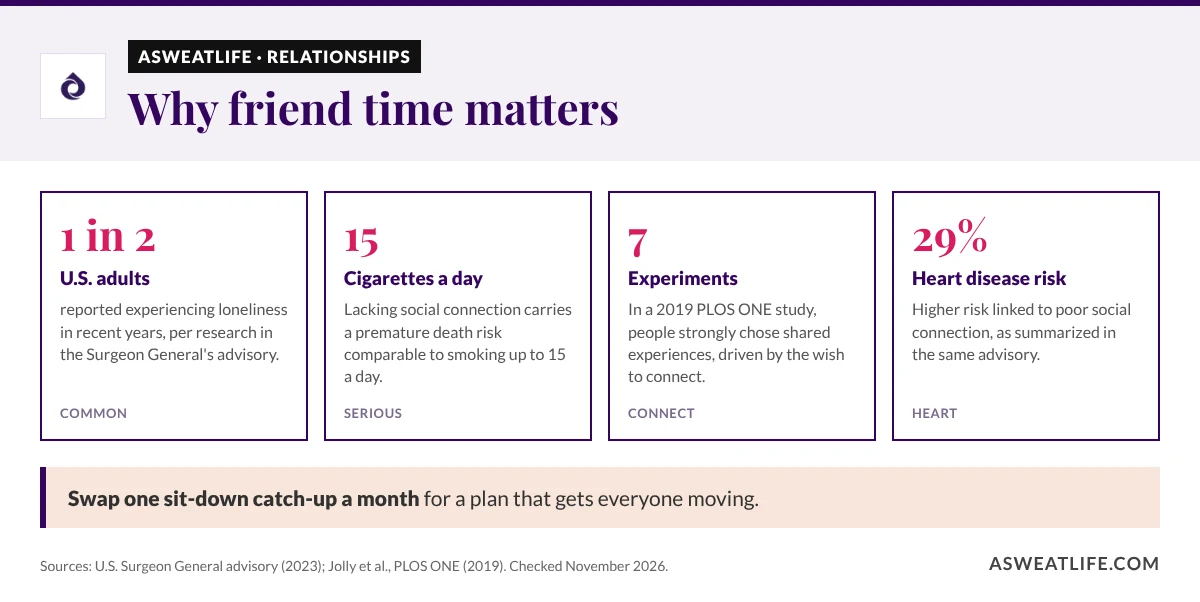
Research backs up the pull. Across seven experiments in a 2019 PLOS ONE study on shared experiences, people strongly preferred sharing an experience with someone else, even when sharing didn’t make it more enjoyable in the moment. Participants said they were driven by the desire to connect. In other words, the value is in the together part, whatever the activity.
There’s a health angle too. The U.S. Surgeon General’s 2023 advisory on loneliness and social connection reported that lacking social connection carries a risk of premature death comparable to smoking up to 15 cigarettes a day. Making time for friends counts as part of looking after yourself.


What Are the Best Active Things to Do With Friends?
The best plans get everyone moving a little without asking anyone to be an athlete. Here are seven that work for most groups.
1. Go Ice Skating Together
Ice skating is a great equalizer. Almost everyone wobbles at first, and the laughing starts the moment someone grabs the wall. For beginners, finding your feet on the ice with friends nearby takes the pressure off, since nobody expects anyone to glide on day one. If you’re near Jersey City, a beginner lesson can teach the basics like falling safely and stopping; elsewhere, look for public sessions or learn-to-skate classes at a local rink.
A few tips make the outing smoother: pick a quieter public session, rent skates that fit snugly, wear gloves and layers, and consider a helmet if you’re new. A skate around the rink followed by hot chocolate is a whole afternoon.
2. Take a Beginner Sports Class
When everyone is new, nobody has to pretend to know what they’re doing. A coached intro class handles the structure, so the group can focus on having fun. Tennis works especially well because doubles keeps four people busy and drills are easy to laugh through. In Manhattan, a group tennis class is one way of discovering a new hobby as a group, and most cities have beginner clinics at public courts or rec centers.
Other easy options include pickleball open play, a drop-in dance class or an intro session at a climbing gym. If you’re nervous about class culture, our guide to group fitness class etiquette covers the unwritten rules.
3. Join or Start a Run or Walk Club
A regular group run or walk gives friends a standing plan with no booking required. Pick a weekly time, an easy route and a coffee stop at the end. Our love letter to Chicago run clubs shows how a club can become a social anchor, and if not everyone runs, our 20-minute interval walking workout works for mixed groups.
4. Book a Creative Workshop
Pottery, painting, candle making and flower arranging keep hands busy and conversation flowing. They’re a good fit when energy levels vary or someone is recovering from an injury. You also leave with something you made, which beats a receipt.
5. Be Tourists in Your Own City
Ask each friend to choose one stop: a museum, a historic neighborhood, a botanical garden or a food hall you’ve never tried. Walk between them. Many cities have free museum days and self-guided walking routes, so this one can cost almost nothing.
6. Head Outside Without a Fixed Agenda
A hike, a bike ride or a picnic by the water gives you hours of side-by-side conversation. Choose a route the least experienced person will enjoy, pack water and snacks, and let the pace be whatever it turns out to be.
7. Volunteer Together
A park cleanup, a food bank shift or a community garden day gives your group a shared goal and a different kind of conversation. Many organizations take groups if you contact them ahead.
| Idea | Energy | Typical cost | Best for |
|---|---|---|---|
| Ice skating | Moderate | Rink entry and skate rental | Groups who like a laugh |
| Beginner tennis or pickleball | Moderate to high | Class fee or free open play | Four friends who want a regular game |
| Run or walk club | Easy to moderate | Free | A weekly standing plan |
| Creative workshop | Low | Class fee | Mixed energy levels |
| Hometown tourist day | Easy | Free to low | Curious groups on a budget |
| Hike or bike ride | Moderate | Free to low | Outdoor lovers |
| Volunteering | Easy to moderate | Free | Friends who want purpose |
How Do You Pick a Plan Everyone Will Enjoy?
The hardest part of an active hangout is matching it to the group. Budget, energy, fitness levels and how adventurous people feel all matter. Use the picker below to rank ideas for your crew and set up a three-month rotation.
Tell the picker about your group, and it ranks plans that get everyone moving and talking, plus a three-month rotation so the next hangout is already decided.
How many of you?
Budget per person
Energy level
Setting
Fitness levels in the group
How adventurous is everyone?
Also worth trying
Your three-month rotation
Plan Around Different Fitness Levels
- Choose activities with an easy mode. Skating, walking and pickleball let fitter friends push while others take it slow.
- Ask about injuries privately. Offer alternatives without making anyone explain themselves in front of the group.
- Pick a pace for the slowest person on hikes and rides, then add a loop for anyone who wants more.
- Mix in low-key options so the group isn’t always built around one person’s favorite sport.
How Do You Make Active Hangouts a Regular Habit?
The groups that keep doing this make it easy to plan. A few habits help:
- Rotate the organizer each month so one person isn’t always doing the work.
- Keep a shared list of ideas in a group chat or note.
- Include a free option every few months so cost never decides who can come.
- Put the next date on the calendar before you leave.
- Take a few photos, then put phones away so the day doesn’t turn into content.
Here’s what a simple rotation might look like for a group of four with mixed fitness levels and a modest budget:
| Month | Plan | Who organizes | Rough cost per person |
|---|---|---|---|
| 1 | Public ice skating session, then hot chocolate | Friend A | Rink entry and rental |
| 2 | Beginner tennis clinic, doubles afterward | Friend B | Class fee |
| 3 | Hometown tourist walk with a free museum stop | Friend C | Free to low |
| 4 | Pottery workshop | Friend D | Class fee |
Active plans can also help you move more. The CDC’s weekly physical activity guidelines recommend 150 minutes of moderate activity for adults, and a two-hour skate or hike covers a big share of that without feeling like a workout.
There’s still a place for brunch. Good conversation over a meal will always matter. Swapping one sit-down catch-up a month for something you do together keeps friendships from settling into a rut.
Frequently Asked Questions
What can I do with friends besides going out to eat?
Try ice skating, a beginner tennis or pickleball class, a group hike, a creative workshop, a hometown tourist day or volunteering together. Each gives you something to do side by side.
What are good cheap activities to do with friends?
Walks, hikes, park bike rides, pickleball open play, free museum days, volunteering and game nights cost little or nothing.
How do you plan an activity when friends have different fitness levels?
Pick activities with an easy mode, set the pace for the least experienced person and let fitter friends add extra on their own.
How often should friends get together?
There’s no set number. Many groups find that one planned outing a month, with a standing date, is easier to keep than trying to coordinate from scratch every time.