Fitness Without a Fitness Tracker: How to Move for the Fun of It
Trackers can help, but they can also turn movement into a test. Here's how much activity you actually need and how to build a week with tracker-free days.

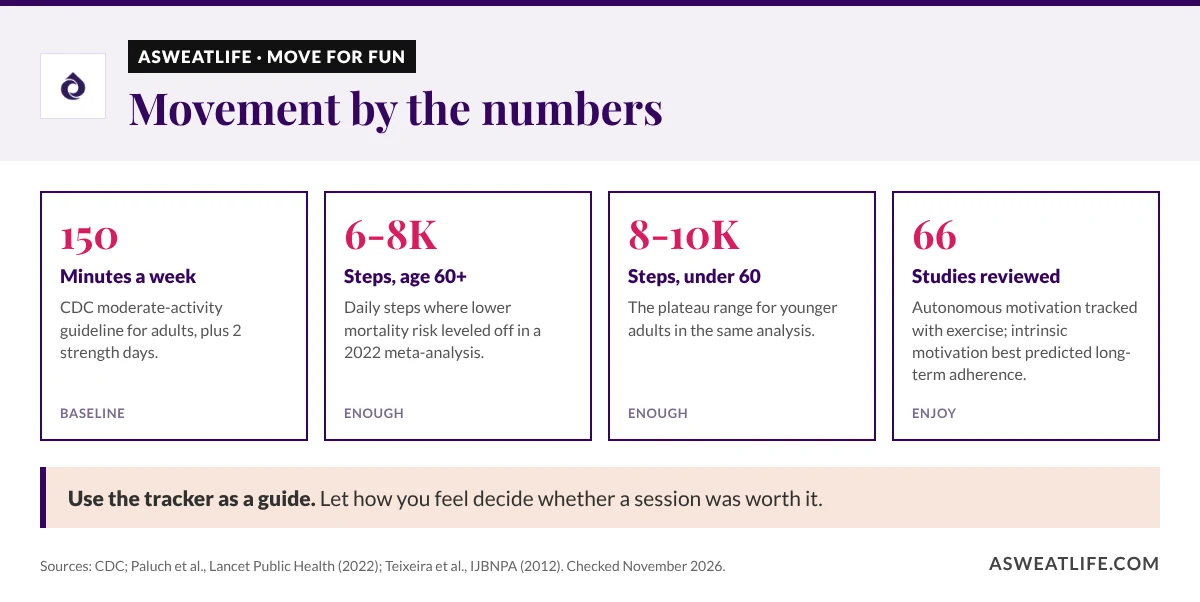
If your watch decides whether a walk was worth it, fitness without a fitness tracker can sound like skipping the workout entirely. The research points the other way: in a 2022 meta-analysis of daily steps and mortality, the benefit leveled off at 6,000 to 8,000 steps a day for adults 60 and older and 8,000 to 10,000 for younger adults, well below the point where many people keep chasing numbers.
Below, you’ll learn when tracking helps and when it backfires, why enjoyment keeps people moving for years, how to read your body instead of a screen, and a simple plan for tracker-free days.
Do Fitness Trackers Help or Hurt Motivation?
This article is for educational purposes only and doesn’t replace advice from a doctor or qualified trainer. If your tracker is part of a medical plan, such as heart rate monitoring after a diagnosis, keep using it as your care team recommends.
Trackers do work for a lot of people. A large umbrella review of wearable activity trackers published in 2022 found they were linked to roughly 1,800 extra steps a day, about 40 more minutes of walking and around 1 kg of weight loss. That’s a real benefit, and you don’t need to throw your watch in a drawer for good.
The problem shows up when the numbers become the point. A few signs the balance has tipped:
- You feel guilty about a good walk because it came up short of a target.
- You skip rest days to protect a streak, even when you’re sore or run down.
- You choose workouts by the score they’ll produce instead of what you want to do.
- You check the screen mid-activity more than you look around.
If two or more of those sound familiar, a few tracker-free days a week can help reset how exercise feels.
Where Did the 10,000 Steps Goal Come From?
Not from a clinical trial. The authors of the Lancet Public Health analysis note that the 10,000 steps goal began with a marketing campaign in Japan, and that there was little evidence behind it as a health target. Their own data, pooled from 15 studies and more than 47,000 adults, found risk kept falling as steps rose, but only up to a point that depended on age.
| What you’re aiming for | What the evidence says | How to use it |
|---|---|---|
| Daily steps, age 60+ | Lower mortality risk leveled off around 6,000 to 8,000 | A useful floor to aim for |
| Daily steps, under 60 | Leveled off around 8,000 to 10,000 | More steps help, up to a point |
| Weekly aerobic activity | 150 minutes of moderate or 75 of vigorous activity | Count any movement that raises your breathing |
| Strength training | 2 or more days a week | Bodyweight moves and carrying groceries count |

The CDC’s physical activity guidelines for adults set the weekly target at 150 minutes of moderate activity, or 75 minutes of vigorous activity, plus two days of muscle strengthening. None of that requires a device. A brisk walk, a swim or a game with friends all count.
Why Does Enjoyment Keep You Moving Longer?
Psychologists call it intrinsic motivation: doing something because you find it satisfying, rather than for a reward or a number. A systematic review of 66 studies on exercise motivation found consistent links between more self-driven forms of motivation and exercise, with intrinsic motivation the stronger predictor of sticking with it over the long term.
That helps explain a familiar pattern. Someone who struggles to keep a gym routine may happily spend whole afternoons hiking, dancing or gardening. The activity feels like the reward, so it doesn’t depend on willpower or a streak.
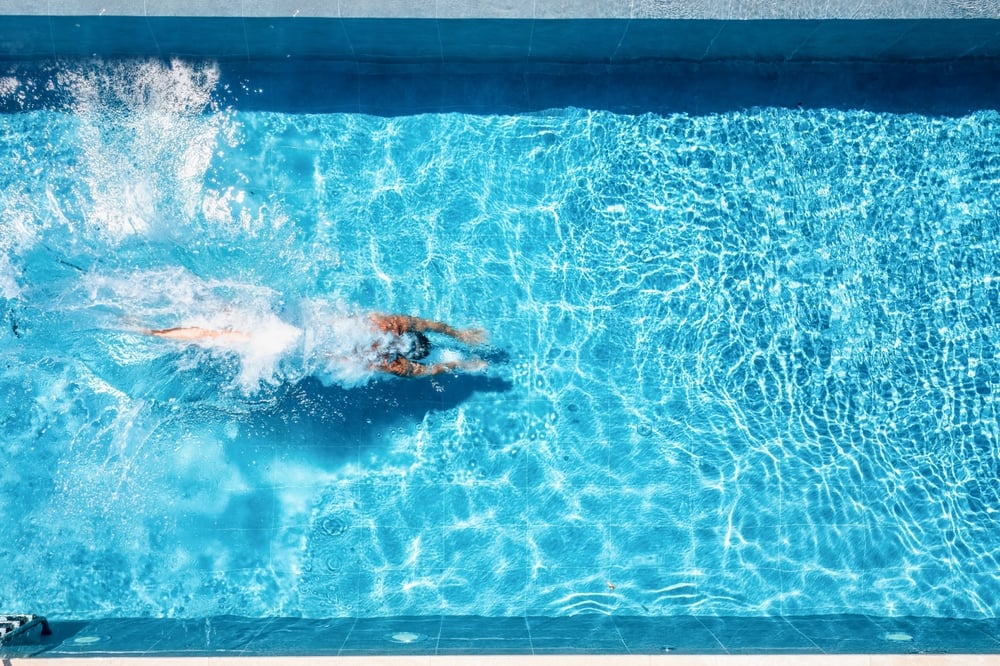
Swimming is a good example. It asks you to pay attention to breathing, timing and the feel of the water, which leaves little room for checking a screen. For adults who never learned or feel rusty, lessons can turn finding your rhythm in the water into something you look forward to, without counting a single lap.
How Do You Listen to Your Body Instead of a Screen?
A tracker can’t tell you how a session felt. You can, if you build the habit of asking. The CDC’s talk test for exercise intensity is a simple start: at moderate effort you can talk but not sing, and at vigorous effort you can only manage a few words before you need a breath.
After a session, try these questions instead of opening the app:
- Did I enjoy that, or did I just get through it?
- Do I have more energy than before I started, or less?
- Is anything sore in a way that feels like a warning instead of normal effort?
- Would I happily do this again this week?
Your answers tell you what to repeat and what to change. If an activity leaves you drained every time, swap it. If one leaves you buzzing, schedule more of it.
How Do You Let Go of Exercise Guilt?
All-or-nothing thinking is the biggest trap that numbers set. A broken streak can feel like a failure, even though one missed day changes very little about your fitness.
- Count rest as part of the plan. Recovery is when your body adapts, and our ideas for what to do on rest days can keep you moving gently without turning a rest day into another workout.
- Stop using exercise as payment. Movement isn’t something you owe for a meal or have to earn before relaxing.
- Let short sessions count. A 10-minute walk still adds to your weekly total.
- Separate your worth from your output. A slower day is just information.
Which Activities Feel Like Play Instead of a Workout?
The best choice is the one you’d do even if nothing recorded it. Most people find these easier to enjoy than a solo session chasing a target:
| Activity | Why it feels like play | Easy way to start |
|---|---|---|
| Swimming | Breathing and rhythm keep your focus in the water | An adult beginner lesson or an easy session at a local pool |
| Pickleball or tennis | Short rallies, lots of laughing, built-in company | A beginner clinic or open play with a friend |
| Dancing | Music sets the pace, so you stop counting | A drop-in class or a kitchen playlist |
| Hiking or nature walks | New scenery replaces the step count | A short local trail on a weekend morning |
| Gardening | Real tasks with visible results | Thirty minutes of weeding or planting |
Getting outside helps too. Our guide to the five-minute outdoor reset habit shows how even short stretches of fresh air can lift a day.
Why Social Activities Make It Easier
Company changes how exercise feels. A weekend bike ride, a family hike or a casual afternoon on the pickleball court gives you something to look forward to and someone who expects you to show up. Racket sports are especially easy to start, since a beginner game is mostly laughing at missed shots. If you’re in Columbus, Ohio, local coaching can help you learn the basics; elsewhere, look for beginner clinics at nearby courts or rec centers.
Try the planner below to map a week that mixes the activities you like with a couple of tracker-free days.
Pick what you enjoy and how much the numbers get to you. The builder maps a week with tracker-free days, adds up your active minutes against the CDC weekly guideline and gives you check-in questions to use instead of a screen.
What do you watch most on your tracker?
When you miss a target, you feel…
Tracker-free days this week
Usual session length
Movement you actually like (pick a few)
Your week
Ask yourself instead of checking the screen
How Do You Build a Week With Tracker-Free Days?
You don’t have to give up your device. Use it less, on purpose, and see what changes.
- Pick one or two tracker-free days and leave the watch at home or turn off notifications.
- Put your favorite activity on those days, so the first experience without numbers is a good one.
- Keep a rough weekly total in your head or on paper, measured against the 150-minute guideline.
- Check in afterward with the questions above instead of the app.
- Use the tracker for structure when it helps, like a training plan or a medical goal.
Look for changes that numbers don’t capture: better sleep, steadier mood, more energy in the afternoon, less dread before a workout. Those often show up first.
If running is your main activity, our tips on making running more enjoyable go deeper on easy pacing and keeping runs fun.
Frequently Asked Questions
Is it OK to work out without a fitness tracker?
Yes. The CDC’s weekly guidelines can be met without any device. A tracker can help with structure, but how you feel during and after activity is a reliable guide for most healthy adults.
Do I really need 10,000 steps a day?
No. A 2022 meta-analysis found the mortality benefit leveled off around 6,000 to 8,000 steps a day for adults 60 and older and 8,000 to 10,000 for younger adults. The 10,000 figure began as a marketing campaign.
Are fitness trackers bad for you?
Not in general. Research links them to more walking and modest weight loss. They become a problem when missing targets causes guilt, or when streaks push you to skip rest.
How can I tell if I’m working hard enough without a tracker?
Use the talk test. At moderate effort you can talk but not sing. At vigorous effort you can only say a few words before taking a breath.