Evening Screen Time and Recovery: How to Protect Your Sleep
Evening screens can chip away at the sleep your body needs to recover from training. Here's what the research shows, what tinted lenses can and can't do, and how to build a wind-down that works.

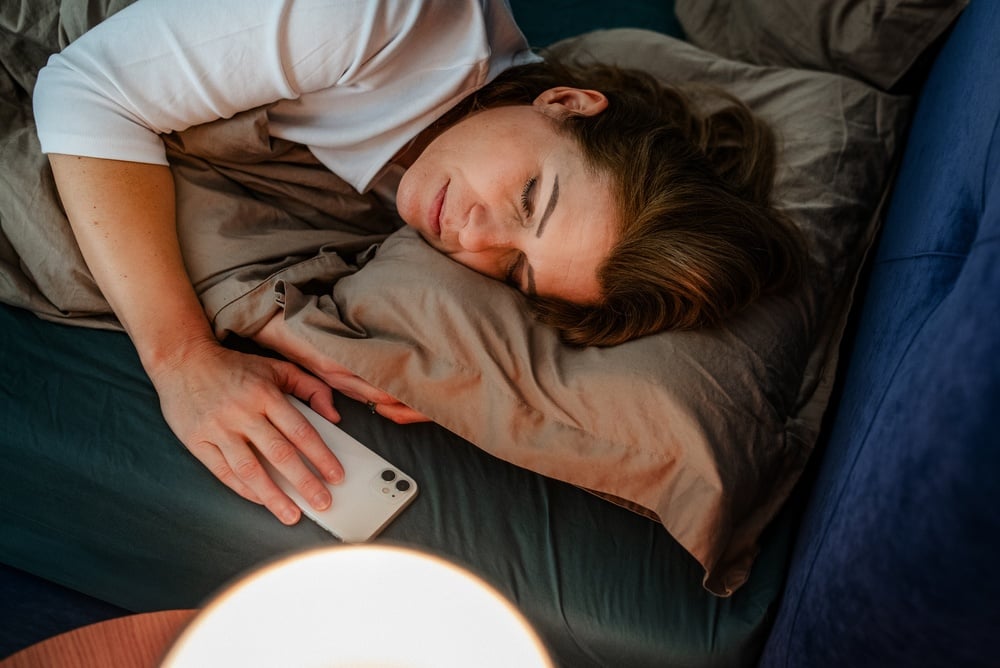
You can track every rep and hit your protein target and still wake up groggy if your evenings end with a glowing screen. Evening screen time cuts into the sleep your body uses to recover: a 2025 U.S. study summarized by Sleep Education found that adults who used screens before bed had a 33% higher rate of poor sleep quality.
Below, you’ll learn why sleep is the recovery tool most active adults shortchange, how screen light affects your eyes and your body clock, what tinted lenses can and can’t do, and the daily habits that protect both.
This article is for educational purposes and doesn’t replace advice from a doctor, eye care professional or sleep specialist. If you have ongoing eye symptoms or insomnia, get checked.
Why Does Evening Screen Time Matter for Workout Recovery?
Training breaks your body down, and sleep is when much of the rebuilding happens. According to a review of sleep hygiene for athletes, sleep loss hurts reaction time, accuracy, strength and endurance, while getting more sleep tends to help. The same review calls better sleep a simple, effective recovery strategy, which is good news for anyone tempted by pricey supplements instead.
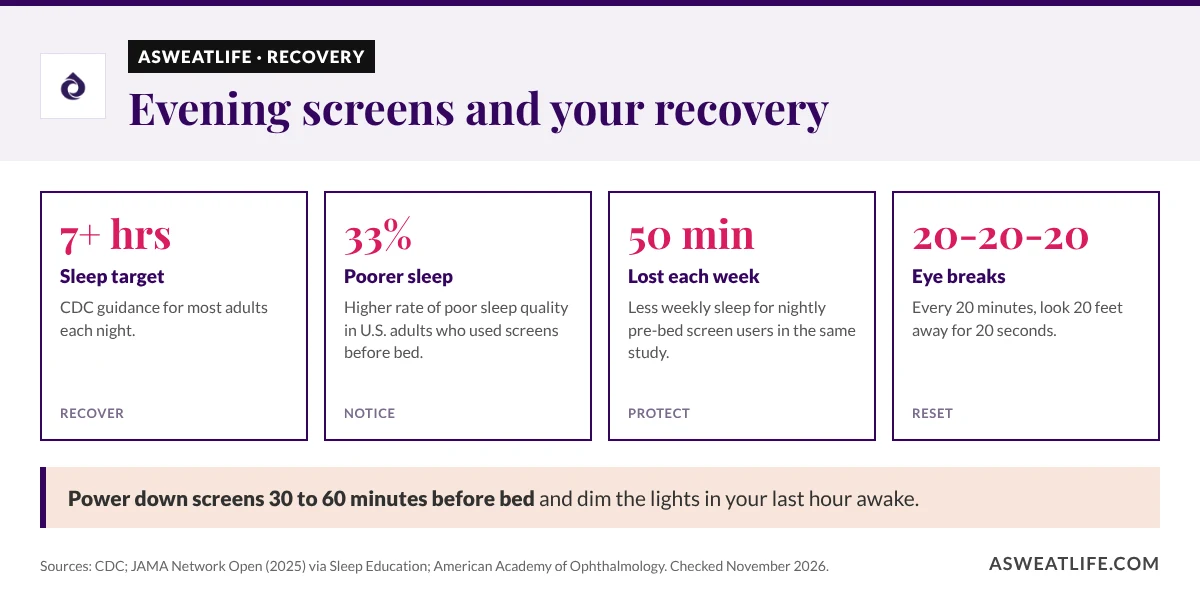
For most adults, the CDC puts the floor at at least 7 hours of sleep each night. If your training is heavy, think of that number as a minimum. Late scrolling chips away at it a few minutes at a time, which makes the loss easy to miss until your legs feel heavy on a morning run or your lifts stall.
Poor sleep and hard training also stack up. If you’re logging more sessions while sleeping less, read up on the warning signs of overtraining before you add another workout to the calendar.
How Does Screen Light Affect Your Eyes and Your Body Clock?
Screens, LED bulbs and the overhead lights in offices and gyms all give off short-wavelength (blue) light, and so does the sun. During the day, that light helps keep you alert. At night, it sends the wrong signal: Stanford Lifestyle Medicine notes that light from screens can delay melatonin release from the brain’s pineal gland, which makes it harder to fall asleep.
Tired, dry eyes by late afternoon are a separate issue. The American Academy of Ophthalmology’s guide to blue light glasses explains that long hours of screen use make you blink less, and that reduced blinking is what drives most digital eye strain. The light itself hasn’t been shown to damage your eyes.

What Happens to Your Sleep After Late Screen Use?
The numbers from two 2025 studies, summarized by the American Academy of Sleep Medicine, are hard to ignore:
- Adults across the U.S. and Puerto Rico who used screens before bed had a 33% higher rate of poor sleep quality and slept about 50 minutes less per week than people who skipped them (JAMA Network Open).
- Nearly 40,000 university students in Norway showed a 59% higher chance of insomnia symptoms and about 24 minutes less sleep per night for each extra hour of screen use after getting into bed (Frontiers in Psychiatry).
Fifty minutes a week sounds small, but over a 12-week training block it adds up to roughly 10 hours of lost sleep. The two studies show associations, so screens aren’t the only factor, but the pattern lines up with what sleep experts already recommend.
| Evening habit | What the research links it to | Why it matters for training |
|---|---|---|
| Screens in the hour before bed | Higher rate of poor sleep quality, less sleep per week | Less time for recovery between sessions |
| Screen use after getting into bed | More insomnia symptoms, about 24 fewer minutes per night per extra hour | Short nights can blunt strength, endurance and reaction time |
| Bright overhead lights late at night | Delayed melatonin release | Later sleep onset makes early workouts harder |
| Long stretches of desk screen work | Less blinking and digital eye strain | Tired eyes and headaches can drain energy for an evening session |

Do Tinted Lenses Help, and When Should You Wear Them?
Tinted lenses split into two jobs, and the evidence is different for each. For daytime eye strain, the American Academy of Ophthalmology doesn’t recommend special eyewear for computer use, because eye strain comes from how you focus and blink. Clear lenses with an anti-glare coating can still cut reflections from ceiling lights and windows, which some people find more comfortable at a desk.
Evening use has stronger, though still limited, support. In a small 2018 trial of amber lenses, people with insomnia symptoms who wore them for two hours before bed for a week reported better sleep than when they wore clear lenses. In healthy adults, a 2021 trial found that evening blue-light-blocking glasses improved self-reported sleep, but objective sleep measures didn’t change much.
If you want to try them, choose tinted lenses for screen use that match the time of day: clear or light yellow options for work hours and deeper amber or red tints for the last couple of hours before bed. Treat them as one part of a wind-down routine, alongside dimmer lights and an earlier screen cutoff.
| Lens type | When people use it | What to expect |
|---|---|---|
| Clear with anti-glare coating | Daytime desk work | Fewer reflections; no proven effect on eye strain |
| Light yellow tint | Daytime screen use | Slight color shift; same caveats as clear lenses |
| Amber tint | The 2 to 3 hours before bed | Small trials suggest better self-reported sleep |
| Red tint | Late evening in dim light | Filters more light; colors look strongly shifted |
How Do You Build an Evening Wind-Down That Supports Recovery?
Waiting until bedtime to fix your routine rarely works. Instead, work backward from the time you want to be asleep and give each step a set time. Sleep Education recommends powering down electronics at least 30 to 60 minutes before bed, and the planner below builds that into a timeline around tomorrow’s workout.
Enter the time you want to be asleep, your sleep goal and tomorrow’s training plan. The planner works backward to give you a screen cutoff, a lights-down time and a wake-up time.
What time do you want to be asleep?
Sleep goal
Tomorrow’s training
Your usual evening screen
Your evening timeline
Tips for your setup
If your bedtime keeps slipping, our tips for going to bed early can help you move it back in small steps.
What Daily Habits Protect Eye Comfort and Deep Sleep?
Small habits stacked onto routines you already have work better than a total overhaul. Start with these.
Take Visual Breaks During Desk Work
The American Academy of Ophthalmology recommends the 20-20-20 rule: every 20 minutes, look at something about 20 feet away for 20 seconds. It relaxes your focusing muscles and gets you blinking normally again. Pair it with a quick stand-up stretch, and your hips and upper back get a break too.
Set a Screen Cutoff and Dim the Lights
- Set a cutoff: put your phone and laptop away 30 to 60 minutes before sleep.
- Dim room lights: switch to warm, low lamps instead of bright overhead fixtures in your last hour or two.
- Park devices early: charge your phone outside the bedroom so late-night checks stop tempting you.
- Use night mode: warmer display settings and lower brightness reduce glare in a dark room.
- Pair it with a wind-down: stretch lightly, read a paper book or lay out tomorrow’s workout gear.
Time Caffeine and Late Workouts Around Sleep
Screens aren’t the only thing that keeps you wired. A late pre-workout or afternoon cold brew can push bedtime back just as easily, so check our guide to fitting coffee into training without losing sleep. Keeping the same bedtime on training and rest days helps your body clock settle into a rhythm.
Frequently Asked Questions
Do blue light glasses help you sleep?
Small trials suggest amber lenses worn for a couple of hours before bed can improve self-reported sleep, especially in people with insomnia symptoms. The evidence is limited, so treat them as one part of a routine that also includes dimmer lights and a screen cutoff.
Do blue light glasses help with eye strain?
The American Academy of Ophthalmology doesn’t recommend them for eye strain, because strain mostly comes from blinking less during close-up screen work. Regular breaks, the 20-20-20 rule and a well-placed screen help more.
How long before bed should you stop using screens?
Sleep Education recommends powering down electronics at least 30 to 60 minutes before bed and keeping your phone out of the bedroom.
How much sleep do active adults need?
The CDC says most adults need at least 7 hours a night. During heavy training, many people find they need more, so aim above the minimum when your schedule allows.