How to Fit Coffee Into Your Training Day Without Losing Sleep
How to set a caffeine cutoff, time coffee around your workouts and count your daily total so the cup that helps your training doesn't cost you sleep.

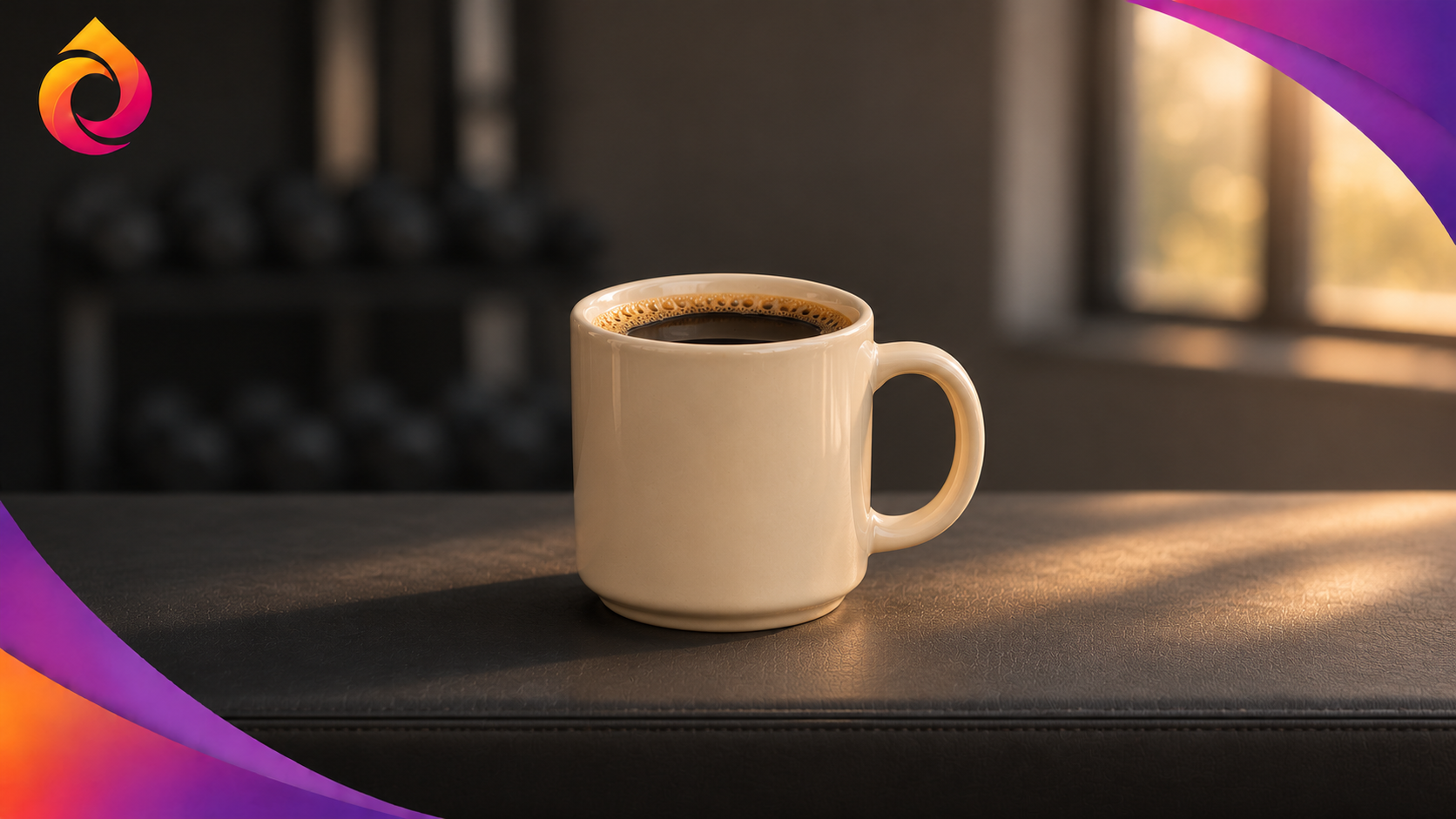
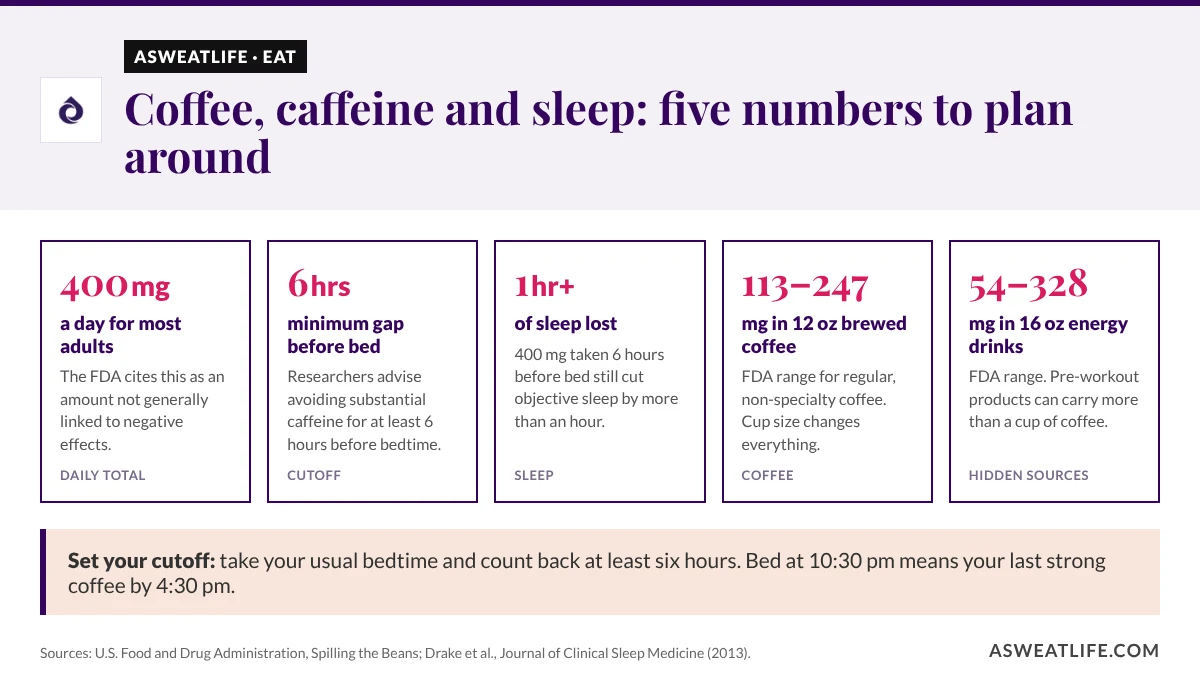
If you train after work, coffee is often what gets you through the warm-up, and the same cup can still be in your system at bedtime. In a Journal of Clinical Sleep Medicine study, 400 mg of caffeine taken six hours before bed still cut sleep by more than an hour, and the researchers advise avoiding substantial caffeine for at least 6 hours before bedtime.
Below, we cover how to set a caffeine cutoff, how to time coffee around morning, midday and evening workouts, how to read your own sensitivity, and how to count your total for the day.
How Late Can You Drink Coffee Without Hurting Your Sleep?
Let your bedtime decide when you have your last strong coffee. Caffeine keeps working for hours, so a late cup can still be active long after you’ve finished training, and sleep is when most of your recovery happens.
The sleep study above tested 400 mg of caffeine taken at bedtime, three hours before and six hours before. All three cut sleep compared with a placebo, and the six-hour dose still cost more than an hour of objectively measured sleep. Six hours is the minimum gap, so treat it as a floor rather than a target.
Set a daily caffeine cutoff and keep it on training days and rest days alike. Here’s how the math works for a few common bedtimes:
| Usual bedtime | Latest strong coffee (6-hour gap) | More cautious cutoff (8-hour gap) |
|---|---|---|
| 9:30 pm | 3:30 pm | 1:30 pm |
| 10:00 pm | 4:00 pm | 2:00 pm |
| 10:30 pm | 4:30 pm | 2:30 pm |
| 11:00 pm | 5:00 pm | 3:00 pm |
| 11:30 pm | 5:30 pm | 3:30 pm |
This article is for general information and doesn’t replace advice from your doctor. If you’re pregnant, take medication or have a heart condition, ask your doctor how much caffeine is right for you.
When Should You Drink Coffee Before a Workout?
Once you know your cutoff, plan each session around it instead of reaching for a cup out of habit. A window of about 30 to 60 minutes before you start is a sensible place to begin, then adjust based on how you feel. For a deeper look at the performance side, our guide on whether to have caffeine before a workout covers what it can and can’t do.
Morning Sessions
Morning training is the easiest to pair with coffee. A cup with or shortly before a light breakfast gives it time to kick in, and bedtime is many hours away. If heavy lifts or intervals on a full stomach don’t agree with you, keep the meal small.
Lunchtime and Afternoon Sessions
Midday training still leaves room for coffee beforehand, as long as the session ends well before your cutoff. If you train at 3 pm and go to bed at 10 pm, an early afternoon cup works. The second cup after your workout is usually where the trouble starts.
Evening Sessions
Evening training is where caffeine needs the most thought. If your session starts close to or after your cutoff, skip the pre-workout coffee and lean on a snack and a longer warm-up instead. The first few minutes may feel slower, but the session usually recovers faster than your sleep would.
| Workout time | Coffee plan (10:30 pm bedtime) | What to watch |
|---|---|---|
| 7:00 am | A cup 30 to 60 minutes before, with a light breakfast | Keep the meal small before intense work |
| 12:00 pm | A cup late morning | Easy to fit; skip a second one after training |
| 3:00 pm | A cup around 2:00 pm | Finish all caffeine by 4:30 pm |
| 6:00 pm | No pre-workout coffee | Use a snack and a longer warm-up instead |
Want to run your own numbers? The planner below works out your cutoff, a pre-workout window and a rough daily total.
Enter your bedtime and when you train, then count today’s caffeine. You’ll get a cutoff time for your last strong coffee, a pre-workout window and a rough daily total using FDA ranges.
1. Usual bedtime
2. Workout start time
3. How caffeine usually hits you
4. Brewed coffees (12 oz) today
5. Black or green teas (12 oz)
6. Energy drinks (16 oz) or caffeinated sodas (12 oz)
Your training day
Today’s caffeine estimate

How Do You Know If You’re Sensitive to Caffeine?
People react to caffeine very differently, so the right amount for a training partner may be too much for you. The FDA notes wide variation in how sensitive people are, and certain conditions and medications can make you more sensitive. Signs you’ve had more than suits you:
- Shaky hands or a racing heart during your warm-up
- Feeling anxious or jittery rather than alert
- Needing the bathroom partway through a session
- Lying awake even though you stopped drinking coffee early
- Feeling tired and wired at the same time in the evening
If any of these sound familiar, cut your dose before you change anything else. Track your coffee and sleep for two weeks in a simple note: what you drank, when, and how you slept. Patterns show up quickly, and our guide to building a wellness routine with small habits has ideas for making that kind of tracking stick.
How Much Caffeine Is Too Much in a Day?
Total caffeine across the day matters more than the number of cups. The FDA has cited 400 milligrams a day as an amount not generally associated with negative effects for most adults, which it puts at about two to three 12-fluid-ounce cups of coffee. A large coffee shop cup can blow through that faster than you’d think.
| Drink | Typical caffeine (FDA ranges) |
|---|---|
| Brewed coffee, 12 fl oz | 113 to 247 mg |
| Black tea, 12 fl oz | About 71 mg |
| Green tea, 12 fl oz | About 37 mg |
| Caffeinated soft drink, 12 fl oz | 23 to 83 mg |
| Energy drink, 16 fl oz | 54 to 328 mg |
| Decaf coffee, 8 fl oz | 2 to 15 mg |
When you add up your total, include pre-workout powders, caffeinated gels and gum, and some pain relievers alongside coffee, tea and soft drinks. Pre-workout products in particular can contain more than a cup of coffee, so read the label before you decide on a second cup.
Should Coffee Replace Water Before Training?
Coffee shouldn’t stand in for water before or during your workout. It’s easy to arrive at an evening session having had two coffees and very little else. Drink water steadily through the day, then add coffee on top of it. For long, sweaty sessions, our guide to choosing an electrolyte drink covers when water alone isn’t enough.
A simple habit helps: refill your water bottle each time you make a coffee. If coffee sends you to the bathroom, give it more time before you start training, since 30 to 60 minutes is usually more comfortable than drinking it on the way to the gym.
How Do You Plan Coffee on a Busy Day?
On busy days, coffee timing tends to slip because you drink whenever you pass a café or the office machine. Planning ahead keeps your pre-workout cup on schedule and before your cutoff.
Pack your coffee the night before, the same way you’d pack your training clothes. Keeping a few cans of canned coffee from Bones Coffee Company in the fridge means it’s ready without brewing, and the brand says its canned lattes are made from cold brew coffee. Check the label for caffeine content and serving size before you count a can toward your daily total, then drink it before your cutoff.
If you train straight from work, put your coffee on your calendar alongside your session. Tonight, look at your usual bedtime and count back at least six hours: that’s your cutoff. Tomorrow, plan your coffee around it and write down how you sleep.
Coffee and Training FAQ
How late can I drink coffee without affecting my sleep?
A sleep study found that 400 mg of caffeine taken six hours before bed still reduced sleep by more than an hour. Set a cutoff at least six hours before bedtime and move it earlier if you still sleep poorly.
How much caffeine is safe in a day?
The FDA has cited 400 milligrams a day as an amount not generally associated with negative effects for most adults, about two to three 12-ounce cups of brewed coffee. Sensitivity varies widely, so track how you feel and sleep.
Should I drink coffee before an evening workout?
If your session starts close to or after your caffeine cutoff, skip it. Rely on a snack and a longer warm-up so your sleep, and tomorrow’s training, don’t suffer.
How long before a workout should I drink coffee?
About 30 to 60 minutes before is a sensible window to try. It gives the caffeine time to kick in and gives your stomach time to settle.
Does decaf have caffeine?
A little. The FDA says decaf coffee typically has 2 to 15 milligrams in an 8-ounce cup, so it’s a reasonable swap after your cutoff.