Told to Lift Light? New NSCA Guidelines Say Women Respond to Strength Training Much Like Men
The NSCA's first update to its female strength training guidelines in 37 years says women respond to lifting much like men, and that years of undertraining have held many women back.

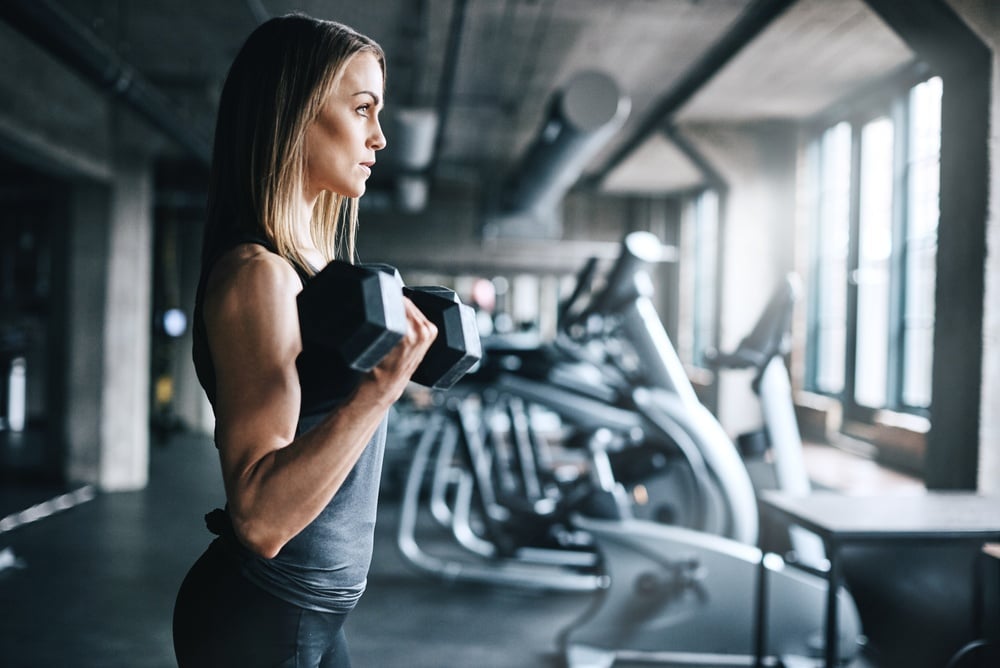
If you’ve ever been nudged toward the pink dumbbells and told to keep things “toned,” the people who train athletes for a living just put that advice to rest. The revised recommendations, the National Strength and Conditioning Association’s first in 37 years, challenge outdated assumptions about gender: women respond to strength training much like men do, and the foundations of lifting heavy apply to everyone.
The National Strength and Conditioning Association (NSCA) published the update as two peer-reviewed position statements in the Journal of Strength and Conditioning Research, replacing performance guidelines last revised in 1989. Women are leaning into strength training more than ever, so here’s what the new guidance says, why the NSCA thinks women have been held back, and what it means for your own strength goals.
What the New NSCA Guidelines for Women Say
The headline message is simple. In Part II, titled Training Adaptations and Program Design, the authors write that core principles such as progressive overload “remain relevant for all humans” and that female athletes respond to strength and conditioning programs similarly to male athletes. Part II went online on June 12, 2026 and is organized into four sections: neuroendocrine responses and adaptations, neuromuscular adaptations, metabolic adaptations and program design.
The statement doesn’t pretend bodies are identical. It notes that sex-specific physiological differences may lead to different needs, rates or magnitudes of adaptation. What changes is the starting assumption: there’s no need for a softer approach to resistance training just because the lifter is a woman.
Part I, Lifespan, Injury, and Health Considerations, followed online on July 1, 2026. It is split into three sections (lifespan development, injury considerations and health considerations) and is written to help strength and conditioning professionals apply current evidence to female athletes at every major life stage.
Both papers share the same nine authors, led by Nicole C. Dabbs, with co-authors including Abbie Smith-Ryan and N. Travis Triplett. The NSCA’s board of directors voted on February 6, 2026, to amend and restate its Position Statement on Strength and Conditioning of Female Athletes, covering Part 1 and Part 2.
Why the NSCA Says Women Have Been Undertrained
The NSCA argues that the messages women have heard about lifting for most of their lives may be one of the biggest barriers to their strength and performance. The guidelines put it bluntly: “The provision, resourcing, consistency and delivery of these programs is still restricted in many ways and fundamentally limits the actual potential of female athletes that is often incorrectly attributed to their biology.”
That framing extends to kids. The guidelines say girls respond to strength and conditioning programs similarly to boys, and that past assumptions of male superiority may partly reflect the fact that boys were encouraged to lift more.
Exercise scientist and fitness coach Alyssa Olenick has made the same point in a post on women’s training history: “So much of what we blame on women’s bodies may really come down to women being undertrained for a really long time.” She added, “When we compare the sexes, we’re often comparing very different training histories, not just different biology.”
If that history interests you, author Haley Shapley traced it in our conversation about the history of women’s strength in her book “Strong Like Her”.
Strength Training Across a Woman’s Lifespan
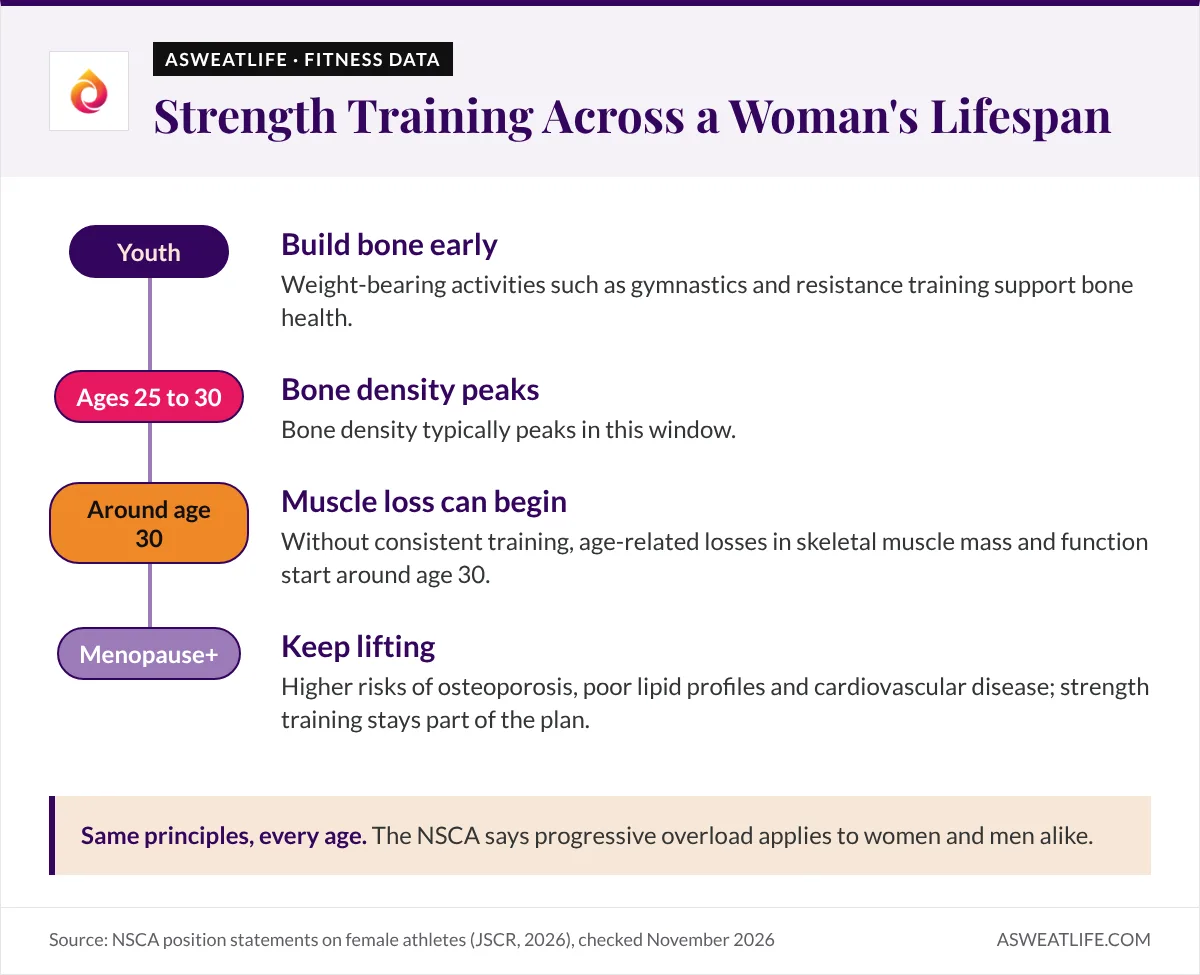
One of the clearest shifts is the focus on resistance training through every stage of life, from youth sports into adulthood, menopause and postmenopause. Here’s how the guidelines map it out:
Pick your life stage to see what the new guidelines flag and a realistic next step.
- Youth: weight-bearing activities such as gymnastics and resistance training are recommended to support bone health.
- Ages 25 to 30: bone density typically peaks by this age range, which makes the years before and during early adulthood a big opportunity to build it with weight-bearing and loaded exercise.
- Around age 30: “Without appropriate and consistent training, age-related losses in skeletal muscle mass and function start around age 30,” the guidelines read.
- Menopause and after: women face higher risks of osteoporosis, abdominal fat and poor lipid profiles, which can raise the risk of cardiovascular disease, so strength training becomes an even bigger priority.
It’s never too early or too late to pick up a weight. If you’re in your 40s or 50s and wondering how your body is changing, our guide to how your body changes during perimenopause is a good companion read.
ACL Tears, Bone Stress Injuries and Concussions
The injury section names three problems that hit women at higher rates: ACL tears, bone stress injuries and concussions. The guidelines point out that progressive strength and conditioning programs have been shown to reduce these risks, which turns strength work into injury prevention as much as performance training.
For runners and field-sport athletes, that’s a strong argument for keeping a lifting day in the week even in peak season. If you need a starting point, here’s why and how to add strength training to your running program.
Why the Research Pool Is Finally Bigger
A larger pool of female athletes informed the update. The number of females playing high school sports in the U.S. has risen more than 1,000%, and collegiate participation has risen more than 600%, which gives researchers far more women to study than in 1989.
Even so, the NSCA noted that female-driven research is still limited, and it calls that one more reason sex-specific guidelines matter for understanding differences in health, performance and injury.
What the NSCA Strength Training Guidelines Mean for Your Goals
The guidelines are written for coaches and strength and conditioning professionals, but they land at a moment when women are already lifting in bigger numbers. Tension, a women’s-only strength gym, opened in New York City earlier in 2026, and strength training was already one of the most popular workouts in 2021.
So what’s your next step? If heavier weights have felt off-limits, give yourself permission to progress: add a little load, a rep or a set over time and see how your body responds. New to the weight room? Start with our guide on how to start a strength training routine, then create your own strength workout routine at home once you’ve got the basics down. And if a session feels harder than last week, give yourself grace: a tough workout is just a different day.
FAQ
Where Can I Read the New NSCA Guidelines for Female Athletes?
Both NSCA position statements on strength and conditioning of female athletes appear in the Journal of Strength and Conditioning Research, volume 40, issue 8. Part I runs on pages 875 to 894, and the full text sits behind the journal’s paywall.
Do the NSCA Guidelines Only Apply to Elite Athletes?
The NSCA wrote the position statements for strength and conditioning professionals who train female athletes. Their lifespan sections still cover youth sports, adulthood, menopause and postmenopause, so the core principles apply well beyond elite sport.
What Is Progressive Overload?
Progressive overload means gradually increasing the demand on your muscles over time, for example by adding weight, reps or sets. The 2026 NSCA guidelines say the principle applies to women and men alike.
This article is for educational purposes and does not replace advice from a doctor, registered dietitian or qualified trainer.