How to Choose Electrolytes for Women: Minerals, Sugar and Format

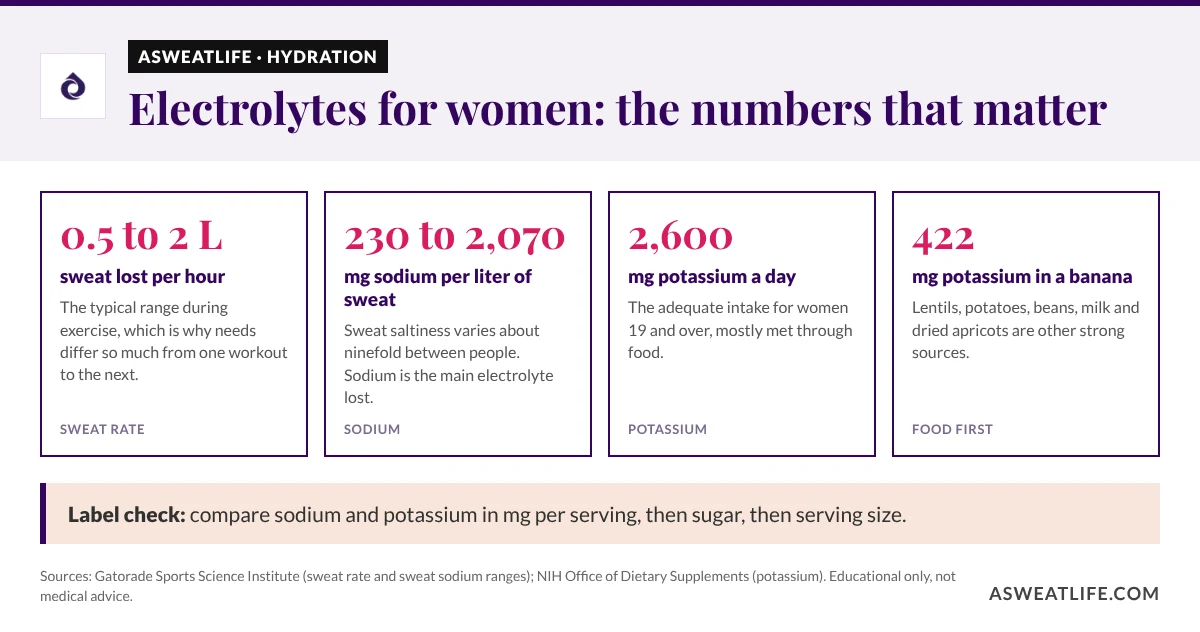
Shopping for electrolytes for women can feel like reading a chemistry exam, with every tub and bottle promising better hydration. The real differences are on the label: sweat saltiness alone ranges from about 10 to 90 mmol of sodium per liter (roughly 230 to 2,070 mg) between people, according to Gatorade Sports Science Institute research on sweat testing.
Below, we cover what electrolytes actually do, what to look for on a label, how to match a product to your day, and how drops, powders and ready-to-drink options compare.
Why Do Electrolytes Matter for Women?
Electrolytes are minerals that carry an electric charge when they dissolve in your body fluids. MedlinePlus explains fluid and electrolyte balance as the job of keeping water and pH levels steady, supporting muscle and nerve function, and keeping your heartbeat regular. You get them from food and drink, and you lose them through sweat, urine and illness.
| Electrolyte | What it does | Where you get it |
|---|---|---|
| Sodium | Holds fluid in your body and supports nerve and muscle signals | Salt, bread, cheese, soups and most packaged foods |
| Potassium | Supports muscle contractions and fluid balance inside cells | Potatoes, beans, lentils, bananas, dried apricots and milk |
| Magnesium | Supports muscle and nerve function and energy production | Nuts, seeds, whole grains and leafy greens |
| Calcium | Needed for muscle contractions, nerve signals and bones | Dairy, fortified plant milks, tofu and leafy greens |
Your electrolyte needs aren’t set by gender alone. Body size, how hard and how long you train, the weather and your diet all matter more. For most women, regular meals and enough water cover daily needs without a supplement. Potassium is a good example: the NIH potassium fact sheet sets the adequate intake for women 19 and over at 2,600 mg a day, and a single medium banana supplies 422 mg. Our guide on how to eat your electrolytes has more food ideas.

What Should You Look For on an Electrolyte Label?
This article is for general education and doesn’t replace advice from your doctor or a registered dietitian. Two products sold for hydration can contain very different amounts of each mineral, so the nutrition panel matters more than the front of the package.
Sodium and Other Minerals
Start with sodium, the main electrolyte lost in sweat, then check potassium and magnesium. Compare milligrams per serving rather than claims like “advanced hydration blend.” More isn’t automatically better: a product built for endurance athletes can carry far more sodium than you need after a 30-minute class.
Sugar, Sweeteners and Extras
Sugar-free options suit everyday sipping when you don’t need extra carbohydrates. Sugar isn’t always a problem, though. During long endurance sessions, a drink with carbs can fuel you as well as hydrate you. Also scan for artificial sweeteners, caffeine and added flavors so you know exactly what you’re drinking.
Format and Ease of Use
Electrolytes come as concentrated drops, powders or ready-to-drink bottles, and the right one is the one you’ll actually use. If you want something portable and unflavored, Buoy electrolytes (for women) are liquid drops you squeeze into water, coffee, tea or smoothies. Buoy says its Hydration Drops contain no sugar, sweeteners or flavors and rates their sodium as moderate, but the page doesn’t list milligrams per serving, so check the product label if you’re tracking sodium closely.
How Do You Choose Electrolytes for Your Lifestyle?
The most useful question isn’t which product is strongest. It’s when you actually need more than water.
- Everyday hydration: desk days, errands and easy walks are usually covered by water and balanced meals with fruit, vegetables, dairy, beans and nuts.
- Workouts: a short gym session or yoga class rarely needs more than water. Long runs, rides or repeated hard sessions raise sodium and fluid losses, and that’s where an electrolyte drink can help.
- Hot days and active jobs: heat and humidity increase sweating even during light activity, such as gardening, festivals or a long day on your feet.
The same GSSI research puts typical sweat rates during exercise at about 0.5 to 2 liters an hour, which is why two people in the same class can need very different amounts. If you sweat heavily or notice white salt marks on your clothes, you probably lose more sodium than average. Our explainer on what an electrolyte beverage is covers when sports drinks make sense.
Not sure where your day falls? Run through the quick check below.
Answer four quick questions about your day and get a plain-English read on whether water is enough, plus what to look for on a label.
1. Today’s activity
2. Conditions
3. How much do you sweat?
4. Sugar preference
What to look for on the label
Keep in mind
Electrolyte Drops vs. Powders vs. Ready-to-Drink Beverages
Each format has trade-offs. Ingredients vary within every category, so check the label rather than assuming the format tells you what’s inside.
| Format | How it works | Good for | Watch out for |
|---|---|---|---|
| Drops | A few drops or a squeeze added to any drink | Travel, work bags and flavoring-free sipping | Mineral amounts vary and may be low per serving |
| Powders | Stick packs or tubs mixed with water | Pre-measured workout drinks; some include carbs | Added sugar or sweeteners in some blends |
| Ready-to-drink | Bottled and ready to go | Workouts, commutes and outdoor events | Higher cost per serving, more storage space and packaging |
When you compare, work out the cost per serving and the sodium and potassium per serving. If you mostly train hard, our side-by-side of electrolyte drinks and powders by sodium and sugar puts the numbers in one place.
Common Mistakes When Choosing Electrolytes
- Assuming every product has similar sodium. Some contain only small amounts of the minerals you lose in sweat.
- Skipping the serving size. A tub can look generous until you see how much powder each serving takes.
- Overlooking sugar. Fine for a long ride, less useful if you’re sipping all day at a desk.
- Taking more than you need. Daily supplements can add minerals your diet already supplies.
Drinking far more than you need is also a risk. Overhydrating with water or sports drinks during exercise can cause exercise-associated hyponatremia, where blood sodium falls too low, and UVA Health’s report on overhydration guidelines notes that experts advise drinking to thirst. If you have kidney disease or a heart condition, or take medicines that affect sodium or potassium, talk to your doctor before using electrolyte supplements.
Electrolytes for Women FAQ
Do women need different electrolytes than men?
Not because of gender alone. Body size, sweat rate, training load, climate and diet shape your needs far more than whether a product is marketed to women.
Should I take electrolytes every day?
Most people don’t need to. Water and balanced meals usually cover daily needs. Electrolytes are most useful after long or sweaty workouts and on hot, active days.
Are sugar-free electrolytes better?
They suit everyday hydration if you want to avoid extra carbs. For endurance sessions longer than about an hour, a drink with some carbohydrates can help fuel you.
How do I know if I’m a salty sweater?
White marks on your clothes or hat after a workout are a common clue. A lab or field sweat test can measure your sweat sodium more precisely.
Can electrolyte drops replace a sports drink?
They can for everyday hydration. For long endurance efforts, check that the sodium per serving is high enough and add a carbohydrate source if you need fuel.