
Active Family Vacations: 9 U.S. Destinations Where Kids Can Run, Hike and Explore
Nine U.S. destinations where kids can hike, swim, bike and explore, plus how to match trips to their ages and plan active days without meltdowns.


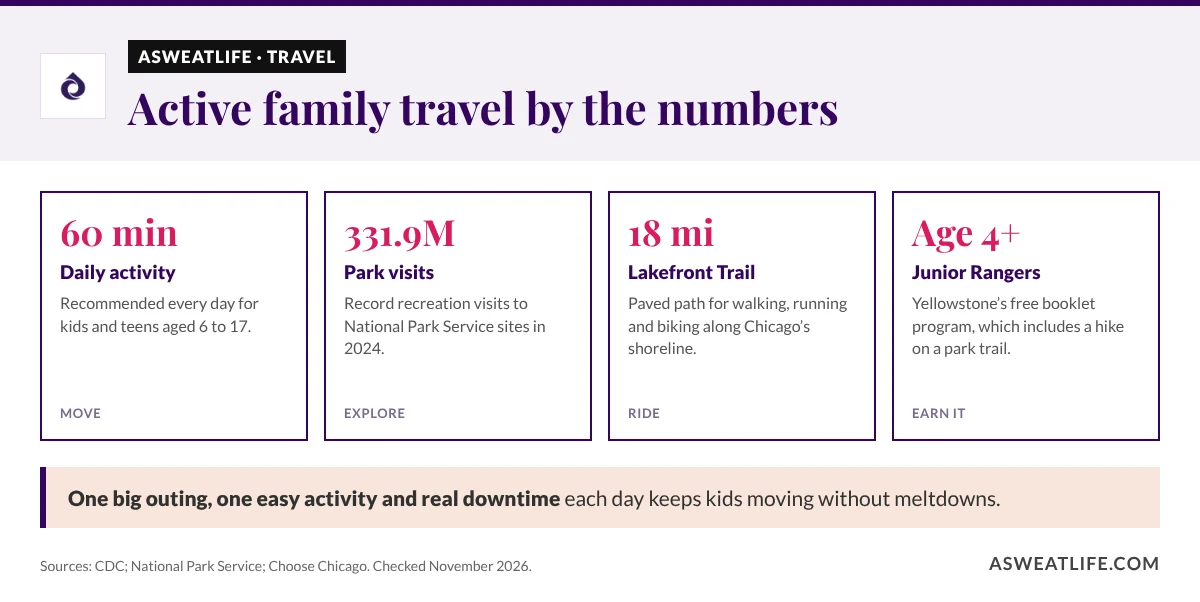
Planning an active family vacation is part trip, part logistics puzzle, especially when kids need to burn energy every day. The CDC recommends that children and teens aged 6 to 17 get at least 60 minutes of physical activity every day, and a well-chosen destination makes that easy without anyone calling it exercise.
Below you’ll find what makes a destination work for active families, nine U.S. places where kids can hike, swim, bike and explore, how to match the trip to your kids’ ages, and how to plan days that keep everyone moving without meltdowns.
What Makes a Destination Great for an Active Family Vacation?
The best family destinations let kids move a lot without the trip feeling like a boot camp. That usually means walkable layouts, easy access to trails, beaches or parks, nap-friendly schedules and food that picky eaters will tolerate.
Look for places with a mix of indoor and outdoor options. Weather turns, and a rainy afternoon shouldn’t end the day, so the strongest picks have a backup plan within a short drive.
Americans are clearly heading outdoors in big numbers. The National Park Service logged a record 331.9 million recreation visits in 2024, beating the previous high set in 2016. If you’re aiming for the busiest parks in peak season, plan early.
| What to look for | Why it matters for active kids |
|---|---|
| Short transit times | Less sitting in cars and planes, more time to move |
| Walkable areas or bike paths | Kids rack up activity just getting from place to place |
| Free outdoor space nearby | Parks, beaches and trails give kids room to run |
| An indoor backup | Hands-on museums or pools save rainy or very hot days |
| Flexible days | Room for naps, snacks and changes of plan |

Which U.S. Destinations Work Best for Active Families?
Here are nine destinations that earn their reputation, each with a way to get the whole family moving. All of them work for a range of ages.
San Diego, California
Mild weather year-round makes San Diego easy to plan around. Calm beaches suit swimming and sandcastle building, and Balboa Park packs gardens, museums and the San Diego Zoo into one walkable stretch. Expect the zoo alone to involve plenty of walking up and down its hilly paths.

Orlando, Florida
Orlando is the obvious theme park hub, and walking a big park all day adds up fast. When ride lines get long, swap a park day for kayaking or paddling at one of the area’s natural springs, or a hands-on science center on a stormy afternoon.

Washington, D.C.
The Smithsonian museums are free, which lowers the stakes if a toddler lasts only an hour. The National Mall gives kids space to run between museums, and the monuments are spread far enough apart that a day of sightseeing doubles as a long walk.
Yellowstone National Park, Wyoming
Geysers and bison deliver genuine awe. Yellowstone runs a self-guided Junior Ranger program for children 4 and older, and the requirements include hiking on a park trail or boardwalk, which turns a long day into a mission. Keep kids on boardwalks in thermal areas and give wildlife plenty of space.
West Yellowstone, Montana, sits right outside the park’s west entrance and makes an easy base for families. The map below shows places to stay in and around town.
Florida’s Space Coast
Kennedy Space Center turns rockets into a full day of wonder, with plenty of walking between exhibits. Nearby beaches let tired kids reset with a swim or a run along the waterline.
San Antonio, Texas
The River Walk is stroller-friendly, and its paths extend well beyond the busy downtown stretch, so you can walk or bike farther out as kids get older. The city stays warm when northern states freeze, which makes it a good winter-break pick.
Williamsburg, Virginia
Living history and a nearby amusement park give you education and adrenaline in one trip. Exploring the historic area on foot keeps everyone moving between demonstrations.
Chicago, Illinois
Millennium Park, the lakefront and kid-focused museums like the Museum of Science and Industry make Chicago easy with children. The 18-mile Lakefront Trail is open to walking, running and biking, so families can rent bikes and pick a stretch that suits small legs.
Asheville, North Carolina
Easy hikes, waterfalls and a walkable downtown make Asheville a gentle introduction to mountain travel. The area was hit hard by Hurricane Helene in 2024, but Explore Asheville’s update on the area’s outdoors says many trails are open again, with work continuing on others. Check trail status and the Blue Ridge Parkway’s Helene recovery updates before you go.
How Do You Compare Beaches, Parks and Cities for Active Kids?
Choose for your kids’ ages and energy levels rather than someone else’s highlight reel. This table sums up how each style of trip tends to work.
| Trip style | Best ages | How kids stay active | Watch out for |
|---|---|---|---|
| Beach town | All ages, especially toddlers | Swimming, sand play, boardwalk walks | Sun, heat and water safety |
| National park | Ages 4 and up for longer trails | Hikes, Junior Ranger activities, ranger walks | Long drives, altitude and wildlife |
| City with museums | Ages 5 and up | Walking between sights, parks, bike rentals | Too much time indoors |
| Theme park | Ages 4 and up | Walking all day between rides | Long lines, heat and late nights |
Toddlers do best with beaches and short days. Elementary-age kids thrive on interactive museums, theme parks and short hikes with a reward at the end, like a waterfall or a geyser.
Tweens and teens want a say. Give them two or three active options, such as a bike ride, a longer hike or a kayak rental, and let them vote. Buy-in cuts complaints on the ground, and confidence built outdoors can carry over to sports back home. Our piece on why confidence matters in youth sports explains why that matters.
Multigenerational trips need variety within a single base. A beach town with a boardwalk, a pool and a nearby aquarium lets grandparents walk at their own pace while kids run ahead.
How Do You Plan Active Days Without Overdoing It?
Over-scheduling is the fastest way to ruin a family trip. Build in downtime every day. One major activity plus one low-key activity is a realistic daily target.
- Do the big outing early, when energy is highest and, in summer, before the heat peaks.
- Protect rest time. Naps, a pool float or quiet time in the room keep the afternoon from falling apart.
- Let the slowest walker set the pace on trails, and turn back before anyone is exhausted.
- Pack water and snacks for every outing, plus sunscreen and a layer.
- Book lodging with a kitchen when you can. Breakfast in the room saves money and avoids a morning restaurant battle.
The same discipline that goes into any group trip applies here: lock the dates, budget and transportation early, then leave the afternoons loose. Pack a small bag of surprises for travel days too. New stickers or a cheap toy buy you quiet miles.
Use the planner below to sketch an active day for your destination, kids and weather.
Pick the kind of place you are visiting, your youngest child’s age and the weather. The planner builds an active day with one big outing, one easy one and real downtime.
Where are you spending the day?
Youngest child’s age
Expected weather
How much energy do your kids have?
Your active day
Keep it safe and fun
How Can Parents Fit in Their Own Workouts?
Kids aren’t the only ones who need to move. A 20-minute session before the family wakes up can make the rest of the day easier. A resistance band takes up almost no room in a suitcase, and our resistance band hotel room workout needs only a door anchor and a bit of floor space.
Many family activities count as exercise for adults too. A hike with a child carrier, a long bike ride on a lakefront trail or a day of walking a theme park can add up to more activity than a typical day at home. If you’re crossing time zones, our guide to resetting sleep and training in a new time zone can help everyone adjust faster.
How Do You Stay Connected on an Active Trip?
Nothing derails a family day like a dead map, a lost signal at a trailhead or a frozen booking confirmation. Reliable mobile data keeps your itinerary, rideshare and emergency contacts one tap away. Before heading into remote parks, download offline maps too, because coverage can be patchy or missing on trails.
Families visiting the U.S. from abroad can avoid roaming charges with a travel eSIM. Holafly offers an esim usa travel plan that can be installed before you leave home. The company says its USA plans include unlimited data and start once you arrive and turn the eSIM on. It works only on phones that support eSIM, so check your device first, and compare plan length and price for your trip.
U.S.-based families on a domestic road trip can usually rely on their regular phone plan, though it’s worth checking your carrier’s coverage map for parks and rural areas.
This article is for general information. Check with your child’s doctor before strenuous activity if your child has a health condition, and follow posted safety rules at parks, beaches and trails.
Frequently Asked Questions
What is the best age to start active travel with kids?
There is no perfect age. Infants travel easily because they nap anywhere, while kids over five tend to remember the trip and can handle longer walks. The mobile but unpredictable toddler stage suits shorter trips closer to home.
How much activity do kids need on vacation?
The same as at home. The CDC recommends that children aged 3 to 5 be active throughout the day and that kids and teens aged 6 to 17 get at least 60 minutes of moderate to vigorous activity daily.
Are national parks good for young children?
Yes, if you pick accessible trails and short loops. Junior Ranger programs give kids a goal, and visitor centers offer breaks when a trail gets too long. Yellowstone’s program is open to children 4 and older.
How far in advance should I book a family vacation?
For popular destinations, book flights and major attractions a few months out. Theme parks and national park lodges can sell out even earlier during summer and holiday weeks.
What should I always pack for an active family trip?
Water bottles, snacks, sunscreen, a change of clothes in your day bag and any required medication. Keep these in your carry-on, never in checked luggage.