Wireless Meat Thermometer Guide: A Safer, Juicier Thanksgiving Turkey
How a wireless meat thermometer works, the safe temperatures to hit, how to time a Thanksgiving turkey and what to look for before you buy.

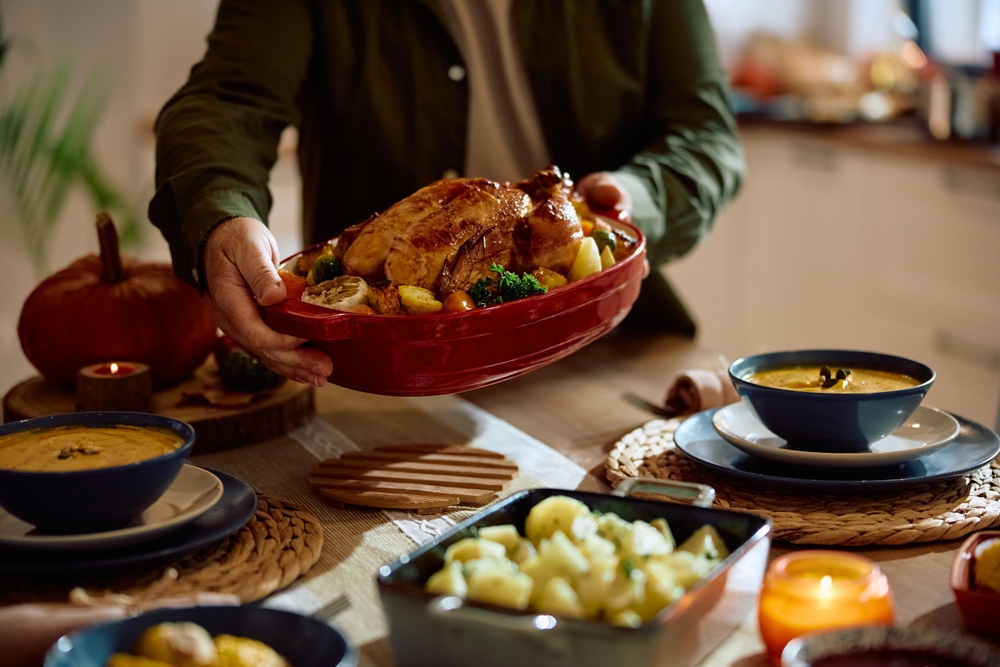
If you’re hosting Thanksgiving this year, the turkey is the one dish you can’t fix after it leaves the oven. A wireless meat thermometer takes the guessing out of it, and the target is simple: USDA says a turkey is done when it reaches 165°F in the innermost thigh, the innermost wing and the thickest part of the breast.
Below, we cover why the old doneness tests let you down, how a wireless probe works, the safe temperatures worth memorizing, how to time a Thanksgiving turkey, and what to look for when you buy one.
Why Guessing Doneness Doesn’t Work
For generations, home cooks have relied on the pop-up timer, a quick stab with a fork or a peek at the juices. None of them tells you the temperature at the center of the meat, which is the only number that matters for safety and for texture.
Pop-up timers are the most common trap. USDA’s turkey guidance says not to rely on the pop-up indicator alone and to confirm with a food thermometer, because the button only reports one spot and the bird cooks unevenly. White breast meat dries out at a lower temperature than the dark meat in the thighs takes to finish, so a bird that looks done on the outside can still be underdone near the bone.
The analog dial thermometer helps, but it has its own cost. Every time you open the oven to check, heat escapes, the oven has to recover and your roasting time stretches. On a four-hour bird, a few checks an hour adds up.
How Does a Wireless Meat Thermometer Work?
A wireless meat thermometer is a slim stainless steel probe you push into the meat before it goes in the oven, smoker or grill. It stays there for the whole cook and sends readings to an app on your phone or a base station, so you can watch the temperature climb without opening the door.
Most models carry two kinds of sensor. The tip reads the internal temperature of the meat, and a sensor near the handle reads the ambient temperature around it. Seeing both at once tells you if your oven is running hot or cold, and lets the app estimate how long is left.
- Fewer door openings: you check your phone instead of the oven, so heat and moisture stay where they belong.
- Freedom to move: you can work on sides, set the table or sit down with family while the app keeps watch.
- Alerts at your target: set a target temperature and get a notification when the meat gets close, so you’re at the oven before it overshoots.
- A record of the cook: many apps graph the temperature curve, which makes it easier to repeat a good result next year.

| Tool | How it reads | Best for | Main drawback |
|---|---|---|---|
| Pop-up timer | Pops at one set temperature in one spot | Nothing on its own | Doesn’t confirm the thigh, wing and breast |
| Dial thermometer | Analog needle, slow to settle | Occasional spot checks | Slow, and you open the oven each time |
| Instant-read probe | Digital reading in a few seconds | Steaks, chops, final checks | Still means opening the oven |
| Wireless leave-in probe | Continuous readings to your phone | Turkey, roasts, smoking, long cooks | Higher price; battery to keep charged |
What Temperature Should Meat Be Cooked To?
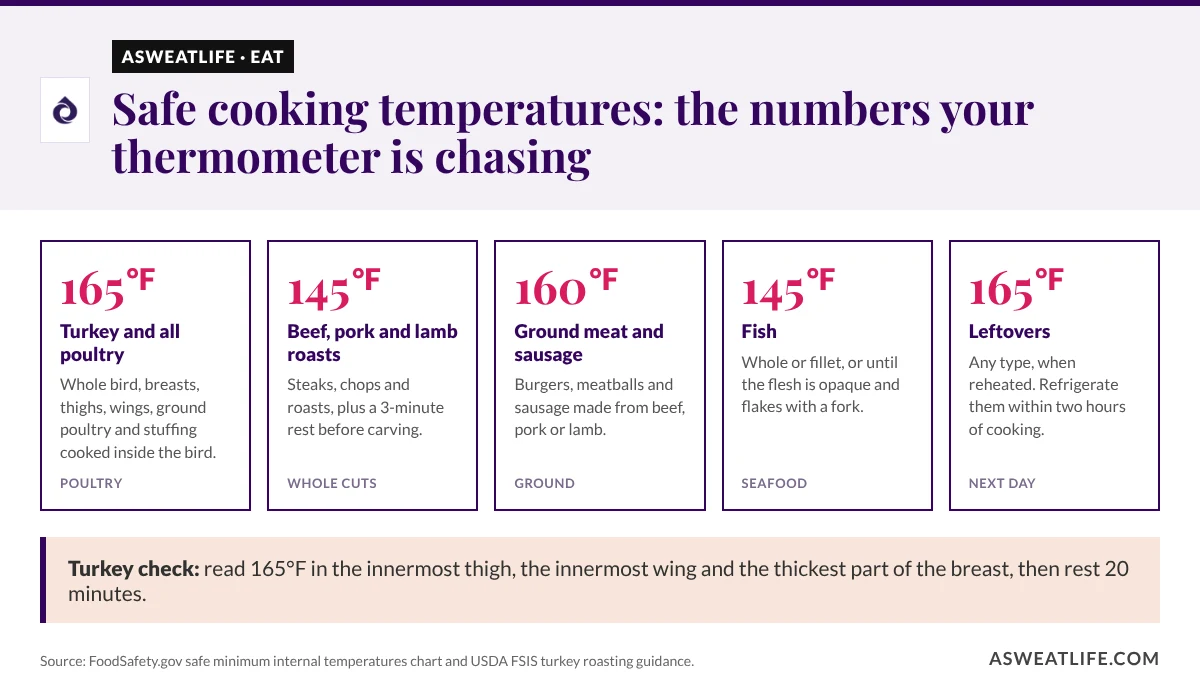
The numbers your thermometer is chasing come from USDA. FoodSafety.gov lists the safe minimum internal temperatures for each type of meat, and they’re worth knowing by heart before the holidays.
| Food | Safe minimum internal temperature |
|---|---|
| Turkey and all poultry (whole, parts, ground) | 165°F |
| Stuffing cooked inside poultry | 165°F |
| Beef, pork, veal and lamb roasts, steaks and chops | 145°F, plus a 3-minute rest |
| Ground meat and sausage (beef, pork, lamb) | 160°F |
| Fish, whole or fillet | 145°F |
| Leftovers, reheated | 165°F |
This article is for general information and doesn’t replace guidance from a food safety professional. If you have a specific question about safe handling, the USDA Meat and Poultry Hotline is the place to ask.
How to Use a Wireless Thermometer on a Thanksgiving Turkey
Thanksgiving falls on Thursday, November 26, 2026. Here’s how to get the turkey right, from the freezer to the table. The planner below turns your bird’s weight and your dinner time into a timeline.
Pick your turkey’s size, whether it’s stuffed, and when you want to sit down. You’ll get a thaw start day, an oven-in time and the point to start watching your thermometer, based on USDA roasting times at 325°F.
1. Turkey weight
2. Stuffed or not?
3. Dinner time
- Thaw it in the fridge. USDA recommends about 24 hours of refrigerator thawing for every 4 to 5 pounds at 40°F or below. A 20-pound bird needs four to five days, so a big turkey may need to go in the fridge the weekend before.
- Place the probe in the thickest part of the breast. Push it in deep, away from bone, which conducts heat and throws the reading off. If your thermometer has two probes, put the second one in the innermost part of the thigh.
- Roast at 325°F or higher. USDA says to set your oven no lower than 325°F. Set your alert a few degrees below 165°F so you have time to get to the kitchen.
- Confirm three spots before it comes out. When the probe reads 165°F, check the innermost thigh and the innermost wing with an instant-read thermometer or a second probe. All three need to reach 165°F.
- Let it rest, then carve. USDA suggests letting the turkey stand for 20 minutes so the juices set. Refrigerate leftovers within two hours of cooking.
Times are only a starting point. USDA’s roasting chart for a fully thawed turkey at 325°F looks like this:
| Turkey weight | Unstuffed | Stuffed |
|---|---|---|
| 8 to 12 lb | 2¾ to 3 hours | 3 to 3½ hours |
| 12 to 14 lb | 3 to 3¾ hours | 3½ to 4 hours |
| 14 to 18 lb | 3¾ to 4¼ hours | 4 to 4¼ hours |
| 18 to 20 lb | 4¼ to 4½ hours | 4¼ to 4¾ hours |
| 20 to 24 lb | 4½ to 5 hours | 4¾ to 5¼ hours |
USDA doesn’t recommend stuffing the bird at all, since the stuffing in the center is the last thing to get hot. Baking it in a separate dish is safer and frees up your thermometer for the turkey. If you’re bringing a side to someone else’s table, these Friendsgiving dishes travel well.
How to Choose the Best Meat Thermometer for Turkey
If you’re shopping for the best meat thermometer for turkey, start with the job it has to do. A whole bird means a long cook, a hot oven and you probably wandering away from the kitchen, so reliability matters more than extra features.
- Accuracy you can check. Look for a stated accuracy figure or a calibration certificate, then test it yourself in ice water, where it should read 32°F.
- Range that covers your house. Bluetooth alone can drop out through walls. Models that add Wi-Fi or a long-range base station keep the connection if you step outside or upstairs.
- Heat tolerance. Check the maximum ambient temperature the probe can handle, especially if you plan to finish at high heat, smoke or deep-fry.
- Battery life. A turkey can take five hours or more, plus prep. Make sure the probe and the base or app connection last the full cook.
- An app that helps. Target alerts, estimated finish times and a rest timer are the features you’ll actually use.
- Easy cleaning. Food-grade stainless steel probes that wipe clean easily, and know which parts are dishwasher-safe before you buy.
| Feature | What to look for | Why it matters for a turkey |
|---|---|---|
| Probes | Two or more probes | Breast and thigh cook at different rates |
| Sensors | Internal and ambient readings | Shows if your oven runs hot or cold |
| Connection | Wi-Fi or long-range base station | Alerts reach you anywhere in the house |
| Battery | Covers 6+ hours | Outlasts a big bird and the rest |
| Accuracy | Stated figure or certification | A few degrees separates juicy from dry |
Common names in this category include Meater, ThermoWorks and Typhur. Typhur’s Sync range, for example, is listed with a long-range Sub-1G connection and NIST-certified accuracy, and its multi-probe models let you track the breast and thigh at the same time. Compare the specs for each model rather than the brand, since range and heat ratings vary within every lineup.
Beyond Thanksgiving: Cooking Lean Protein Without Drying It Out
A wireless thermometer earns its place long after the holiday. Lean proteins are the easiest to overcook, and they’re the ones many of us eat most often when we’re training or meal prepping.
- Chicken breast: pull it the moment it hits 165°F. A few extra minutes is the difference between juicy and chalky.
- Pork tenderloin and loin: 145°F with a 3-minute rest leaves it slightly pink and tender, which is safe.
- Beef roasts: cook to the doneness you like, with 145°F plus a rest as the minimum.
- Salmon and other fish: 145°F, or until it’s opaque and flakes with a fork.
- The grill and smoker: the same probe works outdoors. Our grilling tips pair well with it.
Batch-cooking chicken or a pork loin on a Sunday is a lot less stressful when an alert tells you it’s done. And if you’re the one hosting, a thermometer that keeps watch is one less thing to worry about while you host a gathering people remember.
Wireless Meat Thermometer FAQ
Where do you put a meat thermometer in a turkey?
Put the leave-in probe in the thickest part of the breast, away from bone. Before the turkey comes out, check that the innermost part of the thigh and the innermost part of the wing also read 165°F.
Is a turkey done at 160°F?
No. USDA’s safe minimum for turkey is 165°F in the thigh, wing and breast. Set your alert a few degrees early so you’re ready to check, but don’t take the bird out until all three spots reach 165°F.
Can you leave a wireless meat thermometer in the oven?
Yes, that’s what they’re designed for, as long as you stay within the probe’s maximum ambient temperature. Check that rating if you cook at high heat or plan to broil at the end.
Do I still need an instant-read thermometer?
It’s useful as a backup. A quick instant-read check of the thigh and wing confirms what the leave-in probe tells you about the breast.
How long should a turkey rest after cooking?
USDA suggests letting a turkey stand for 20 minutes before carving so the juices set. Refrigerate leftovers within two hours.
How do I check if my meat thermometer is accurate?
Stir the probe into a glass packed with ice and a little cold water. After a minute it should read 32°F. If it’s off, recalibrate it if the model allows, or account for the difference.