7 Things to Plan Before Your First Trail Run With Your Dog
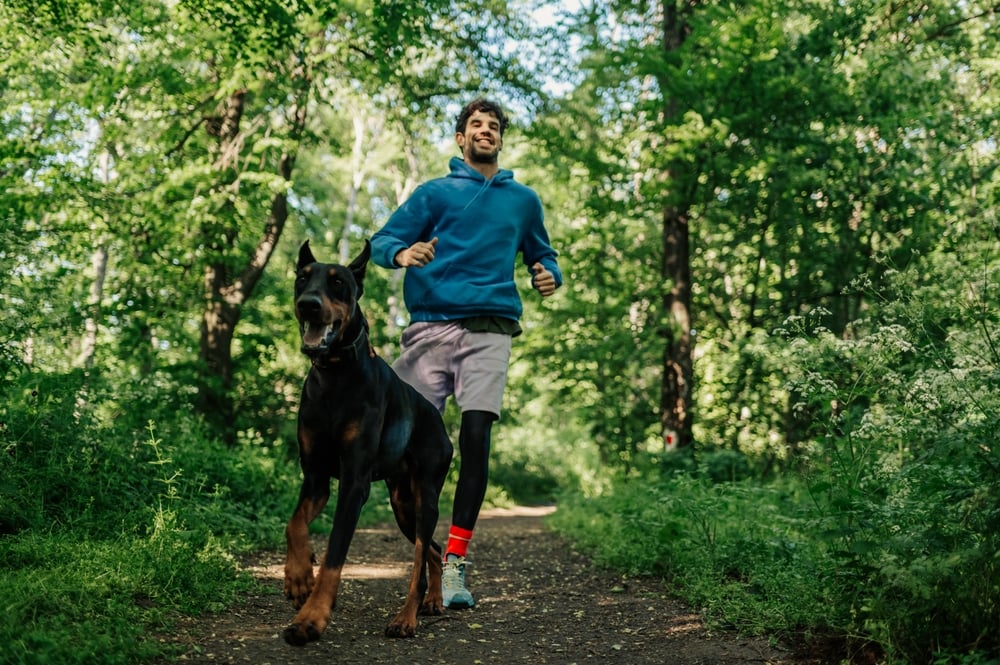
Your dog is already at the door with the leash in its mouth, and the trail you have been eyeing for months is finally on the calendar. Trail running with your dog asks more of both of you than a loop around the block, and heat is the big difference: dogs can’t sweat the way people do, so they overheat more easily.
Here is what to plan before that first run: a vet check, a gradual build-up, the right route, heat and water, trail manners, an emergency plan and a way to pay for unexpected vet care.
1. Book a Vet Check Before You Add Distance
This guide is general information. Your vet knows your dog’s age and health history, so their advice comes first.
Start with your vet. Book a check before you raise the distance, and say clearly that the plan is running on uneven ground, since that is a different ask from a daily walk.
Take these questions with you:
- Is my dog fit to run, and how far should we start?
- Are vaccinations current for where we will be running?
- Which flea and tick prevention fits my dog?
- Do joints, weight or breathing affect how hard we should go?
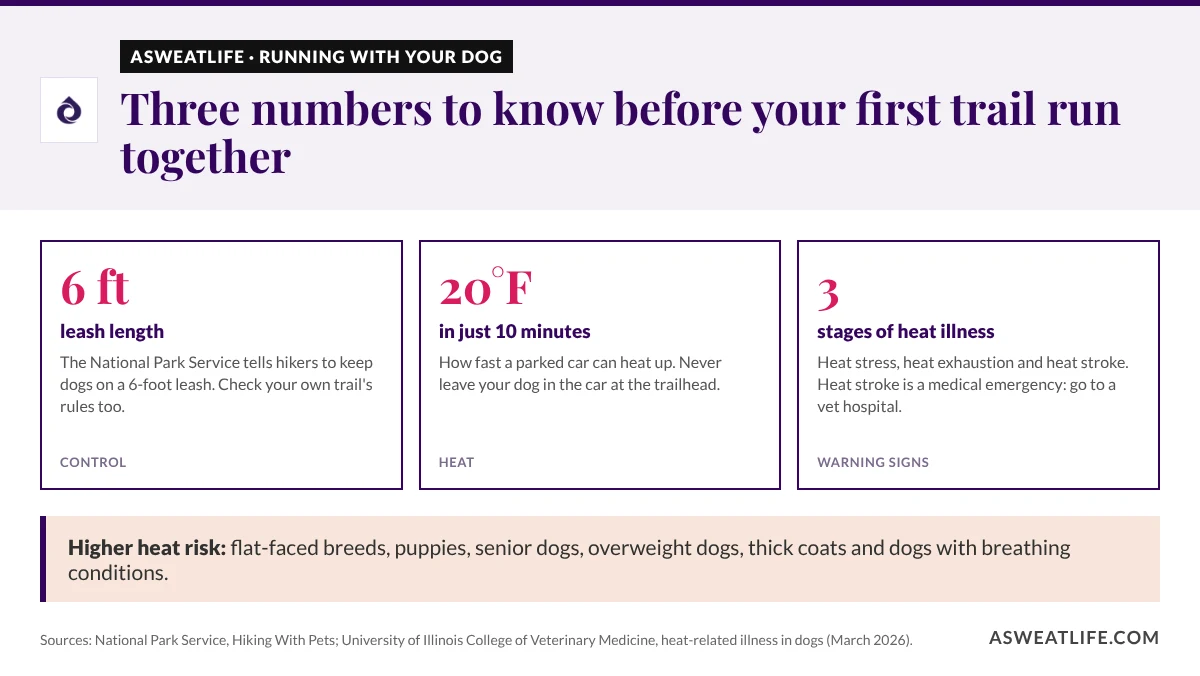
Dogs cool down mainly by panting. Veterinarians at the University of Illinois name dogs with short, flat faces (such as bulldogs, pugs and Boston terriers), puppies, senior dogs, overweight dogs, dogs with thick or long coats and dogs with breathing conditions as the groups most at risk from heat. If your dog fits any of those, ask your vet how that changes the plan.
2. Build Your Dog’s Running Fitness Gradually
A dog that loves a long walk isn’t automatically ready to run for an hour. Muscles and paw pads both need time to adapt. University of Illinois veterinarians advise that you gradually work up to greater amounts of activity and more time outdoors, because dogs need time to adjust to warmer temperatures and harder work.
Build distance in small steps. Start with about a mile on flat ground, then add a little time each week and mix in hills and rougher surfaces later. If your dog lags or stops to lick its paws, cut the next run short. The plan below is an illustration of that pattern; your vet may want you to go slower.
| Stage | Example run | Surface | Move on when |
|---|---|---|---|
| Week 1 | About 1 mile, easy pace | Flat, packed dirt | Your dog finishes keen and recovers quickly |
| Week 2 | A little longer than week 1 | Flat trail | No sore paws, limping or lagging the next day |
| Week 3 | Add a few short hills | Mixed but smooth | Breathing settles fast at each stop |
| Week 4 on | Small weekly increases | Rougher trail in short sections | Your vet is happy with how it is going |

Your own legs need the same patience. Our rundown of common runner injuries and what to do is worth a read if trails are new to you as well.
3. Choose a Dog-Friendly Trail Route
Pick a route where dogs are allowed and the surface is kind to paws, such as packed dirt or soft trail. Check the park’s website or land manager first. The National Park Service notes that many parks do not allow pets on hiking trails or boardwalks, and other preserves restrict dogs to certain paths.
For the first run, choose a loop or an out-and-back that starts near your car. You can turn around early if your dog tires, and you won’t face a long walk back to the trailhead.
Top tip: walk the first half mile of the route a day earlier, or read recent trail reports for closures, mud and wildlife notices. A route that suits a hiker can be too rocky or too narrow for a dog running at your side, and it is better to learn that before you are on it.
4. Plan for Heat and Bring Enough Water
Heat limits dogs more than it limits you. Run in the cooler hours of the day, and skip hot, humid days entirely while your dog is still getting fit. Never leave your dog in the car at the trailhead either: University of Illinois veterinarians warn that a parked car can heat up by 20°F in just 10 minutes.
Carry what you both need:
- Water and a collapsible bowl for your dog
- A small towel for muddy paws
- Treats for breaks and recall
- A first-aid kit for people and pets
Streams and ponds aren’t a reliable water source, so bring enough for the whole run and offer a drink at every stop. Plan your own fluids too; our guide to electrolyte drinks and powders by sodium and sugar can help on longer, warmer outings. Learn the warning signs before you go:
| Stage | What you may see | What to do |
|---|---|---|
| Heat stress | More panting than usual, tongue long and wide, seeking shade, but still distractible | Stop, find shade, offer water and head back slowly |
| Heat exhaustion | Panting becomes uncontrolled; vomiting, diarrhea or slow response to commands | Move to a cooler spot, offer water, cool the body gently and call your vet |
| Heat stroke | Disorientation, collapse, seizures or loss of consciousness | Treat as an emergency: go to the nearest veterinary hospital immediately |
Protect yourself from the sun on exposed stretches too. Our sun protection tips for runners cover the basics.
5. Learn Trail Etiquette for Running With a Dog
Trail manners protect your dog, other runners and local wildlife. Cover them before you go, because a first trail run is a poor time to find out your dog is nervous around strangers.
Leash and Control
The National Park Service tells hikers to always keep your dog on a 6 foot leash and to make sure the dog is used to passing other people and dogs. Your trail may set its own rules, so check those too. Practice a reliable “leave it” and “stay close” at home first.
Cleanup and Courtesy
Bring bags and pack out every bit of waste. Step off the trail to let faster runners pass, and keep your dog on your inside when you meet others.
Tick what is true today, then get a quick read on whether to plan a short test run, build up first or talk to your vet.
1. What have you already done?
2. Does any of this describe your dog?
3. When are you planning to go?
Do this next
6. Make an Emergency Plan
Decide what you would do if something goes wrong before you leave, because a plan is hard to build while you are worried. Save your vet and emergency clinic numbers in your phone, and look up the nearest 24-hour clinic to the trailhead.
Tell someone your route and when you expect to be back, and check your phone signal at the start. If your dog seems to be overheating, stop at once, move into shade, offer water and cool the body gently, then call your vet. When you get home, check your dog all over for ticks and remove any you find.
7. Budget for Unexpected Vet Care
Vet bills for unplanned visits are hard to predict, so decide before the run how you would pay for one. Some owners keep a dedicated savings account, and others use a credit line or an insurance policy.
If insurance is on your list, compare U.S. pet insurance companies such as Spot Pet Insurance side by side on exclusions, waiting periods, deductibles and how claims are filed. Spot, for example, says pre-existing conditions aren’t covered, and its prices vary with your dog’s age, breed and location. Read each policy’s full terms before you buy, and ask your vet which conditions are common for your dog’s breed.
Pick a Short Trail and Go
Choose one easy trail near home, pack your bag and do a short test run of a mile or less. You will learn how your dog handles the surface, the leash and the pace, and you can adjust before the next one. Your first step today is simple: call your vet and ask for a time to talk about running.
Trail Running With Your Dog FAQs
How far should we run the first time?
Start with about a mile on flat ground, then add a little distance each week. Cut the run short if your dog lags or licks its paws, and follow your vet’s advice on distance.
What should I ask the vet?
Ask whether your dog is fit to run, how far to start and which flea and tick prevention suits it. Mention any joint, weight or breathing concerns.
Which dogs struggle most in the heat?
Flat-faced breeds, puppies, senior dogs, overweight dogs, dogs with thick or long coats and dogs with breathing conditions are at higher risk, according to University of Illinois veterinarians.
What should I bring on the run?
Water and a collapsible bowl, treats, a first-aid kit for people and pets, waste bags and your vet and emergency clinic numbers.
What are the signs my dog is overheating?
Watch for heavy panting that doesn’t ease when you stop, a long, wide tongue, vomiting or slow responses. Collapse or confusion is an emergency, so go straight to a veterinary hospital.