How Much Sugar Is in Non-Alcoholic Wine? 10 Bottles Ranked by Sugar per Glass
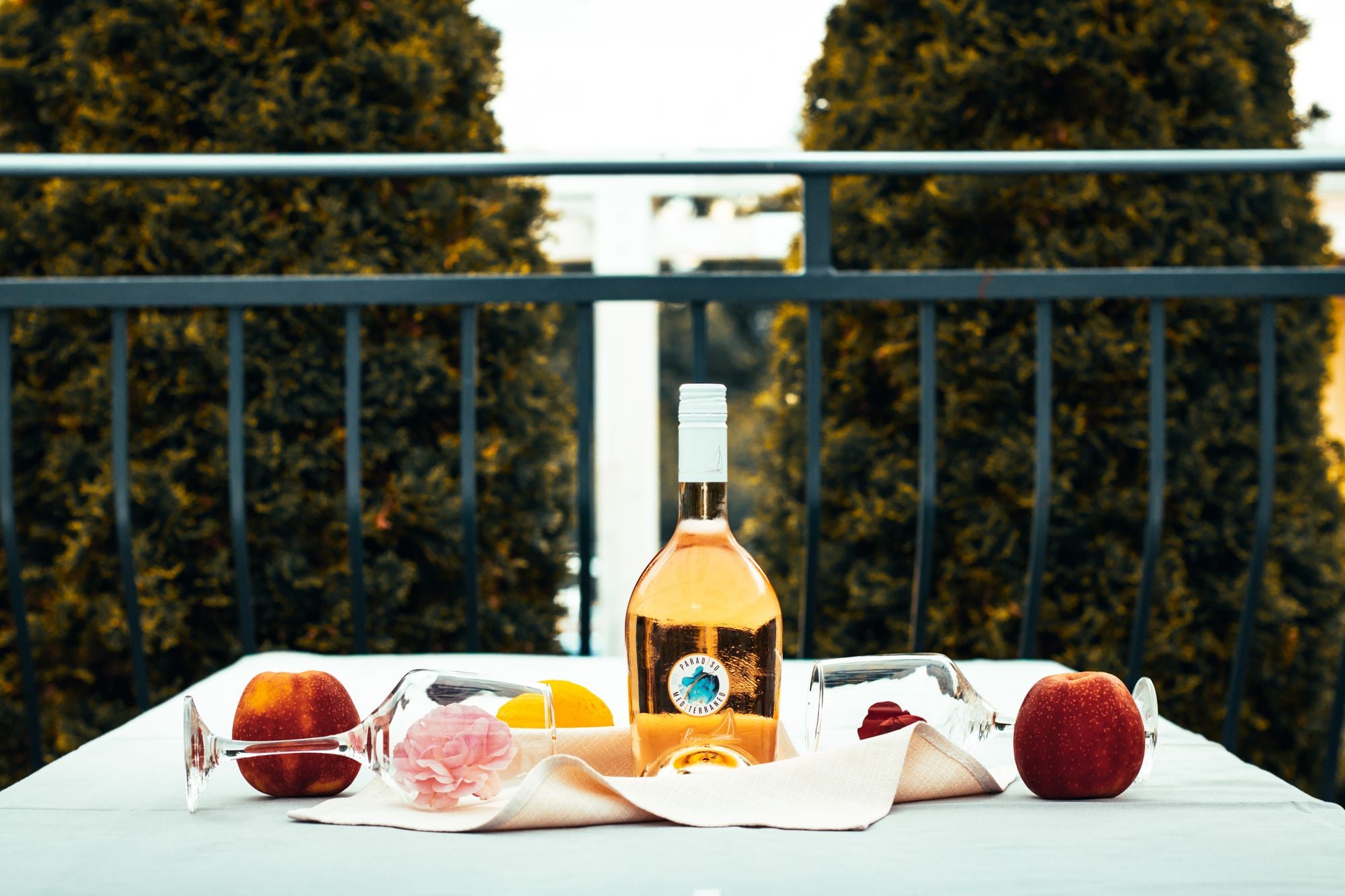
You want a glass of something that feels like wine at dinner, minus the alcohol, and the shelf is a wall of bottles with very little to go on. Price, style and how the stuff is made all change what ends up in your glass.
Here’s a short list of non-alcoholic wines worth trying, plain-English answers on how they’re made, and what happens to the sugar along the way. If you’re curious about drinking less more broadly, our tips for being sober during the holidays are a good next read.
Which Non-Alcoholic Wines Are Worth Trying?
These eight come from a January 2026 round-up of non-alcoholic wines, and the prices below are the ones listed then. Shelf prices move, so treat them as a ballpark. Start with the style you’d normally order, and see our non-alcoholic bar cart picks if you want more than wine.
Use the filter to narrow the eight picks by sparkling or still.
#1 90+ Cellars Lot 229 Non-Alcoholic Sparkling Rosé
At $15, this is the lowest-priced pick here. It’s lively and bubbly, with red berry and stone fruit flavors and bright acidity. A good first bottle if you’re testing the waters.
#2 Mionetto One Alcohol-Removed Sparkling Wine
This $16 sparkling white has crisp honeysuckle, melon and citrus notes and works in spritzes and mimosas. The alcohol is listed at about 1%, so read the label if you need a strict zero.
#3 Wölffer Estate Vineyard Spring in a Bottle Rosé
For $20, you get a sparkling rosé with strawberry, cherry and watermelon flavors. It’s a bright pick for a patio or a toast.
#4 Oddbird Blanc de Blancs
This $25 sparkling white is aged in oak, which adds vanilla, spice and cream, balanced by citrus and green apple. It suits readers who like their bubbles on the richer side.
#5 Dr. Fischer Steinbock Riesling Zero
The $18 Riesling leads with white flowers and tart citrus, then lands on a bright, mineral palate with high acidity. If you love a dry white, start here.
#6 Fritz Müller Non-Alcoholic Müller-Thurgau
At $20, it brings honeysuckle, orchard fruit and lime, with high acidity and a light spritz. It’s a lively still white for weeknight dinners.
#7 Studio Null Grüner Weiss
This $32 white is dry and crisp, with white flower, orange blossom and green apple notes that suit food pairing. Pour it with dinner.
#8 Muri x The Four Horsemen Non-Alcoholic Still Red
Red drinkers, this one is for you. At $44 it’s the priciest bottle here, with juicy sour cherry and red fruit plus an herbal edge from tomato leaf and pepper.
How Is Non-Alcoholic Wine Made?
Most non-alcoholic wine starts as regular wine. Winemakers ferment it, then remove the alcohol near the end. There are a few main ways to do it:
- Vacuum evaporation: Lower pressure lets alcohol turn to vapor at gentler temperatures. Older thin-film versions also strip flavor compounds.
- Reverse osmosis: Wine is pushed against a fine membrane at cool temperatures. Alcohol and water pass through while larger compounds stay behind, and water is added back to restore balance.
- Spinning cone column: A first low-temperature pass captures the aroma compounds, a second pass removes the alcohol under vacuum, and the aromas go back into the wine.
Method matters for taste. In a 2021 lab study, white, rosé and red wines were taken down to 0.7% ethanol with both reverse osmosis and vacuum distillation, and the tasting panel preferred the reverse osmosis wines. Body, aroma and fruity notes dropped further after vacuum distillation.
On the label, US wine called nonalcoholic must contain less than 0.5% alcohol. Labeling terms differ elsewhere.
Does Non-Alcoholic Wine Have More Sugar Than Regular Wine?
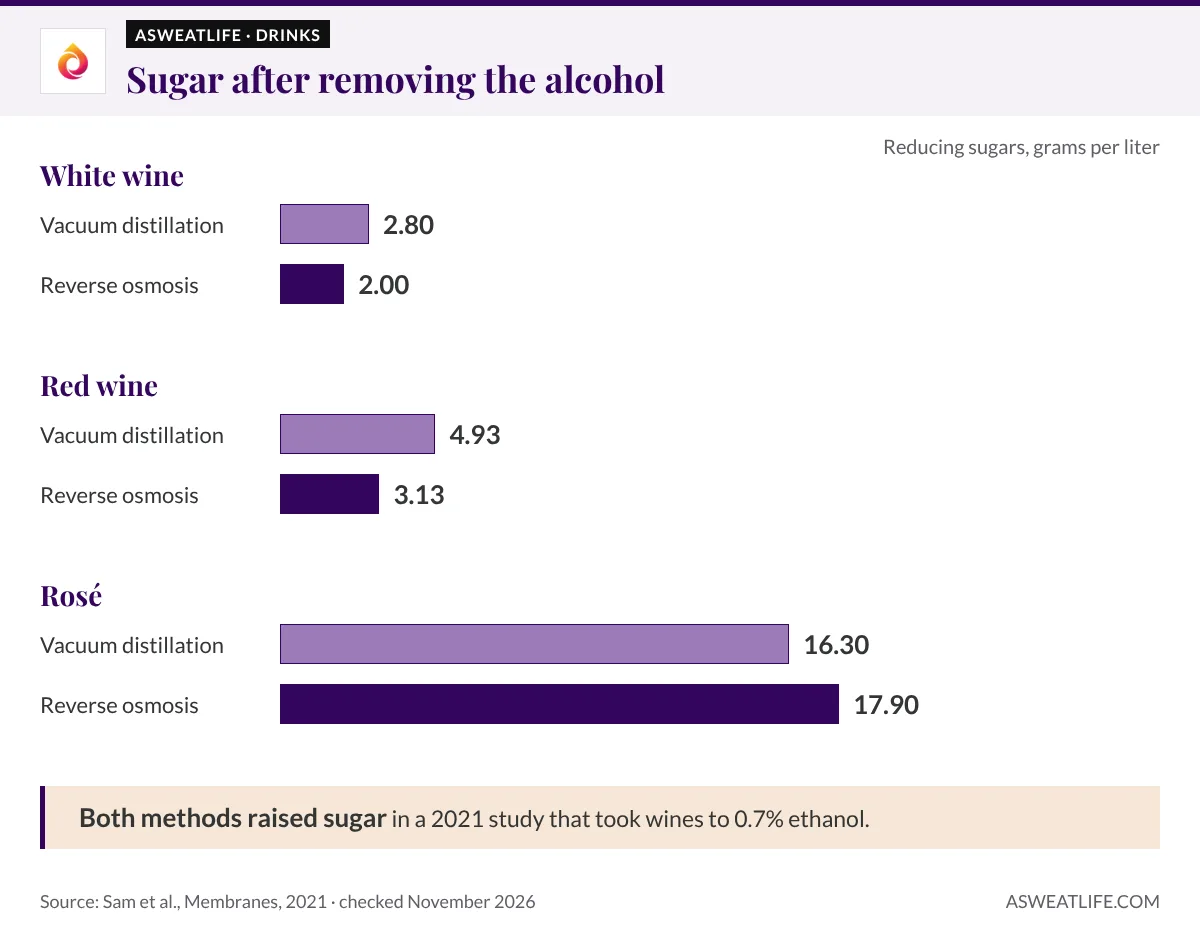
It can, and it depends on the bottle. Taking out alcohol and water leaves the sugars more concentrated. In that same 2021 study, both methods increased reducing sugars, a change tied to removing water and ethanol.
| Wine (taken to 0.7% ethanol) | Vacuum distillation (g/L) | Reverse osmosis (g/L) |
|---|---|---|
| White | 2.80 | 2.00 |
| Red | 4.93 | 3.13 |
| Rosé | 16.30 | 17.90 |
Those are lab figures for one study’s wines, not a verdict on any bottle you’ll buy. Producers don’t always print residual sugar, so check the nutrition panel or the maker’s website. Keeping an eye on sugar? The dry whites and reds on our list are a sensible place to start. (Wondering what “clean wine” labels mean? We break that down in our clean wine guide.)
FAQ
Can I use non-alcoholic sparkling wine in cocktails?
Yes. The Mionetto One bottle suits spritzes and mimosas.
Is non-alcoholic wine right for everyone?
Not necessarily. Some bottles contain a small amount of alcohol, so if you’re pregnant, in recovery or avoiding alcohol for medical reasons, ask your doctor before choosing one.
Where should I start?
Pick the style you’d normally order, then try the lowest-priced bottle in it. If you like it, move up the list.
Your next step: choose one bottle from the list and pour it at your next dinner with friends. Give yourself grace if the first one isn’t your favorite, since styles vary a lot.
This article is for educational purposes and does not replace advice from a doctor, registered dietitian or qualified trainer.